West Lake Hills Motorized Patio Screens Built for Weather & Insect Screening
Treaty Oak Shade Co. installs motorized patio screens across West Lake Hills properties where hillside exposure and oak-canopy pollen demand year-round protection. We hold SomfyPro certification and maintain a 4. 9-star rating across verified Google reviews.
- 5.0 · Google reviews
- SomfyPro Certified
- Lutron Platinum Dealer
- BBB A+
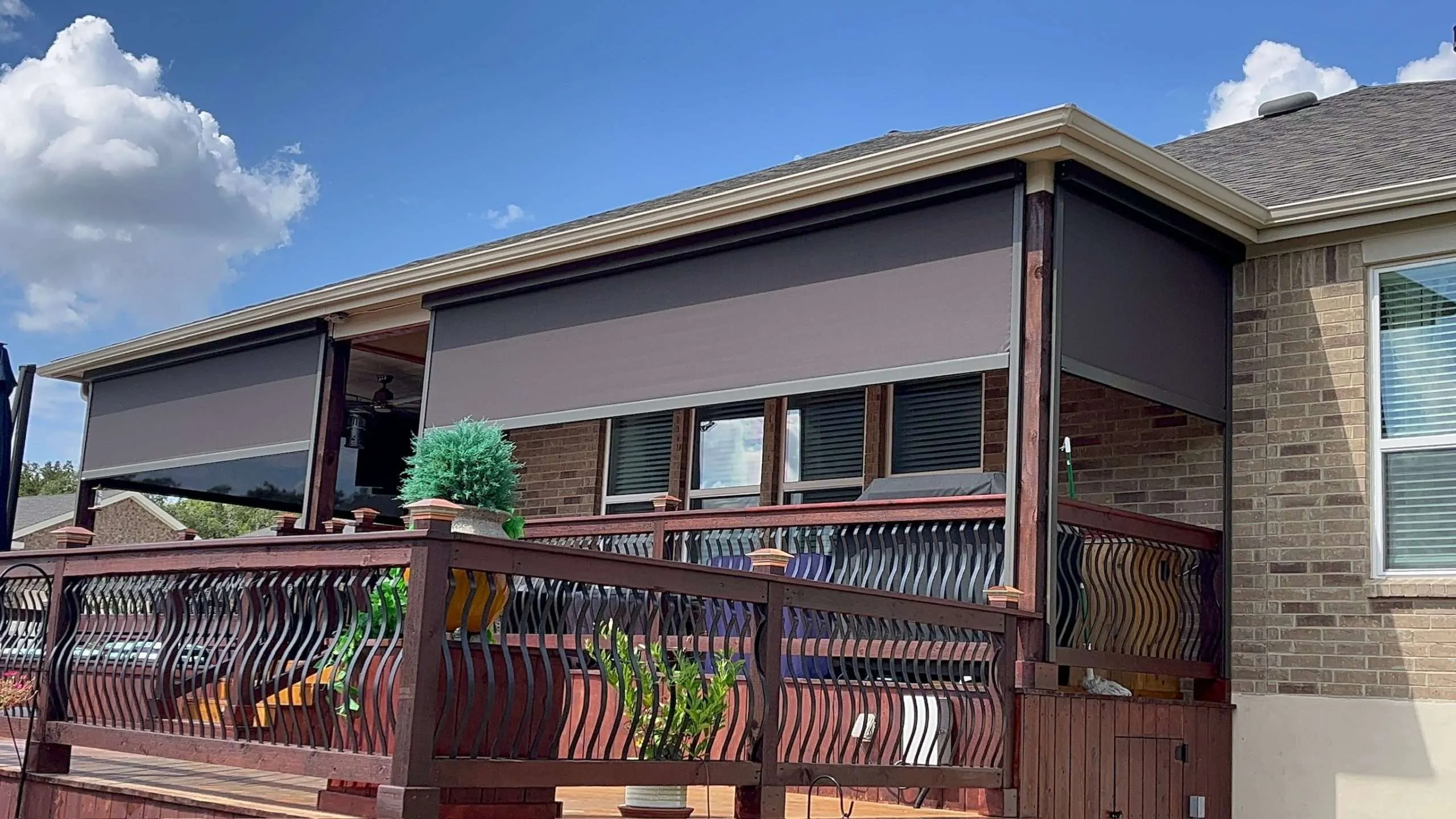
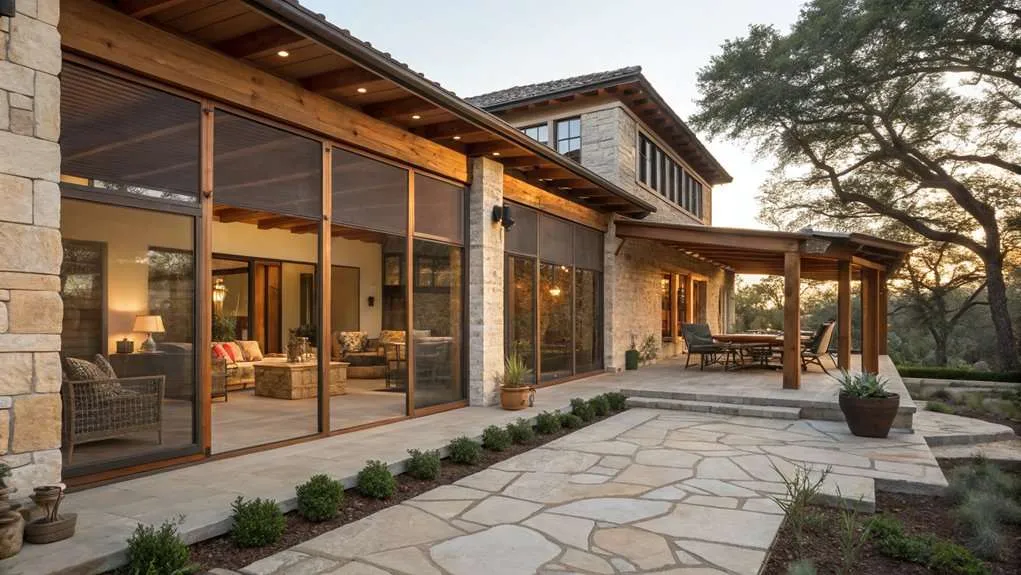
What our clients say.
Best Motorized Screen Systems for Hill Country Patios
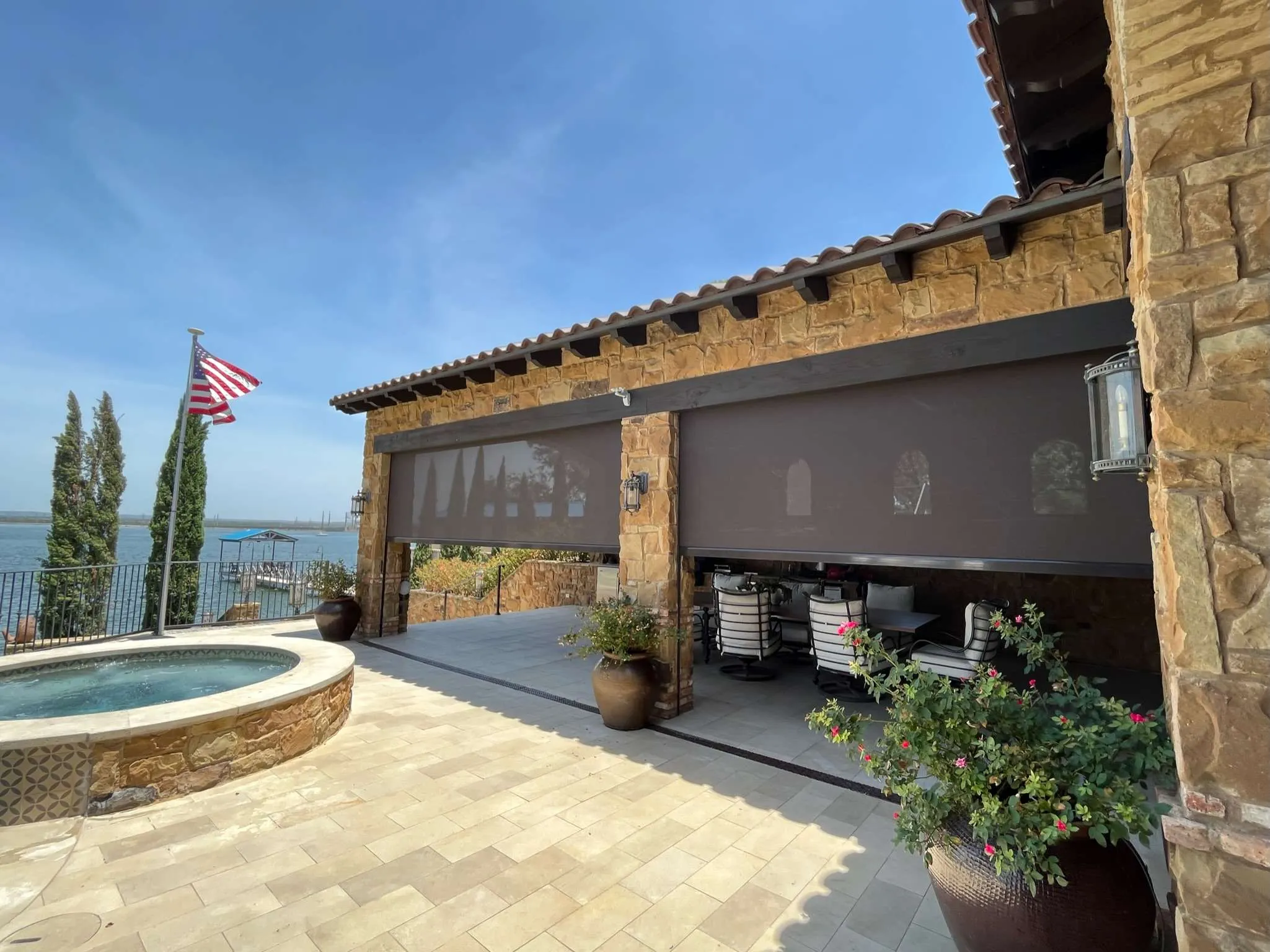
Most clients discover they need a motorized screen only after a single windstorm tears through a fixed panel or a summer evening becomes unbearable because of mosquitoes. The honest answer is that a quality zip-track system addresses both problems at once, but only if the side guides are plumb and the hem bar seals properly against the sill. We’ve installed screens on exposed lots where 40 mph gusts are routine and on shaded decks where no-see-um mesh is the only barrier between dinner and a swarm.
What Makes a Screen System Work Here
- Zip-Track Retention: Keder weld holds fabric in side guides during wind events
- Tubular Motor Limits: Somfy RTS motors programmed to stop at exact positions
- Mesh Selection: 90–97% UV block or 20×20 no-see-um weave per opening
- Hem Bar Weight: Internal ballast keeps bottom rail seated against threshold brush
We had a Barton Creek client whose previous contractor installed a cable-guided screen without tensioning the side wires, so every deployment left a two-inch gap where flies poured through until we replaced the entire track system with welded zip guides. The reality is that a screen either seals or it doesn’t, and no amount of motor horsepower fixes poor track alignment.
Why West Lake Hills Homeowners Trust Treaty Oak Shade Co.
You’re probably reading this after getting three bids that range from $4,800 to $11,200 for what looks like the same screen system, and now you’re trying to figure out whether the middle quote is genuinely better or just better at sounding confident. West Lake Hills properties present specific challenges, limestone anchoring that requires masonry bits and expansion anchors, HOA packets that demand elevation drawings, and sun angles that make a 90% solar mesh perform very differently than a privacy weave.
Treaty Oak Shade Co. Credentials
- SomfyPro certified for motor installation and RF control programming
- Lutron Platinum Dealer status for integrated shade and lighting systems
- LUXE Interiors + Design Preferred Partner recognition for custom outdoor projects
- A+ rating with the Better Business Bureau across all service categories
These credentials mean every motorized screen installation follows manufacturer torque specs, every electrical rough-in complies with NEC GFCI requirements, and every fabric selection comes with documented UV-blockage and wind-resistance data specific to Central Texas exposure. We’re not suggesting other contractors skip these steps, but it’s worth asking how they verify compliance before you sign.
Motorized Outdoor Shade Solutions We Install
We’re not suggesting every property needs all six screen types, but it’s worth knowing the differences before you commit to a system that solves sun but ignores insects, or blocks wind but traps heat. The right screen depends on whether you’re blocking afternoon glare, sealing out pollen, or creating a windbreak for a second-story deck.
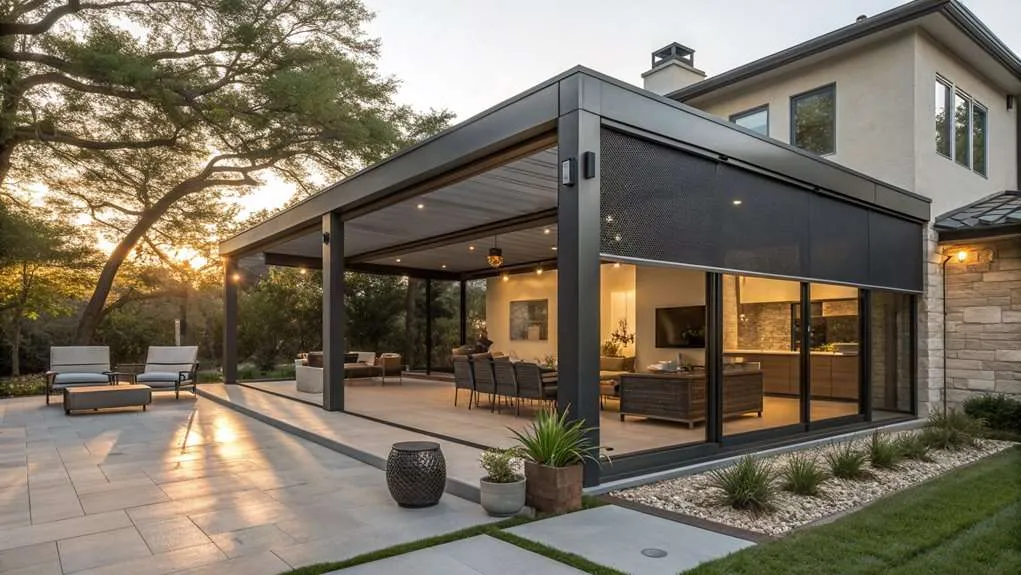
Zip-track systems with 90–95% solar mesh or no-see-um weave for full-height openings up to 18 feet wide.
Cassette-mounted roller shades with Serge Ferrari or Phifer fabrics for west-facing windows and glass doors.
Fiberglass 20×20 mesh in side tracks, deployed seasonally or left down through oak-pollen months.
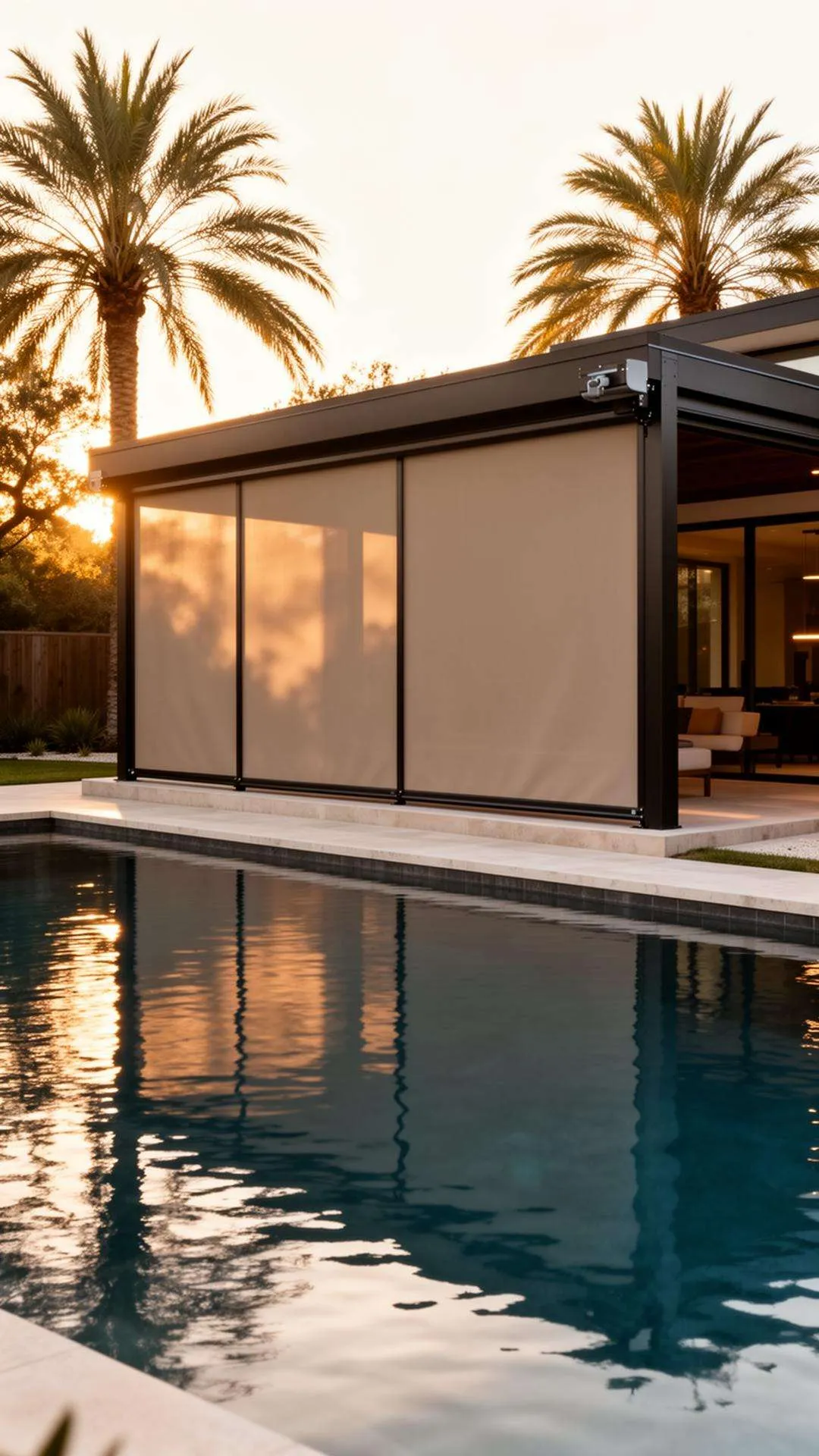
Overhead retractable fabric systems spanning pergola beams, controlled via Somfy RTS or io protocols.
Lateral-arm awnings with wind sensors, retracting automatically above 25 mph gust thresholds.
Aluminum blade systems integrated with screen drops for full weather and insect enclosure.
How Do Motorized Patio Screens Work?
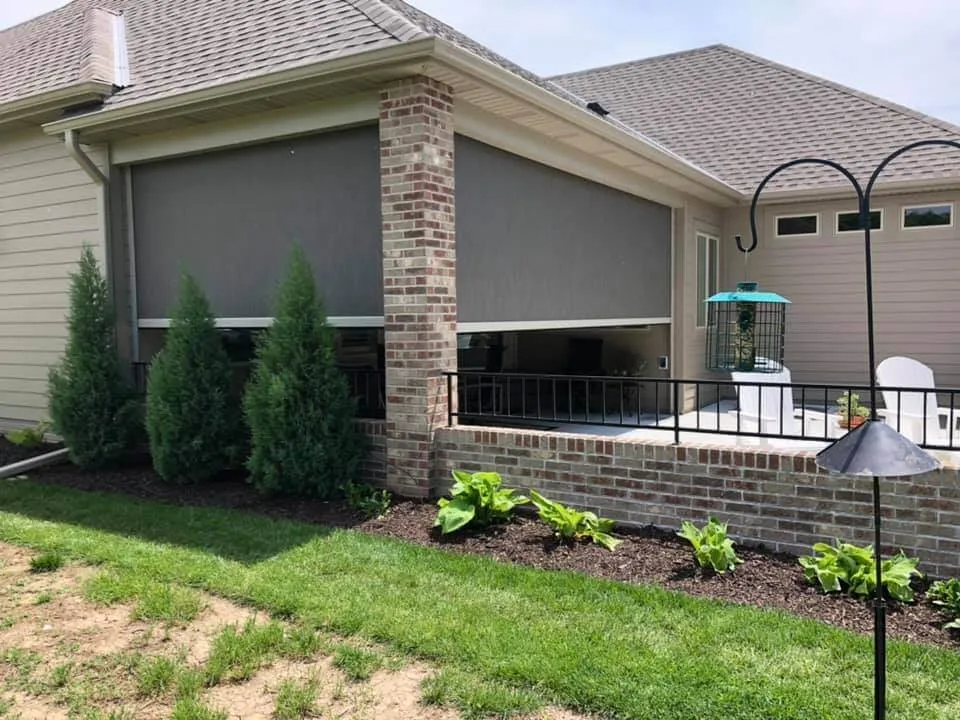
You hit a wall switch or tap a phone app, and a tubular motor inside the roller tube spins the fabric down until a programmed limit stops it. The fabric edge rides inside a zippered track so wind can’t peel it out. That’s the system. What breaks is usually the limit setting drifting over time or debris jamming the hem bar against the sill brush.
Core Components and Their Jobs
- Roller Tube Assembly: 6063-T5 aluminum shaft houses motor and winds fabric evenly
- Side Track Guides: Extruded channels hold keder-welded fabric edge under tension
- Hem Bar and Seal: Weighted bottom rail with EPDM brush closes gap at threshold
- RF Control Module: Somfy RTS receiver pairs with remotes or smart-hub bridges
For Ashish Sangwai, we installed screens on a tall patio where the span required a center-support post to prevent fabric sag, and the motor had to be programmed with intermediate stops so the screen wouldn’t over-tension during partial deployments. One thing we’ve learned is that a screen wider than 14 feet almost always needs either a center guide or a heavier hem bar to keep the fabric from bowing in moderate wind.
What Motorized Patio Screens Cost in West Lake Hills
A single motorized screen for a 10-foot opening in West Lake Hills typically costs $2,800–$4,200 installed, while a three-screen patio enclosure runs $9,000–$18,000 depending on fabric type and smart-home integration. These figures align closely with broader Austin pricing, though hillside lots with limestone substrate or HOA-required powder-coat color matching can add $600–$1,200 to the total.
What Affects the Price in West Lake Hills
- Opening Width and Height: Screens wider than 14 feet require heavier motors, center guides, or dual-tube assemblies, which increase both material and labor costs.
- Fabric Selection: Standard 90% solar mesh costs less than Serge Ferrari Soltis or privacy weaves, and no-see-um insect mesh falls between the two.
- Mounting Substrate: Anchoring to limestone or stucco requires specialized fasteners and flashing details that add time and material expense compared to wood soffits.
Every project is quoted individually after we measure the openings and evaluate substrate conditions. We provide itemized proposals that break out fabric, motor, track, and electrical costs so you understand exactly what you’re paying for.
Manufacturing Standards and Control Options
Motorized Patio Screens
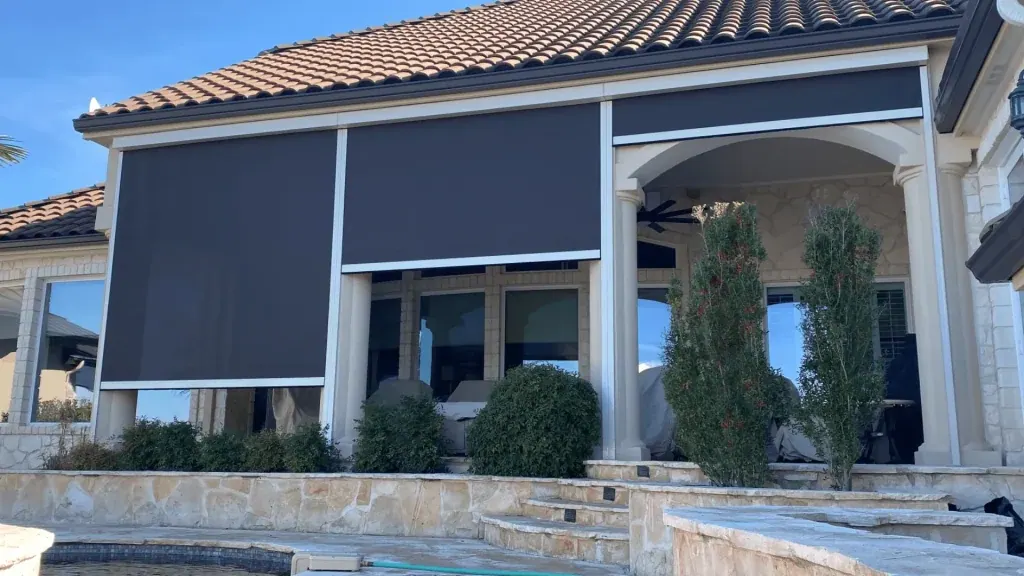
Manufacturing & Hardware Specs
- Powder-Coated Aluminum Frames: 6063-T5 aluminum extrusions provide strength, stability, and corrosion resistance for exterior installations.
- Corrosion-Resistant Hardware: Stainless-steel fasteners support dependable performance in humid and weather-exposed conditions.
- Exterior Screen Mesh: PVC-coated polyester or fiberglass mesh provides durable insect, glare, and solar protection.
- Wind-Rated Motor Components: Properly specified systems can support operational wind-load ratings above 50 mph, with UL-listed RF motors meeting FCC Part 15 requirements.
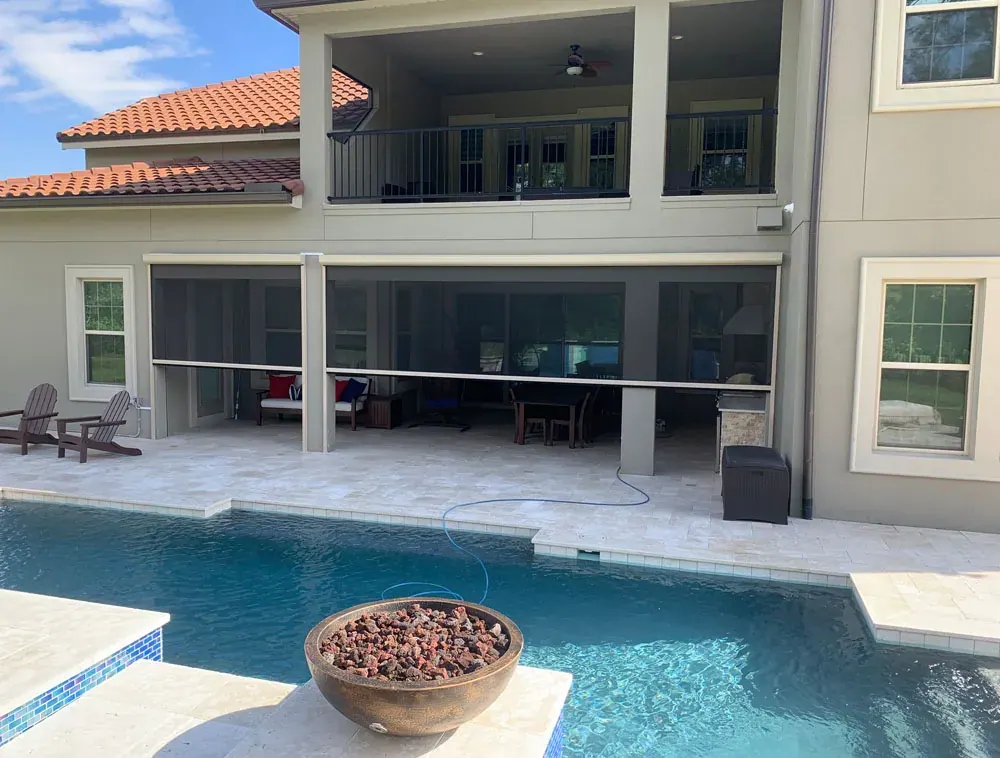
Automation & Operations Options
- Somfy Motor Controls: RTS and compatible Somfy motor systems provide dependable raising and lowering of motorized patio screens.
- Remote and Wall Controls: Handheld remotes and wall switches support convenient individual or grouped operation.
- Weather Sensor Integration: Wind and sun sensors can automatically retract or deploy screens when programmed conditions are reached.
- Smart Home Compatibility: Bond Bridge, Lutron, and Control4 support scenes, schedules, voice integration, and connected control.
Motorized Patio Screens Serving West Lake Hills and Surrounding Areas
Treaty Oak Shade Co. serves homeowners throughout West Lake Hills and the surrounding Hill Country corridor. Our installation team regularly works in Rollingwood, Westlake, and the Barton Creek area, where hillside lots and oak canopy create specific challenges for motorized screen mounting and fabric selection. We schedule site assessments across Travis County and adapt our approach to each property’s exposure and substrate conditions.
Service Area
- Frequent projects in Rob Roy and Eanes School District neighborhoods along the lakefront.
- Clients near the Barton Creek Greenbelt and Zilker Park corridor rely on our wind-rated systems.
- Complete coverage across the greater Austin metro for residential and commercial installations.
We offer flexible scheduling throughout West Lake Hills and coordinate around HOA review timelines and permit approval windows.
Frequently asked questions
What makes Treaty Oak Shade Company's motorized patio screens different from manual retractable options in West Lake Hills?
Motorized patio screens eliminate manual cranking and allow remote or automated control, making them more practical for frequent use. The difference matters most when screens are installed on tall openings or used daily for weather and privacy adjustments.
Treaty Oak Shade Company installs motorized systems that respond to wall switches, remotes, or smart home triggers, which removes the physical effort required with crank-operated models. One thing that consistently catches people off guard is how often they actually use the screens once the friction of manual operation disappears. If your patio faces afternoon sun or you want quick bug protection without wrestling with a pull cord, motorized screens from Treaty Oak Shade Company make that adjustment effortless and repeatable throughout the day.
How does Treaty Oak Shade Company handle installation challenges for motorized patio screens on West Lake Hills properties with irregular outdoor layouts?
Treaty Oak Shade Company custom-fits motorized screens to unusual patio shapes, covered decks, and multi-level outdoor spaces through precise measurement and adaptable mounting systems. Installation complexity increases when existing structures lack adequate header support or electrical access points.
West Lake Hills homes often feature outdoor spaces that don’t follow standard rectangular patterns, including curved patios, angled pergolas, and split-level entertaining areas. Treaty Oak Shade Company approaches these installations by conducting detailed site assessments that account for structural mounting points, available power sources, and the specific dimensions of each opening. We’ve found that properties built into hillsides or featuring custom stonework require mounting solutions that work around existing architectural elements rather than forcing a standard bracket configuration. The screens themselves can be fabricated to fit openings up to certain widths while maintaining smooth motor operation, though exceptionally wide spans sometimes benefit from dual-screen configurations that meet in the middle. Electrical routing becomes the practical constraint in many cases, particularly when homeowners want screens installed far from existing outdoor outlets or when conduit runs would need to cross finished surfaces.
If your West Lake Hills outdoor space includes unusual angles, multiple ceiling heights, or limited electrical infrastructure, Treaty Oak Shade Company can walk the site and identify what’s structurally feasible before any fabrication begins. That upfront assessment prevents ordering screens that won’t mount correctly or motors that can’t be wired without extensive electrical work.
Can motorized patio screens in West Lake Hills handle the intense summer heat without warping or losing tension?
Quality motorized screens withstand West Lake Hills heat when built with UV-resistant fabric and powder-coated aluminum frames. Performance degrades when cheap vinyl components or undersized motors are used in full-sun exposures.
One thing that catches homeowners off guard is how much thermal stress a west-facing patio screen absorbs during July and August. Temperatures on a screen surface can spike 30 degrees above ambient air when direct sun hits dark fabric for hours. Screens designed for this environment use solution-dyed acrylic or PVC-coated polyester that resists UV breakdown, paired with frames engineered to allow slight expansion without losing track alignment. Cheaper systems tend to sag or bind within two seasons when installed on exposures that get afternoon sun.
Material Choices That Hold Up Under Sustained Heat:
- Fabric Composition: Solution-dyed acrylic maintains color and tension better than printed polyester, which can fade and stretch when exposed to sustained temperatures above 110°F on the screen surface.
- Frame Material: Powder-coated extruded aluminum dissipates heat more effectively than vinyl-clad steel, reducing the risk of warping or paint blistering on south and west exposures.
- Motor Placement: Side-mounted tubular motors generate less heat buildup than inline cassette motors, which can overheat during repeated cycles in direct sun and trigger thermal shutoff.
The honest answer is that not every motorized screen is rated for the kind of thermal cycling you get on a Hill Country patio with western exposure. If your space gets six-plus hours of direct sun and you’re comparing quotes, ask what fabric weight and UV rating the installer uses and whether the motor has a thermal protection circuit. Systems that fail early almost always skimp on one of those two components.
What maintenance do motorized patio screens require after installation in West Lake Hills?
Motorized patio screens need periodic track cleaning, fabric inspection, and motor lubrication to maintain smooth operation. Most systems run reliably for years with minimal upkeep when debris is kept out of guide channels.
The honest answer is that most motorized screen failures trace back to leaves, pollen, or spider webs clogging the side tracks. A quick brush-out every few months keeps tension consistent and prevents the fabric from binding mid-cycle. Motor components are sealed and rarely need attention, though an annual check of mounting brackets helps catch loose hardware before it rattles. If your screens face heavy oak canopy or limestone dust exposure common in West Lake Hills, consider a seasonal wipe-down of the fabric itself to prevent buildup that can stress the motor over time.
Are motorized patio screens in West Lake Hills loud enough to disturb outdoor conversations when they operate?
Modern motorized patio screens operate quietly using tubular motors that produce minimal noise during deployment or retraction. Sound levels depend on motor quality and proper installation, with premium systems barely audible during normal use.
Most quality motorized patio screen systems generate about as much noise as a refrigerator compressor cycling on, which means they’re noticeable for a few seconds but rarely disruptive. The motor itself sits inside the roller tube at the top of the screen housing, and the sound you hear is mostly the fabric unrolling or retracting rather than mechanical grinding. One thing that catches people off guard is how much installation quality affects noise levels. If the mounting brackets aren’t secured flush to the structure or if there’s any play in the guide rails, you’ll hear rattling or vibration that has nothing to do with the motor itself. West Lake Hills homes with stone or stucco exteriors tend to dampen sound better than wood siding, which can amplify vibration if the fasteners aren’t set correctly.
If you’re planning outdoor entertaining spaces where ambient noise matters, ask to hear the system operate before installation. A properly installed motorized screen should blend into the background, not announce itself every time you want shade or insect protection. The difference between a quiet system and a distracting one often comes down to mounting precision.
Ready For a Quote?
Get a Site Assessment for Your West Lake Hills Patio
We’ll measure your openings, evaluate substrate and exposure, and provide a detailed proposal with fabric options and motor specs. Most assessments are scheduled within three business days. Call us or submit your project details online to start the process.
- 5.0 · Google reviews
- SomfyPro Certified
- Lutron Platinum Dealer
- BBB A+
Call the workshop
Mon–Fri · 8a–5p CT · Austin, TX
Prefer to talk it through? Calls are answered by the same team that builds your quote — no call centers, no gatekeepers.

Custom exterior shades, motorized patio screens, awnings, and interior window treatments for Austin and Central Texas.
How To Contact Us
- (512) 939-3446
- 15218 Nightingale Ln,
Austin, TX 78734 - By Appointment Only
Monday - Friday 8 AM - 5 PM