West Lake Hills Motorized Insect Screens for Hillside Outdoor Living
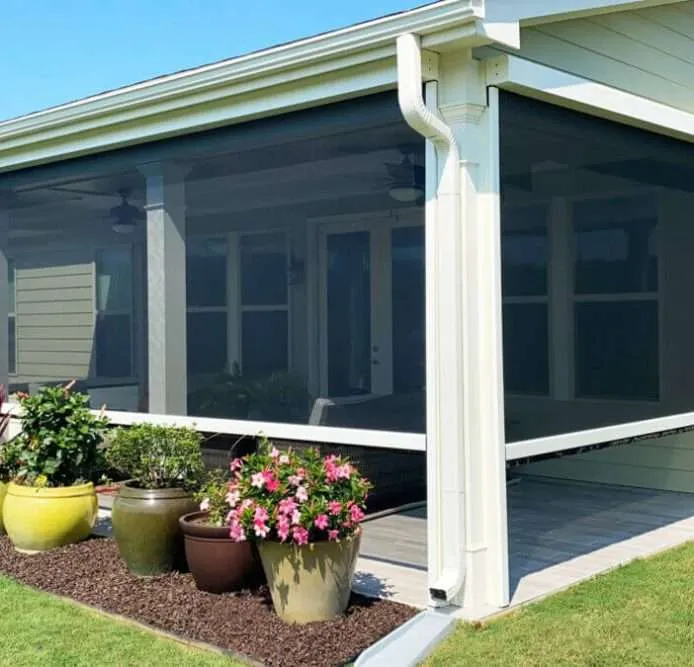
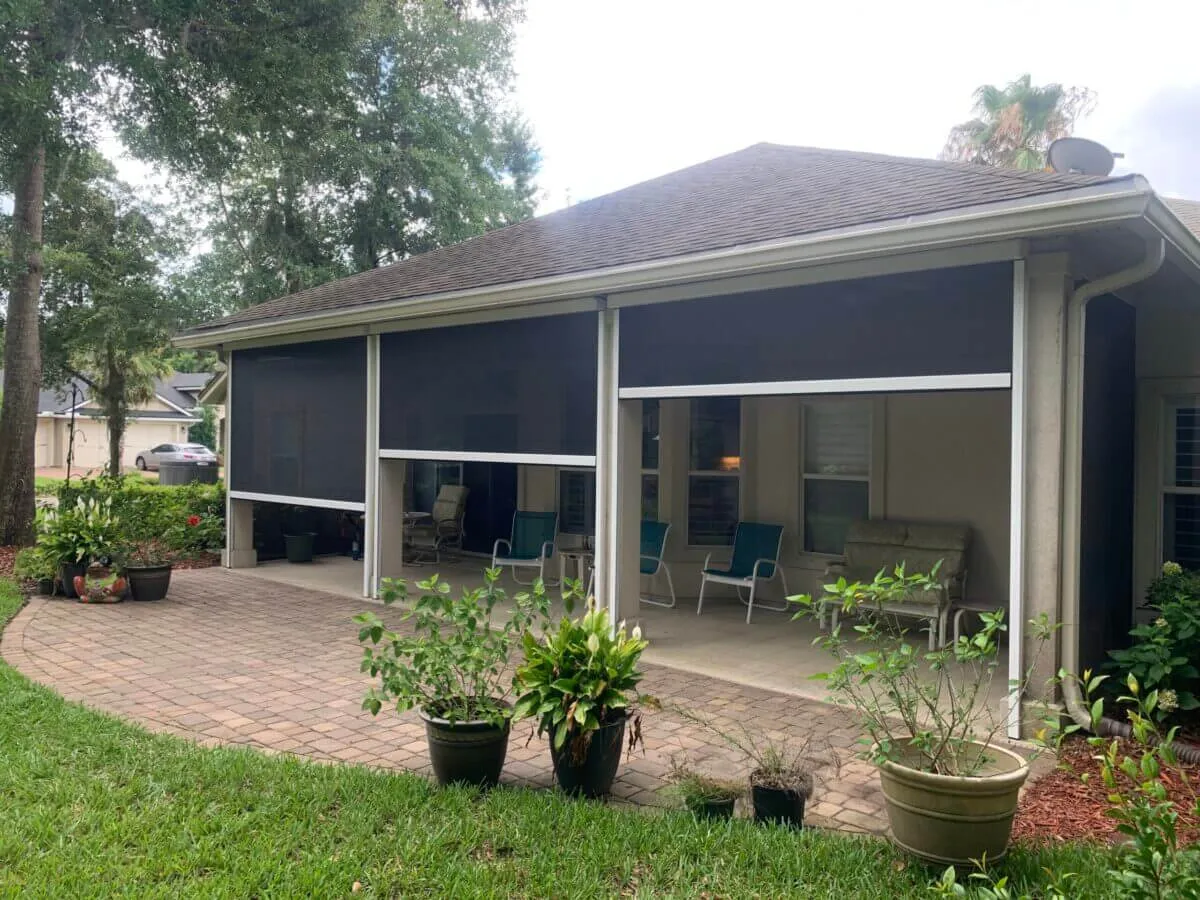
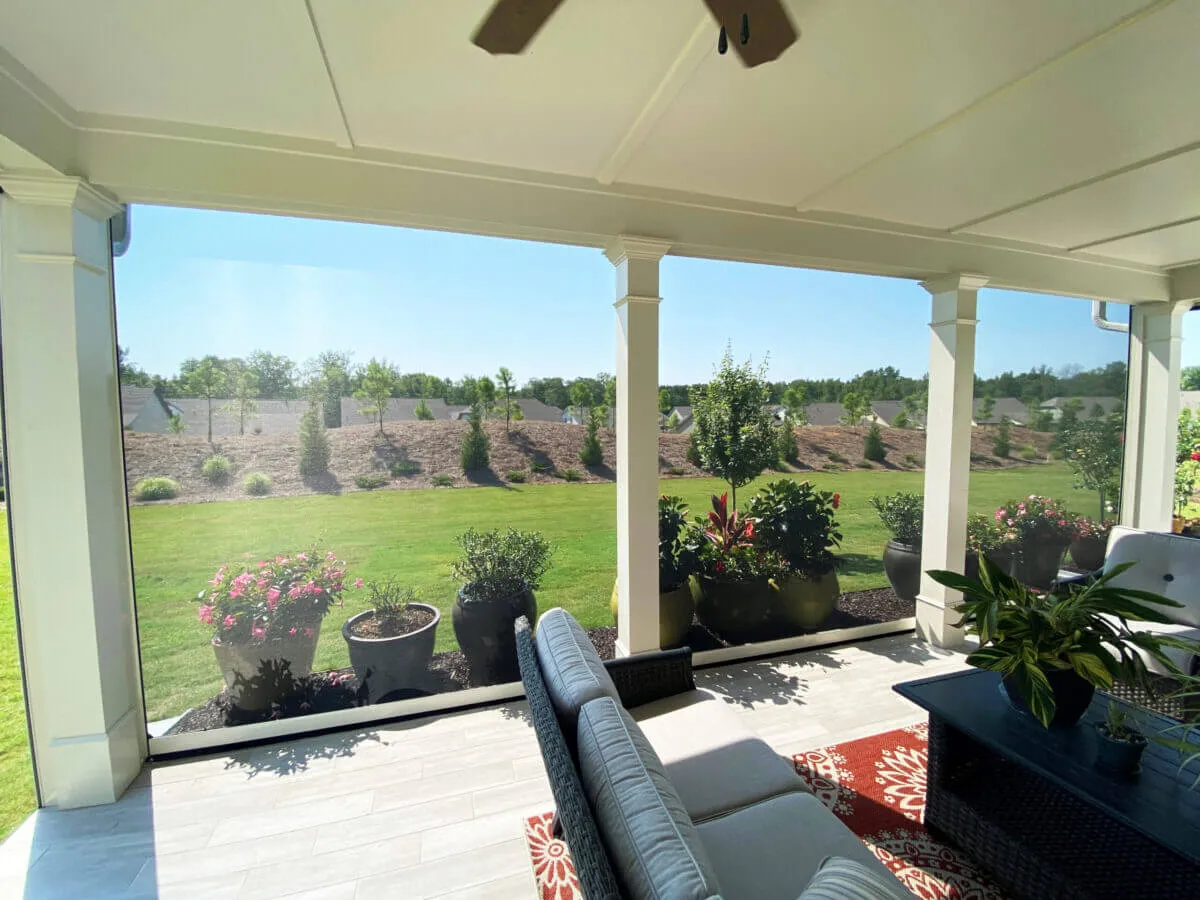
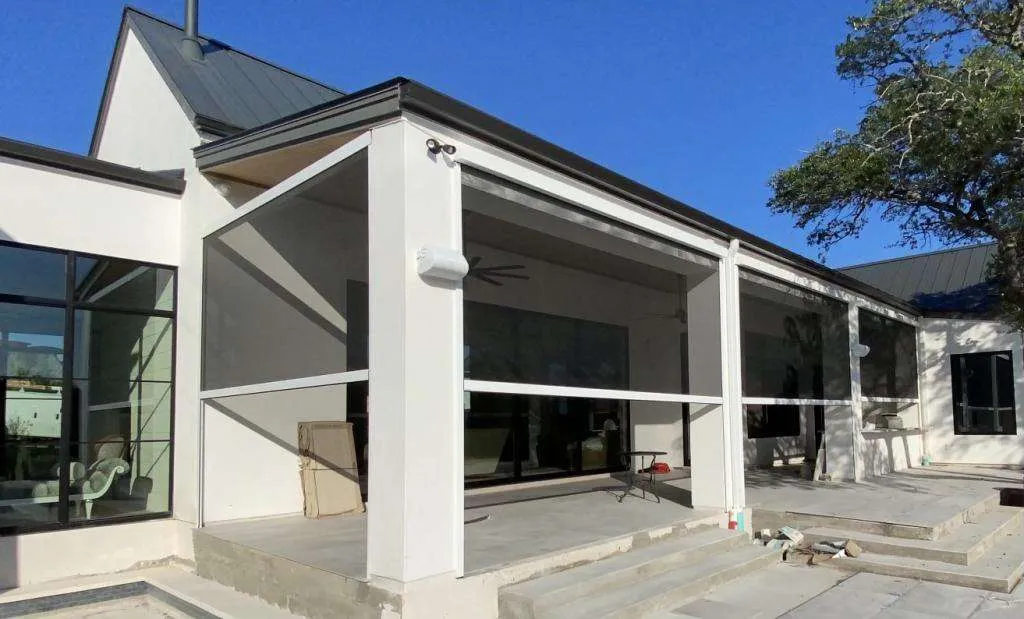
Treaty Oak Shade installs zip-track motorized insect screens across West Lake Hills properties where steep terrain and wooded corridors create unique mounting challenges. We hold SomfyPro certification and maintain an A+ BBB rating.
- 5.0 · Google reviews
- SomfyPro Certified
- Lutron Platinum Dealer
- BBB A+
What our clients say.
Best Uses for Automated Outdoor Screens
Most people think of motorized screens as patio add-ons, but the real value shows up when you’re trying to reclaim a space that’s been unusable for months. West Lake Hills properties sit in wooded corridors where mosquitoes and no-see-ums make outdoor living miserable from April through October.
Where Zip-Track Systems Perform
- Multi-Bay Porch Openings: Spans up to 24 feet without center posts
- Pool Deck Perimeters: Full enclosure with corner-post coordination and threshold seals
- Garage-to-Patio Transitions: Surface-mount cassettes integrate with existing stone or steel beams
We’ve installed screens on hillside patios where stone columns weren’t plumb and overhead beams had a two-inch crown. If your opening is more than two degrees out of square, the zipper will bind under wind load, no amount of adjustment fixes geometry.
Why West Lake Hills Homeowners Count On Us
You’ve watched your neighbor’s motorized screen tear loose during a Hill Country windstorm, and now you’re wondering if any of these systems actually hold up. We’re a Lutron Platinum Dealer and SomfyPro-certified installer, which means our motor programming and limit-switch configuration meet manufacturer warranty standards that most regional contractors skip.
Treaty Oak Shade Credentials
- Lutron Platinum Dealer with advanced motor control and scene-integration training
- A+ rating from the Better Business Bureau across residential and commercial projects
- LUXE Interiors + Design Preferred Partner for architectural shade and screen systems
- SomfyPro certification for tubular motor installation, RF pairing, and obstruction-detection logic
These credentials translate to installations that pass HOA architectural review on the first submission and systems that integrate with Control4, Crestron, or Savant without requiring a second service call. Just understand that certification doesn’t eliminate the need for annual track cleaning, neglect that, and even the best motor can’t compensate for debris binding.
Automated Screen Solutions for Every Outdoor Space
Motorized screens aren’t one-size-fits-all. The mesh count, retention method, and motor torque all shift depending on whether you’re enclosing a garage opening, a porch perimeter, or a pool deck.
Zip-track systems with 18×16 fiberglass mesh for full-height patio enclosures up to 20 feet wide.
Solar-rated PVC mesh blocks UV and heat while maintaining outward visibility on west-facing exposures.
No-see-um polyester mesh rated 20×20 or finer for Hill Country gnat and midge exclusion.
Overhead retractable canopy systems with rain-sensor automation and integrated LED lighting tracks.
Lateral-arm awnings with wind sensors that auto-retract at 20 mph to prevent fabric damage.
Aluminum louver systems with tilt control for variable shade, ventilation, and rain protection.
Understanding Retractable Screen Options and Controls
Motor torque must match fabric weight, side-track alignment must stay within two millimeters, and RF remotes need pairing to the correct channel. Miss any of those three, and you’ll have gaps, binding, or motors that stall mid-cycle.
Control and Mesh Decisions
- Mesh Count Trade-Offs: 18×16 fiberglass allows maximum airflow; 20×20 polyester blocks smaller insects
- Motor Speed Calibration: Somfy and Nice motors travel 8-12 inches per second with adjustable limits
- Smart Home Bridges: Bond Bridge or TaHoma hub enables Alexa, Google, and scene-based automation
For Jack & Elizabeth Jacobson, we’ve maintained storm shutters and screens for years, and one pattern we see consistently: clients who skip the wind sensor end up with torn fabric after the first 30 mph gust. The sensor adds cost, but it’s the only thing standing between your screen and a $1,200 fabric replacement.
What Motorized Insect Screens Cost in West Lake Hills
Installed zip-track motorized insect screens in West Lake Hills typically run $2,800-$4,500 per opening for standard residential sizes, 8 to 12 feet wide, 8 to 10 feet tall. That’s slightly higher than the Austin metro average of $2,200-$3,800, driven by hillside access challenges, irregular stone or steel mounting surfaces, and HOA documentation requirements common in this market.
What Affects the Price in West Lake Hills
- Opening Size and Span Width: Wider openings require larger motors, heavier extrusions, and sometimes intermediate support posts, all of which increase material and labor costs.
- Mesh Type and Fabric Weight: No-see-um 20×20 polyester mesh costs more than standard 18×16 fiberglass due to tighter weave and higher tensile strength requirements.
- Control Integration and Sensors: Adding wind sensors, sun sensors, or smart-home bridge modules increases upfront cost but prevents fabric damage and enables automated operation.
Every property is different. We provide fixed-price quotes after measuring your openings, evaluating substrate conditions, and confirming electrical access. No hidden fees, no change orders unless you alter the scope.
Manufacturing Standards and Automation Features
That Survive Hill Country Conditions
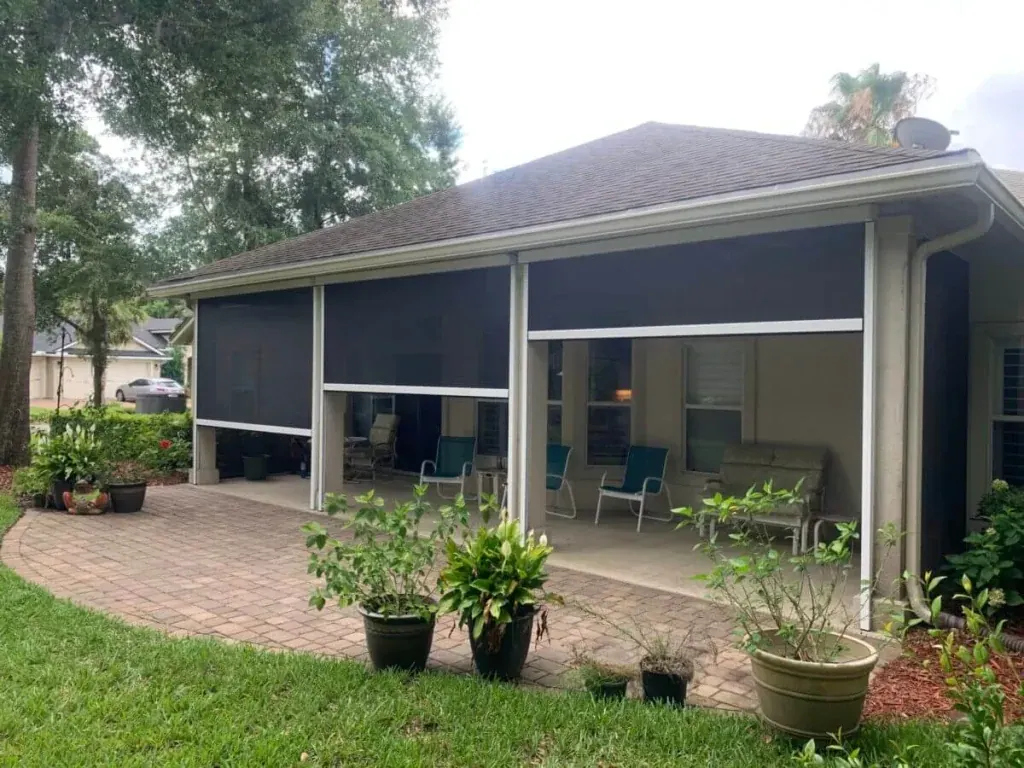
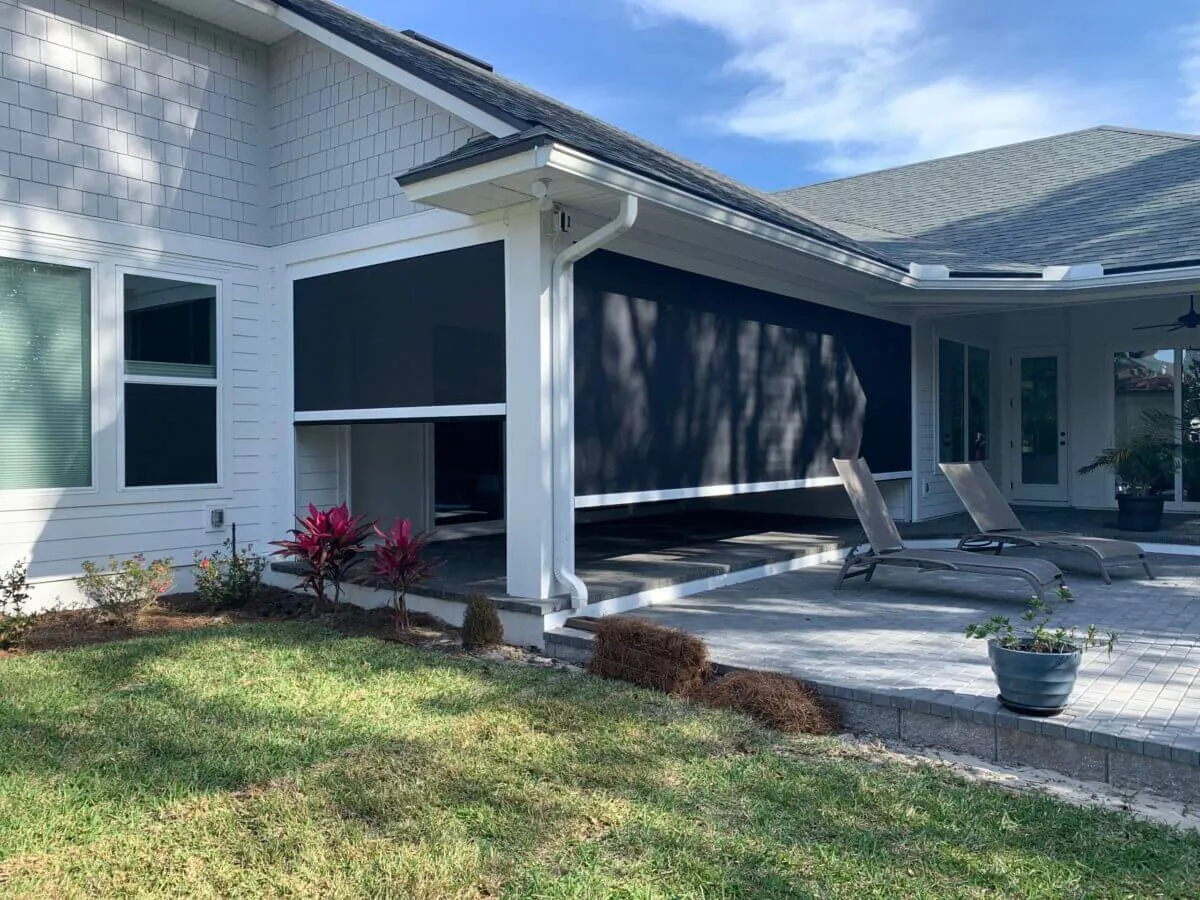
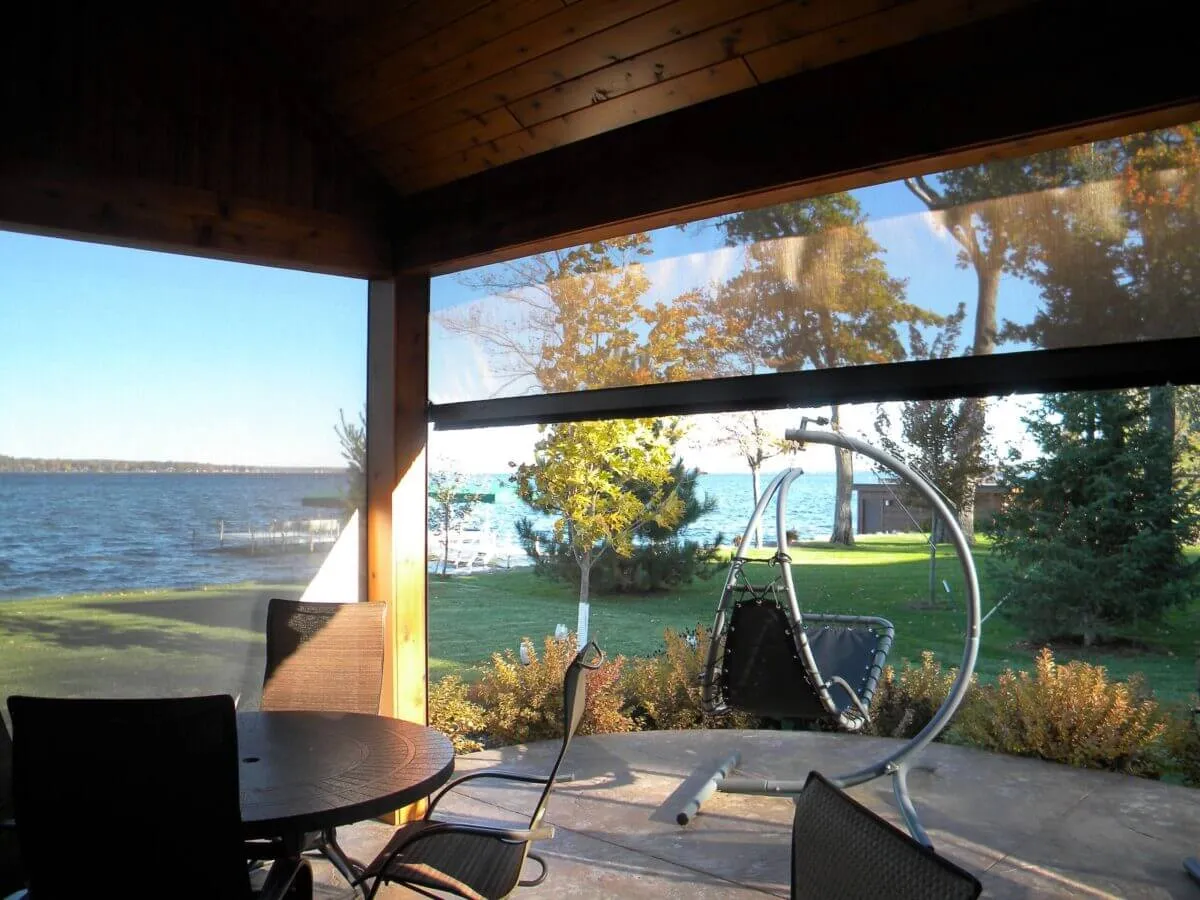
Manufacturing & Hardware Specs
- Extruded Aluminum Construction: 6063-T5 aluminum profiles provide strength, dimensional stability, and corrosion resistance.
- Weather-Resistant Hardware: 304 stainless-steel fasteners and EPDM bottom seals help protect against moisture and outdoor exposure.
- Color-Matched Powder Coating: RAL-matched finishes support durable protection and coordinated exterior design.
- Custom Cassette Sizing: Cassette profiles range from 5 to 9 inches based on fabric roll diameter, screen dimensions, and motor housing.
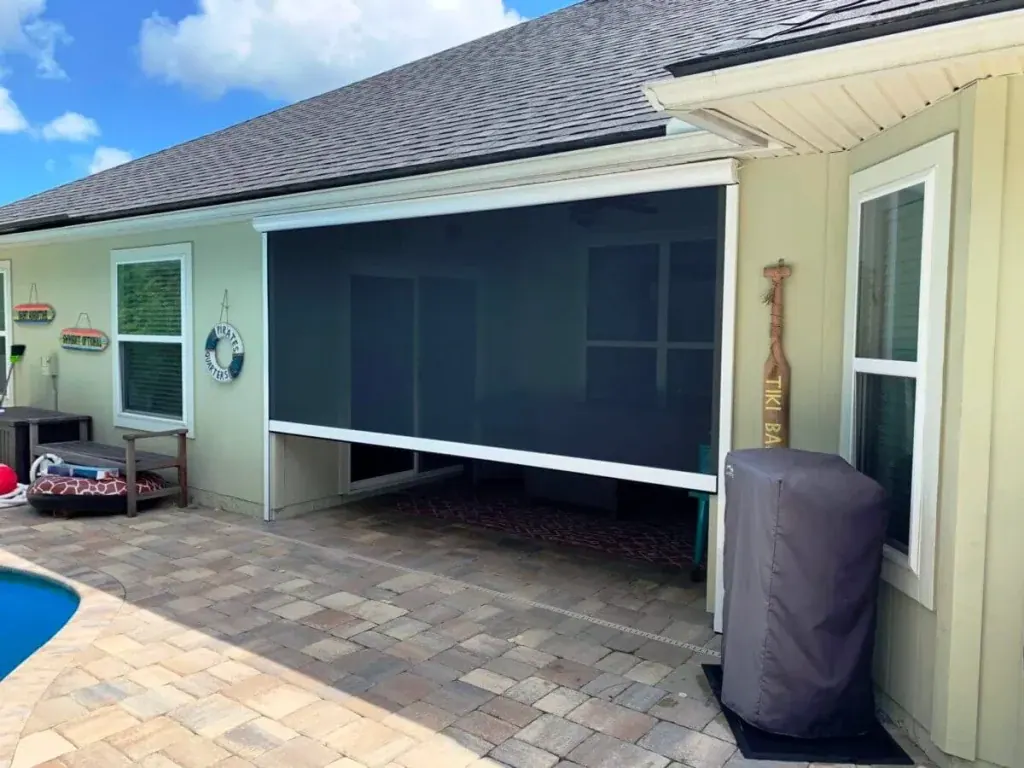
Automation & Operations Options
- Remote and Wall Controls: RF remotes with up to 100-foot range and wall-mounted keypads provide convenient operation.
- Adjustable Weather Sensors: Wind and sun sensors can deploy or retract screens when programmed thresholds are reached.
- Third-Party Integration: Dry-contact relay modules connect the system with compatible home automation platforms.
- Commissioned Control Setup: Pairing, travel limits, and backup power functions are programmed and tested during on-site commissioning.
Motorized Insect Screens Serving West Lake Hills and Surrounding Areas
Treaty Oak Shade serves homeowners throughout West Lake Hills and the surrounding Travis County corridor. Our installation team regularly works in Rollingwood, Westlake, and the Lake Austin shoreline communities where hillside properties and irregular stone facades require custom mounting solutions. We schedule site surveys and installations around your availability, including weekends for occupied homes.
Service Area
- Frequent projects in Barton Creek and Rob Roy neighborhoods with architectural review requirements.
- Clients near the Westlake Hills commercial district and Loop 360 corridor.
- Complete coverage across the greater Austin metro hillside communities.
We coordinate installation timelines to minimize disruption and work within HOA submission windows across West Lake Hills.
Frequently asked questions
What makes Treaty Oak Shade Company's motorized insect screens different from standard manual screens in West Lake Hills?
Motorized insect screens retract completely into housing when not needed and deploy at the press of a button, preserving unobstructed views. Manual screens stay fixed in place year-round, blocking sightlines even when insects aren’t active.
Treaty Oak Shade Company installs motorized systems that disappear into discreet header cassettes, so your outdoor space looks completely open when screens aren’t deployed. Manual screens create a permanent barrier that collects pollen and blocks views regardless of season. The honest answer is that most West Lake Hills clients initially hesitate at the upfront difference, then realize how often they actually want the screen gone during cooler months when bugs aren’t an issue. If your patio faces a hill country view you paid for, contact Treaty Oak Shade Company to see how retractable automation changes how you use the space.
Can motorized insect screens handle strong winds and weather conditions common in West Lake Hills?
Motorized insect screens are engineered to retract automatically when wind sensors detect unsafe conditions, protecting the mesh and motor assembly. Durability depends on proper installation tension and whether the system includes weather-responsive controls.
The mesh itself can withstand moderate wind when properly tensioned, but most automated screen systems include wind sensors that trigger retraction at specific thresholds, usually around 20 to 25 mph sustained gusts. That’s not a limitation, it’s by design. The motor housing and guide rails are built to handle rain and humidity without issue, but leaving screens deployed during a storm puts unnecessary stress on the fabric edges and the roller mechanism. One thing that catches homeowners off guard is how quickly afternoon thunderstorms can roll through the Hill Country. If you’re not home when wind picks up, a system without automated wind response will either flap aggressively or risk tearing at the mounting points.
If your outdoor space gets exposed to crosswinds or you’re in an elevated area with consistent gusts, ask your installer about adding wind and rain sensors during setup. Those inputs let the system react faster than you can, and they prevent the kind of damage that voids most warranties.
How does Treaty Oak Shade Company customize motorized insect screen controls for different outdoor spaces in West Lake Hills?
Treaty Oak Shade Company configures motorized insect screen controls based on screen placement, user access patterns, and integration with existing home automation systems. Control options range from wall switches to smartphone apps depending on how the space gets used.
Treaty Oak Shade Company approaches control customization by first mapping how you actually move through and use your outdoor areas. A poolside screen that gets raised and lowered multiple times daily needs different control placement than a screened porch that stays down all summer. We’ve found that homeowners rarely think about control location until they’re standing ten feet away from the switch with wet hands, which is why Treaty Oak Shade Company walks the space during consultation to identify where you’ll realistically be when you want to operate the screens.
Control configurations Treaty Oak Shade Company installs based on screen location and usage:
- Poolside and High-Traffic Areas: Wall-mounted switches positioned near primary entry points, often with duplicate controls at opposite ends to avoid walking around furniture or wet decking.
- Covered Patios with Smart Home Systems: Integration with existing platforms like Control4 or Lutron so screens operate alongside lighting scenes, particularly useful for evening entertaining routines.
- Remote or Hard-to-Reach Installations: Handheld remotes or smartphone app control for second-story balconies or screens that protect spaces you access infrequently but want secured against insects during events.
- Multi-Screen Configurations: Grouped control options that let you operate several screens simultaneously, common in West Lake Hills homes with wraparound porches or multiple outdoor zones that function as a single living area.
The wrong control setup turns a convenience feature into a frustration point. Treaty Oak Shade Company has seen homeowners default to leaving screens down permanently because the switch location made operation inconvenient, which defeats the purpose of motorization. If you’re planning motorized screens for a West Lake Hills property and want control placement that matches how you’ll actually use the space, Treaty Oak Shade Company can map options during a site visit that accounts for furniture layout, traffic flow, and existing automation infrastructure.
What maintenance do motorized insect screens require after installation in West Lake Hills?
Motorized insect screens need occasional cleaning of mesh fabric and track channels, plus annual motor inspection to prevent binding. Maintenance frequency depends on exposure to pollen, dust, and how often the screens cycle up and down.
The mesh itself needs periodic rinsing to remove pollen buildup, which is heavy in West Lake Hills during cedar and oak season. Track channels collect debris that can cause binding if screens retract while leaves or twigs are stuck in the guide path. One thing that catches homeowners off guard is how much faster screens wear when they’re cycled multiple times daily compared to leaving them down for weeks at a stretch. The motor housing should be checked annually for loose mounting hardware or frayed wiring connections. If the screen hesitates or makes grinding sounds during operation, debris is usually wedged in the side rails and needs clearing before the fabric tears.
Can motorized insect screens be integrated with existing smart home systems in West Lake Hills properties?
Motorized insect screens integrate with most smart home platforms through compatible controllers and bridge devices. Integration quality depends on the motor type and whether the system supports Z-Wave, Zigbee, or WiFi protocols.
Most motorized screen systems can connect to smart home ecosystems, though the path varies depending on what you’re already running. If you’ve got a home automation hub like Control4, Crestron, or Savant, integration is typically straightforward since these platforms expect to talk to motorized shading devices. For consumer systems like Alexa, Google Home, or Apple HomeKit, you’ll need a motor that either speaks their language natively or uses a compatible bridge device to translate commands. The honest answer is that not every motor manufacturer prioritizes every protocol, so matching your screen motor to your existing setup matters more than most installers admit upfront. A Z-Wave motor works beautifully if your hub supports it. It’s invisible to your system if it doesn’t.
The integration itself usually involves pairing the motor controller during installation and creating automation scenes or routines within your smart home app. Voice control, scheduled operation, and sensor triggers (like wind or temperature) become available once the connection is stable. If seamless smart home operation matters to your household, confirm protocol compatibility before the screens are ordered rather than discovering the gap after installation.
Ready For a Quote?
Schedule Your West Lake Hills Screen Installation Survey
Most hillside patios need custom measurements and substrate evaluation before we can quote accurately. We’ll visit your property, assess mounting surfaces, verify electrical access, and walk you through mesh and control options. No pressure, no upsells, just a clear plan and a fixed price.
- 5.0 · Google reviews
- SomfyPro Certified
- Lutron Platinum Dealer
- BBB A+
Call the workshop
Mon–Fri · 8a–5p CT · Austin, TX
Prefer to talk it through? Calls are answered by the same team that builds your quote — no call centers, no gatekeepers.

Custom exterior shades, motorized patio screens, awnings, and interior window treatments for Austin and Central Texas.
How To Contact Us
- (512) 939-3446
- 15218 Nightingale Ln,
Austin, TX 78734 - By Appointment Only
Monday - Friday 8 AM - 5 PM