Bee Cave Motorized Retractable Awnings Built for Wind-Load Performance
Treaty Oak Shade installs motorized retractable awnings across Bee Cave, anchoring lateral-arm systems to masonry and wood substrates with chemically bonded fasteners and ASCE 7 load calculations. Every motor pairs with wind sensors and carries SomfyPro certification.
- 5.0 · Google reviews
- SomfyPro Certified
- Lutron Platinum Dealer
- BBB A+

What our clients say.
How Do You Find the Best Motorized Retractable Awnings?
Most awning failures in the Hill Country trace back to under-spec’d anchors or motors without torque headroom. We’ve found that substrate matters more than projection, a twelve-foot cassette on hollow-core block needs epoxy rods into the structural backup, not toggle bolts into veneer.
What Separates a Reliable Install
- Anchor Selection by Substrate: Epoxy-bonded threaded rod for masonry, lag screws into doubled headers for wood
- Motor Torque Profile: Somfy io motors rated 15–30 Nm handle fabric tension without stalling mid-cycle
- Wind Sensor Pairing: Eolis 3D motion sensors auto-retract before gusts exceed the frame’s rated threshold
For Samuel Hartman, we mounted a fourteen-foot cassette to limestone veneer, drilled past the façade into poured concrete, and set stainless rods with Hilti epoxy. The honest limitation: no awning should stay extended in sustained winds above twenty-five miles per hour, sensor or not.
Why Bee Cave Homeowners Count On Us
You’re comparing three quotes, all promising “premium” motors and lifetime warranties, yet none explain what happens when a gust hits forty miles per hour during installation week. We’ve seen homeowners inherit systems with sensors wired backward or cassettes mounted to brick veneer instead of structural backup.
Treaty Oak Shade Credentials
- A+ rating with the Better Business Bureau for customer satisfaction and dispute resolution
- Lutron Platinum Dealer status for advanced lighting and shade automation integration
- LUXE Interiors + Design Preferred Partner recognized for high-end residential installations
- SomfyPro certification for motor programming, limit calibration, and RTS/io protocol support
These credentials mean every awning leaves with documented anchor loads, paired sensors, and a warranty registered to your address. You get a system built to code, not just bolted up.
Shade Solutions Across Bee Cave Outdoor Spaces
Not every shade problem calls for a retractable awning. Sometimes a motorized screen drops bugs without blocking breeze; other times a fixed louver roof makes more sense than fabric that retracts twice a day. We’ve learned to ask what’s driving you indoors before recommending hardware.
Zip-guided mesh tracks that drop vertically to seal patios against mosquitoes and wind-blown debris.
Solar fabrics mounted outside windows to reject heat before it hits glass, reducing HVAC load.
Retractable fiberglass or polyester mesh for doorways and openings, operated by tubular motors.
Fixed-frame fabric or polycarbonate roofs with optional side screens for year-round use.
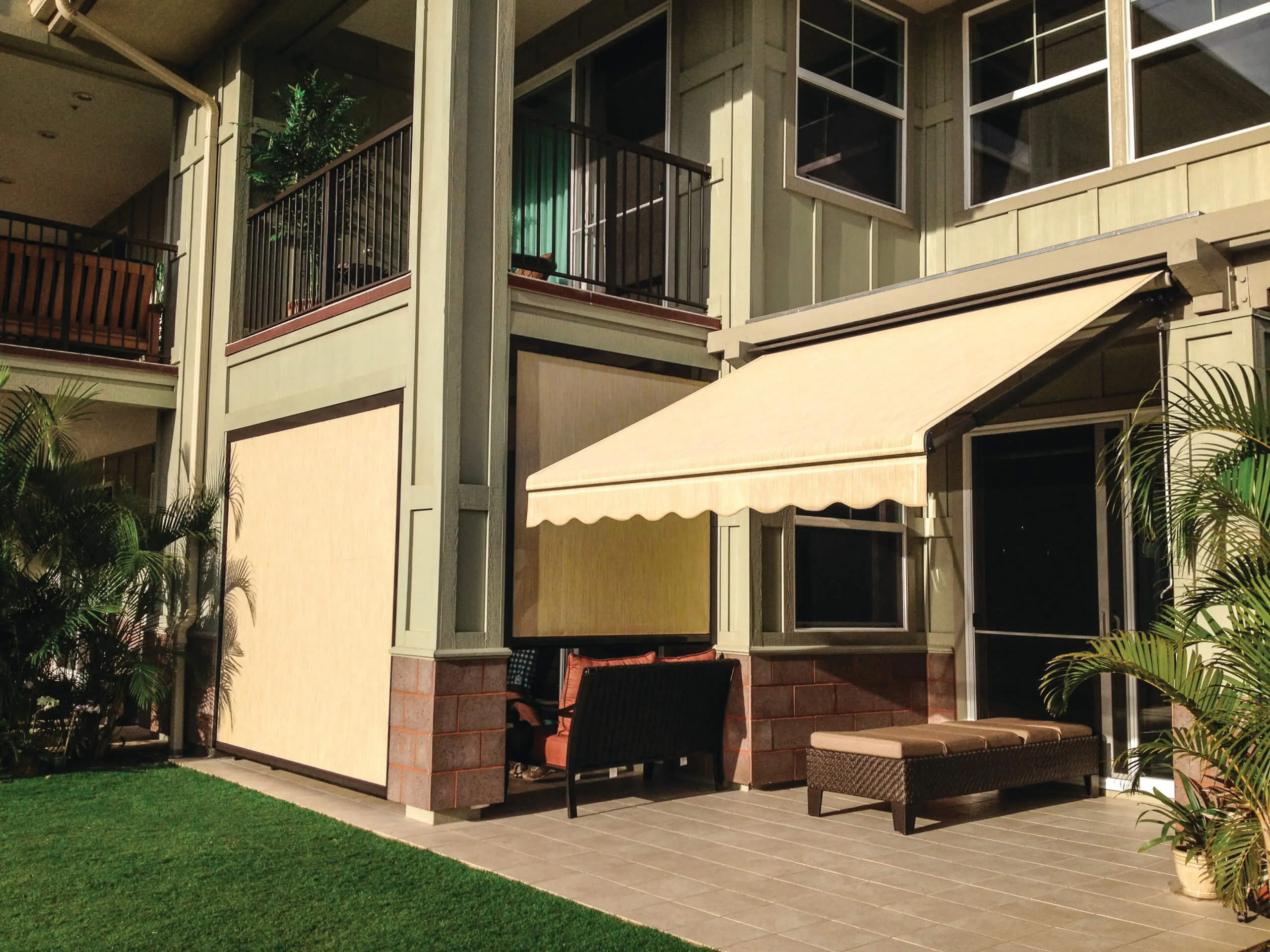
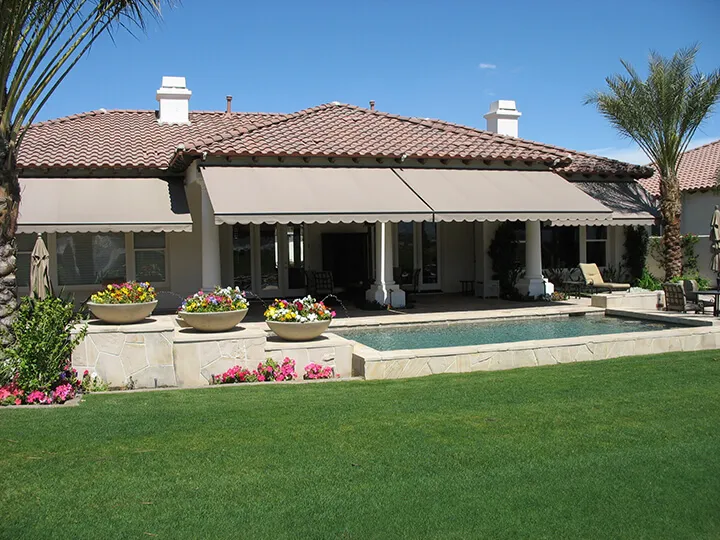
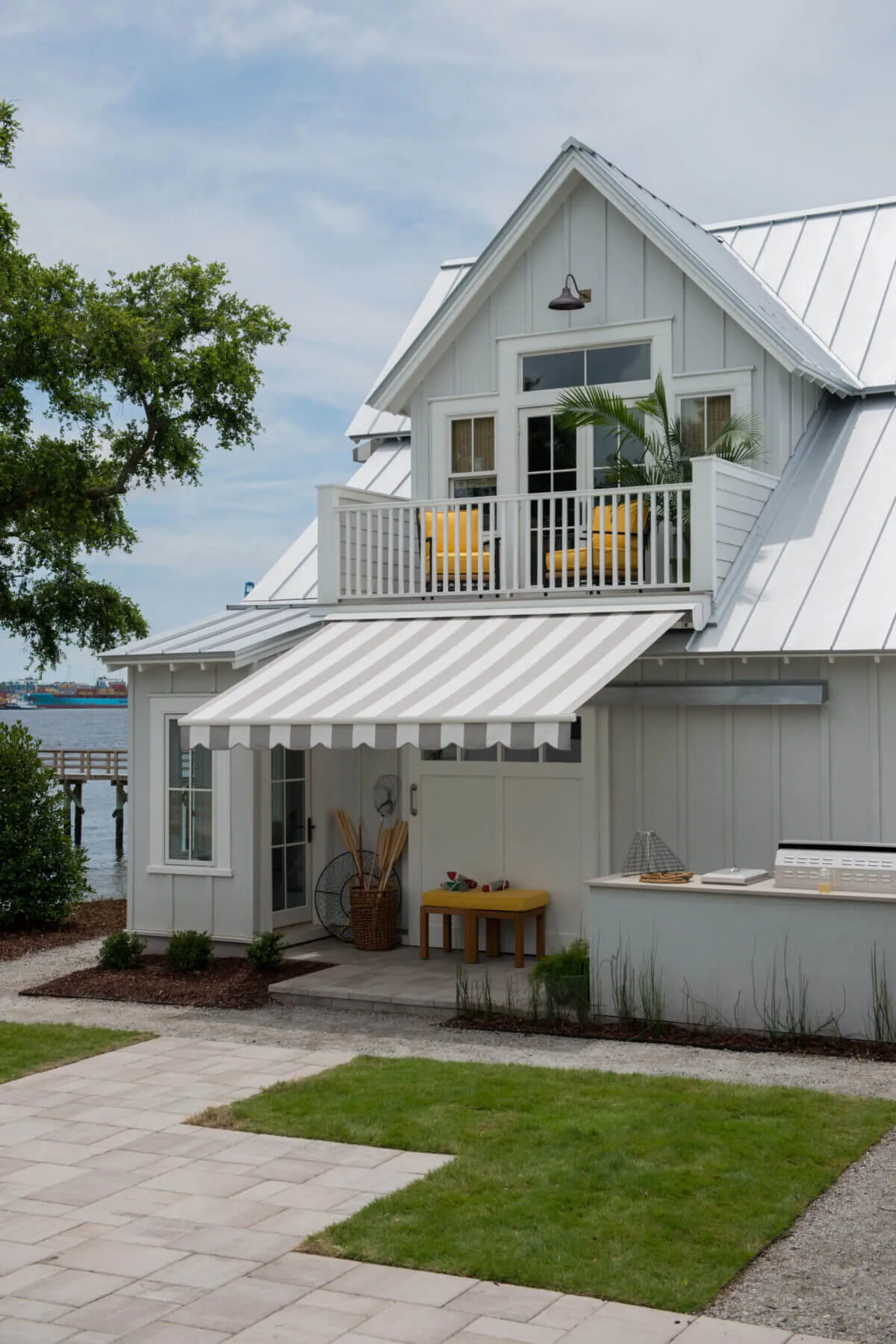
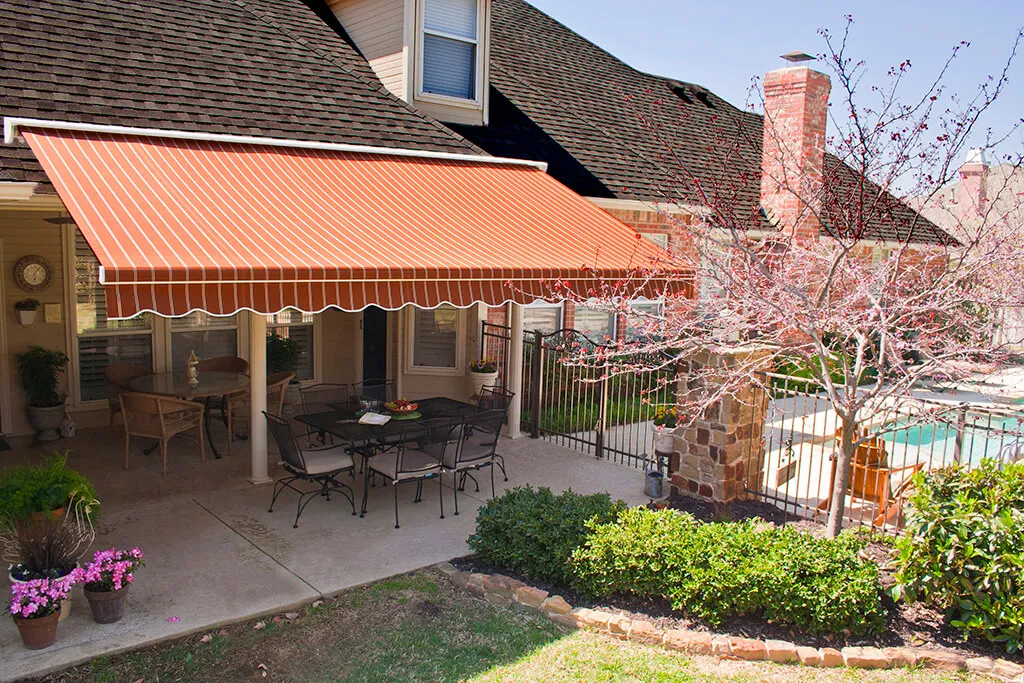
Lateral-arm cassette or semi-cassette systems that extend up to thirteen feet for deck and patio shade.
Aluminum slat roofs that tilt open or closed, shedding rain while allowing breeze and light control.
What to Expect During Your First Visit?
We show up with a laser measure, fabric samples, and a drill to test your mounting surface. First step: confirm the wall can hold the load. Second: measure sun angles at the time you’ll actually use the space. Then we talk motors, sensors, and whether your existing Wi-Fi reaches the patio.
Site Assessment Checklist
- Solar Path Analysis: We map shade coverage at peak hours to size projection and pitch
- Substrate Verification: Stud finder and drill test confirm wood framing, masonry, or steel backup
- Clearance Measurements: Doors, windows, and ceiling fans must clear the retracted cassette by six inches
- Electrical Route Planning: GFCI receptacle location or conduit path for hardwired motors per NEC 210.8
For Jack & Elizabeth Jacobson, we’ve handled annual maintenance on storm shutters for years, Will and Ashton arrive on time, check hardware torque, and leave no mess. One pattern we see: clients who skip the pitch-adjustment step end up with pooling water that stains the valance within two seasons.
What Motorized Retractable Awnings Cost in Bee Cave
Installed motorized retractable awnings in Bee Cave typically run $2,500 to $8,000 for ten- to sixteen-foot widths, slightly above Austin averages due to higher material freight costs and HOA compliance documentation. The main factor is cassette type and fabric grade, full enclosures with Sunbrella cost more than open-roll systems with generic acrylic.
What Affects the Price in Bee Cave
- Projection and Width: Wider spans require heavier torsion bars and higher-torque motors, adding four hundred to twelve hundred dollars per linear foot beyond standard sizes.
- Substrate Complexity: Masonry veneer over hollow block demands epoxy anchors and structural backing verification, increasing labor by three to six hours compared to wood-frame installs.
- Automation and Sensors: Somfy io motors with TaHoma hubs, wind sensors, and smart-home integration add six hundred to fifteen hundred dollars over basic RTS remotes.
Quotes vary by fabric choice, sensor count, and electrical routing. We provide itemized estimates after the site visit, breaking out motor, fabric, and anchor costs separately.
Manufacturing Standards and Automation Options
Motorized Retractable Awnings
Manufacturing & Hardware Specs
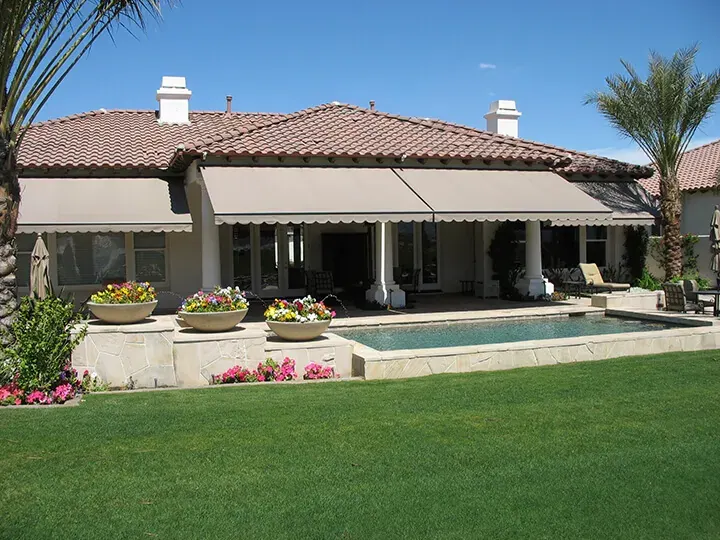
- Powder-Coated Aluminum Frames: AAMA 2604-compliant finishes help resist UV exposure, corrosion, fading, and outdoor wear.
- Corrosion-Resistant Fasteners: Stainless-steel 304 hardware helps prevent rust staining on limestone, stucco, and masonry surfaces.
- Tested Fabric Strength: Awning fabrics are evaluated under ASTM D5034 for tensile performance and long-term durability.
- Reinforced Fabric Seams: Heat-welded or lock-stitched seams are selected according to fabric type, weight, and system design.
Automation & Operations Options
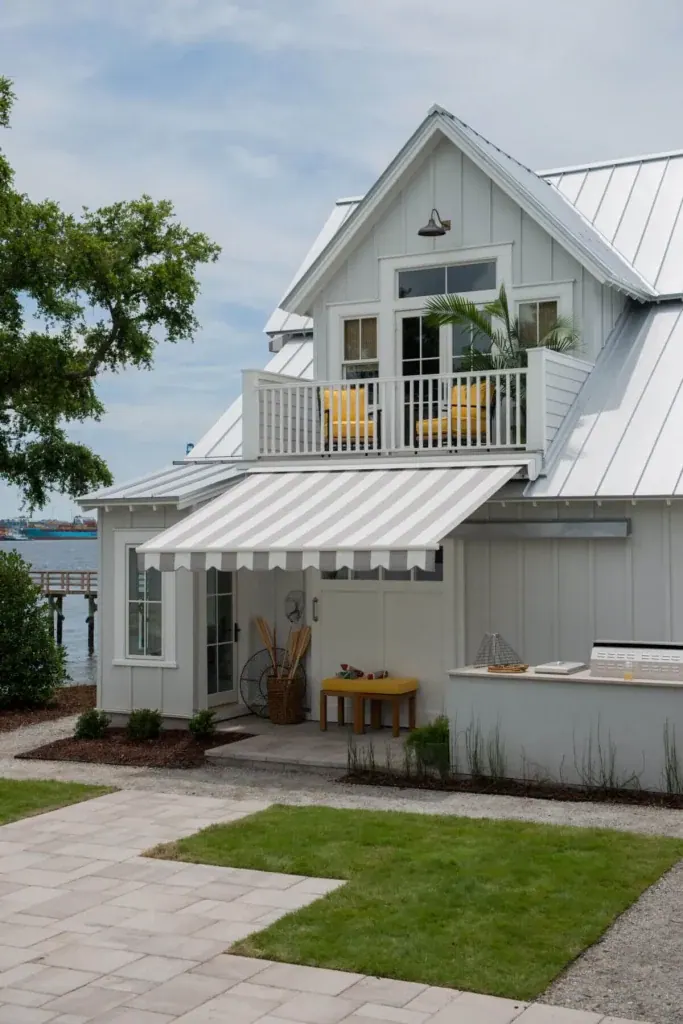
- Somfy Motor Controls: RTS and compatible Somfy motors provide reliable extension, retraction, and positioning.
- Smart Home Integration: TaHoma, Bond Bridge Pro, Control4, and Lutron support app control, scenes, and voice commands.
- Wind and Sun Sensors: Eolis 3D and Sunis sensors can automatically retract or extend the awning as conditions change.
- Manual Override Operation: Integrated hand cranks provide backup control during power outages or system interruptions.
Motorized Retractable Awnings Serving Bee Cave and Surrounding Areas
Treaty Oak Shade serves residents throughout Bee Cave and the surrounding Hill Country corridor. Our team regularly travels to Westlake Hills, Lakeway, and the Barton Creek area, scheduling site visits around your availability. We coordinate delivery and installation timelines to match permit approvals and weather windows, with flexible morning and afternoon slots.
Service Area
- Frequent installations near Spanish Oaks and Flintrock Falls communities west of Highway 71.
- Clients along the Lake Travis shoreline and Bee Cave Road commercial district.
- Full coverage across Travis County and the greater Austin metro area.
We handle scheduling across Bee Cave and neighboring communities, with same-week site visits available most months.
Frequently asked questions
What controls do motorized retractable awnings typically include?
Motorized retractable awnings operate via wall switches, wireless remotes, or smartphone apps that trigger the motor to extend or retract the fabric. Control complexity depends on whether you want basic open/close functionality or integration with smart home systems and wind sensors.
Most installations come with a wall-mounted switch and a handheld remote. The switch stays near the door for quick access. The remote lets you adjust the awning from anywhere in the yard without walking back inside. Some models sync with home automation platforms, letting you program schedules or link to weather sensors that automatically retract the awning when wind speed hits unsafe levels. If you’re adding smart features later, confirm the motor supports aftermarket integrations before installation.
How does Treaty Oak Shade Company handle motorized retractable awning installations on challenging Bee Cave properties?
Treaty Oak Shade Company adapts motorized awning installations to sloped terrain, limestone foundations, and irregular rooflines common in Bee Cave by custom-mounting hardware and routing wiring through existing structures. Installation complexity increases when electrical access is limited or fascia reinforcement is needed.
Treaty Oak Shade Company approaches every Bee Cave installation by first assessing what the structure actually offers for secure mounting. Many homes here sit on sloped lots with stone or stucco exteriors that require different anchor types than standard wood fascia. We’ve worked through plenty of situations where the ideal awning placement sits above a window line with no attic access, which means surface conduit or creative routing through exterior walls. Limestone veneer and older masonry often need pre-drilling with carbide bits to avoid cracking, and some older homes have fascia boards that won’t support the lateral load of a fully extended awning without adding blocking behind the mount points. The wiring path matters more than most people expect. Running low-voltage control wire from the motor to a wall switch sounds simple until you hit a fireblock or discover the interior wall cavity is filled with blown insulation.
If your Bee Cave property has unusual architecture, steep grades, or limited electrical access, Treaty Oak Shade Company can walk the site and show you exactly where the mounting points will go and how we’ll route the wiring before any work starts.
What maintenance requirements should Bee Cave homeowners expect after motorized retractable awning installation?
Motorized retractable awnings need periodic fabric cleaning, motor lubrication checks, and sensor calibration to maintain smooth operation. Maintenance frequency depends on exposure levels, with south-facing installations requiring more frequent attention than shaded locations.
After dozens of installations across Bee Cave properties, one pattern shows up consistently: homeowners who treat motorized awnings like permanent fixtures run into avoidable problems within two years. The motor components and fabric respond differently to Hill Country weather than fixed structures, and the retraction mechanism introduces wear points that don’t exist on stationary awnings. Most maintenance tasks take minutes rather than hours, but skipping them entirely tends to result in premature motor replacement or fabric degradation that could have been prevented with basic attention.
Maintenance Tasks That Actually Extend Service Life:
- Fabric Surface Cleaning: Rinse accumulated pollen and dust every four to six weeks using a garden hose, as embedded debris accelerates UV breakdown and can stain permanently during summer heat.
- Motor Housing Inspection: Check for moisture intrusion or insect nesting twice yearly, particularly after heavy rain periods, since even small amounts of water can corrode electrical connections inside sealed housings.
- Wind Sensor Calibration: Test automatic retraction thresholds each spring, as sensor drift can cause the awning to either retract too aggressively during mild breezes or fail to retract during actual wind events.
- Track and Arm Lubrication: Apply silicone-based lubricant to pivot points and guide rails annually, avoiding petroleum products that attract dirt and create sticky residue that binds moving parts over time.
The honest reality is that most service calls we handle stem from deferred maintenance rather than component failure. A motor that stops mid-cycle usually has debris in the track or corroded limit switches, not a burned-out motor. If your awning is showing sluggish retraction, uneven fabric tension, or inconsistent sensor response, a maintenance visit can typically restore full function without replacement parts.
What size motorized retractable awning works best for a typical Bee Cave patio?
Most Bee Cave patios accommodate awnings between 10 and 16 feet wide, depending on door width and desired coverage area. Proper sizing requires measuring the mounting surface, clearance zones, and accounting for sun angle during peak afternoon heat.
Awning width should extend at least 18 inches beyond each side of the door or window you’re shading, while projection (how far it extends outward) varies from 8 to 12 feet based on how much outdoor space you want protected. One thing that catches homeowners off guard is that a wider awning doesn’t always mean better coverage, especially if your patio faces southwest and the late afternoon sun comes in at a sharp angle. In those cases, deeper projection matters more than width. If your outdoor furniture layout or grill station sits farther from the house, request an on-site measurement so the awning actually covers where you spend time, not just the door threshold.
What should Bee Cave homeowners expect during their first consultation with Treaty Oak Shade Company about motorized retractable awnings?
Treaty Oak Shade Company’s initial consultation assesses your outdoor space dimensions, sun exposure patterns, and structural mounting points to recommend appropriate motorized awning configurations. Accurate site evaluation prevents installation complications and ensures proper awning function.
The first visit from Treaty Oak Shade Company focuses on understanding how your outdoor space actually functions throughout the day, not just measuring square footage. We walk the property to observe where afternoon sun creates the most heat buildup, identify which walls or beams can support motorized hardware without requiring reinforcement, and note obstacles like ceiling fans or lighting fixtures that affect awning clearance. Homeowners who assume any covered patio can accommodate a retractable system sometimes discover that fascia boards need backing or that electrical routing requires conduit work. We document these conditions upfront so the installation estimate reflects real-world requirements, not best-case assumptions.
Treaty Oak Shade Company provides a written summary after the site visit that includes recommended awning dimensions, fabric options suited to your sun exposure, and any prep work needed before installation. If your patio presents structural questions or requires custom electrical planning, we’ll walk you through those specifics so there are no surprises when the crew arrives.
Ready For a Quote?
Ready to Add Shade and Automation to Your Bee Cave Patio?
We’ll measure your space, verify substrate, and walk you through fabric and motor options in one visit. Every quote includes anchor specs, sensor pairing, and a timeline from order to final calibration. Call today to schedule your site assessment.
- 5.0 · Google reviews
- SomfyPro Certified
- Lutron Platinum Dealer
- BBB A+
Call the workshop
Mon–Fri · 8a–5p CT · Austin, TX
Prefer to talk it through? Calls are answered by the same team that builds your quote — no call centers, no gatekeepers.
Custom exterior shades, motorized patio screens, awnings, and interior window treatments for Austin and Central Texas.
How To Contact Us
- (512) 939-3446
- 15218 Nightingale Ln,
Austin, TX 78734 - By Appointment Only
Monday - Friday 8 AM - 5 PM