
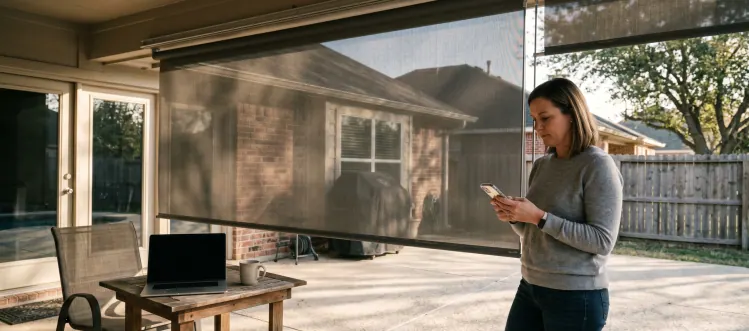
Smart home compatibility drives 73% of motorized shade purchases today. Remote work transformed patios into essential outdoor offices.
You've probably noticed more and more patios in your neighborhood sporting sleek motorized shades that glide up and down with the touch of a button. What started as a luxury feature for high-end homes has exploded into mainstream popularity, with smart home integration driving nearly three-quarters of all purchases. The shift isn't just about convenience, it's about how we use our outdoor spaces in completely new ways.
The motorized patio shades popularity surge reflects deeper changes in how Americans live and work. Remote work transformed patios into outdoor offices, energy costs pushed homeowners toward automated efficiency solutions, and smart home technology made seamless control irresistible. Understanding these driving forces helps explain why your neighbors are investing thousands in what used to be considered an optional upgrade, and why you might want to consider joining them.
Key Takeaways
- Smart Integration: Voice control and app-based scheduling make motorized shades essential components of modern connected homes, not just window coverings.
- Remote Work Impact: Home offices extending to patios created demand for precise light control and glare reduction throughout traditional work hours.
- Hidden Costs: Manual shade maintenance, fabric replacement, and energy inefficiency often cost more than motorized systems over five years of ownership.
- Battery Advantages: Wireless motors eliminate electrical work, reduce installation costs, and provide backup power during outages for consistent operation.
- Neighborhood Effect: Early adopters drive local demand as neighbors witness daily convenience benefits and property value increases firsthand.
Why Smart Home Integration Drives 73% of Modern Motorized Shade Purchases
The explosion in smart home technology has fundamentally changed how homeowners think about every component of their living space. Motorized patio shades aren't just window coverings anymore, they're integral parts of connected ecosystems that respond to weather, time of day, and occupancy patterns. When your shades automatically lower as the afternoon sun hits your west-facing patio, or retract when rain sensors detect an incoming storm, you're experiencing the seamless integration that drives purchase decisions.
Voice control through Alexa, Google Assistant, or Apple HomeKit has made motorized shades accessible to homeowners who never considered automation before. The ability to say 'close the patio shades' while your hands are full with groceries or kids eliminates the friction that kept many people using manual solutions. Integration with existing smart thermostats, lighting systems, and security cameras creates scenarios where shades adjust automatically based on occupancy, temperature, or time-based schedules.
Integration Benefits
- Voice Commands: Hands-free operation through Alexa, Google, or Siri eliminates the need to find remotes or walk to control panels.
- Automated Schedules: Shades adjust based on sunrise, sunset, or custom times to optimize comfort and energy efficiency without daily intervention.
- Weather Response: Built-in sensors retract shades during high winds or storms, protecting fabric and hardware from damage automatically.
- Security Integration: Shades can simulate occupancy when you're away, raising and lowering on random schedules to deter potential intruders.
- Energy Optimization: Smart thermostats trigger shade adjustments to reduce cooling loads during peak sun hours, lowering electricity bills significantly.
The integration possibilities extend far beyond basic up-and-down control. Homeowners report that once they experience automated shade management, manual operation feels primitive and inconvenient. This 'smart home gateway effect' often leads to additional automation purchases, making motorized shades an entry point into broader home technology ecosystems that increase property value and daily convenience.
The Hidden Cost That Catches Most Homeowners Off Guard After Installation
Most homeowners focus on upfront installation costs when comparing motorized versus manual patio shades, completely overlooking the ongoing expenses that manual systems generate over their lifetime. Manual shades require frequent fabric adjustments, hardware maintenance, and eventual component replacement due to wear from daily operation. The crank mechanisms, pulleys, and mounting hardware in manual systems experience constant stress, leading to repairs that can cost hundreds of dollars annually.
Energy inefficiency represents the largest hidden cost of manual shade operation. Without automated scheduling, most homeowners forget to lower shades during peak sun hours, allowing solar heat gain that forces air conditioning systems to work harder. Studies show that properly timed exterior shading can reduce cooling costs by 20-30%, but manual systems rarely achieve optimal timing consistency because human behavior is inherently inconsistent.
Cost Factors
- Manual Maintenance: Crank mechanisms require lubrication, adjustment, and eventual replacement every 3-5 years, costing $150-300 per incident.
- Fabric Stress: Manual operation creates uneven tension that leads to premature fabric wear, requiring replacement 2-3 years earlier than motorized systems.
- Energy Waste: Inconsistent shade timing increases cooling costs by $200-500 annually compared to automated systems with optimal scheduling.
- Labor Costs: Professional maintenance visits for manual hardware adjustments cost $100-200 per service call, typically needed twice yearly.
- Opportunity Cost: Time spent manually adjusting shades throughout the day adds up to 20-30 hours annually of lost productivity.
When homeowners calculate total cost of ownership over 10-15 years, motorized systems often cost less than manual alternatives despite higher upfront investment. The combination of reduced maintenance, energy savings, and eliminated labor creates a compelling financial case that many don't discover until after living with manual shades for several years and experiencing the frustrations firsthand.
How Remote Work Changed Everything About Motorized Shade Demand
The shift to remote work didn't just change where people worked, it fundamentally altered how they used their homes and particularly their outdoor spaces. Patios that were once purely recreational areas became extensions of home offices, creating new demands for precise light control, glare reduction, and environmental management throughout traditional business hours. Modern home design now considers outdoor workspaces as essential as indoor offices, driving demand for professional-grade shade solutions.
Video conferencing from patio offices requires consistent lighting conditions that manual shades simply can't provide. The ability to make micro-adjustments throughout the day, responding to changing sun angles and cloud cover, became essential for maintaining professional appearance during virtual meetings. Motorized shades allow remote workers to optimize their environment without interrupting calls or losing focus, creating the controlled conditions necessary for productive outdoor work sessions.
Here's how remote work requirements compare between manual and motorized shade systems:
| Feature | Manual Shades | Motorized Shades |
|---|---|---|
| Mid-call adjustments | Disruptive noise | Silent operation |
| Light consistency | Manual monitoring required | Automated tracking |
| Response time | 30+ seconds | 5-10 seconds |
| Precision control | Limited positions | Infinite positioning |
| Multi-zone management | Individual operation | Synchronized control |
Work Requirements
- Glare Control: Automated adjustments eliminate screen glare during video calls, maintaining professional appearance without manual intervention during meetings.
- Consistent Lighting: Precise positioning creates even lighting conditions that enhance video quality and reduce eye strain during long work sessions.
- Noise Reduction: Quiet motorized operation doesn't disrupt conference calls, unlike manual cranking mechanisms that create background noise.
- Temperature Management: Automated sun tracking keeps outdoor offices comfortable throughout the day, extending usable work hours significantly.
- Professional Image: Smooth, controlled shade operation maintains a polished backdrop for client video calls and virtual presentations.
The remote work revolution created a permanent shift in how homeowners value outdoor spaces, with many willing to invest significantly in features that support productivity and comfort. This trend shows no signs of reversing, as hybrid work models continue to emphasize the importance of flexible, comfortable home environments that can adapt to both professional and personal needs throughout the day.
Why Battery-Powered Motors Are Actually Superior for Most Patios
The assumption that hardwired motors are superior to battery-powered systems represents one of the biggest misconceptions in the motorized shade industry. Battery technology has advanced dramatically, with modern lithium-ion systems providing 6-12 months of operation per charge while eliminating the electrical work, permits, and installation complexity that hardwired systems require. For most residential patio applications, battery motors offer superior value and performance.
Installation flexibility gives battery-powered systems a significant advantage in retrofit situations where running electrical wiring would be expensive or disruptive. The ability to mount shades anywhere without considering proximity to electrical outlets opens up design possibilities that hardwired systems simply can't match. Professional installers consistently report faster, cleaner installations with battery systems, translating to lower labor costs and reduced disruption for homeowners.
Battery Advantages
- Installation Speed: Battery systems install 50-70% faster than hardwired alternatives, reducing labor costs and project timeline significantly.
- Design Flexibility: Placement options aren't limited by electrical outlet locations, allowing optimal positioning for function and aesthetics.
- Permit Avoidance: No electrical work means no permits, inspections, or code compliance issues that can delay hardwired installations.
- Storm Backup: Battery systems continue operating during power outages, ensuring protection when you need it most.
- Retrofit Friendly: Existing patios can add motorized shades without structural modifications or electrical upgrades to accommodate new circuits.
Modern battery management systems include low-power alerts, smartphone monitoring, and solar charging options that make maintenance virtually effortless. The combination of installation simplicity, operational reliability, and technological sophistication makes battery-powered motors the smart choice for most homeowners, despite lingering perceptions that hardwired systems are inherently better.
The Fabric Weight Mistake That Kills Motor Performance Within Two Years
The most expensive mistake homeowners make when selecting motorized patio shades involves choosing fabric that exceeds their motor's long-term capacity. While motors can initially lift heavier fabrics, operating at or near maximum capacity creates stress that dramatically shortens motor life and leads to premature failure. Understanding the relationship between fabric weight, motor torque, and duty cycle prevents costly replacements and ensures years of reliable operation.
Fabric weight affects more than just motor strain, it influences wind resistance, mounting requirements, and overall system performance. Heavy fabrics catch more wind, creating additional stress on mounting hardware and increasing the likelihood of damage during storms. Industry trends show that lighter, high-performance fabrics often provide superior sun protection while reducing mechanical stress on the entire system.
Here's how fabric weight affects motor performance and system longevity:
| Motor Load | Expected Lifespan | Operating Characteristics |
|---|---|---|
| 50-60% capacity | 15-20 years | Silent, smooth operation |
| 70-80% capacity | 10-12 years | Occasional strain noise |
| 90-100% capacity | 3-5 years | Frequent maintenance needed |
| Over capacity | 1-2 years | Premature failure likely |
Weight Considerations
- Motor Longevity: Operating motors at 70% of maximum capacity extends lifespan from 5-7 years to 12-15 years of reliable service.
- Wind Performance: Lighter fabrics create less wind load, reducing stress on mounting hardware and improving storm resistance significantly.
- Energy Efficiency: Lower operating loads reduce motor power consumption, extending battery life and reducing electrical costs for hardwired systems.
- Smooth Operation: Properly matched fabric weight ensures consistent, quiet operation without strain noises or hesitation during movement cycles.
- Warranty Protection: Exceeding manufacturer weight recommendations can void motor warranties, leaving homeowners responsible for replacement costs.
The key to long-term satisfaction lies in selecting fabric based on performance requirements rather than maximum motor capacity. High-quality lightweight fabrics often provide better UV protection, visibility, and durability than heavier alternatives while ensuring smooth, reliable motor operation for many years. Professional sizing considers not just current performance but long-term reliability and maintenance requirements.
What Happens When Your Neighbors Install Motorized Shades First
The neighborhood effect plays a surprisingly powerful role in motorized shade adoption, as homeowners witness daily the convenience and aesthetic appeal of automated systems in action. Watching neighbors effortlessly adjust their shades with voice commands or smartphone apps while you're manually cranking handles creates a stark contrast that highlights the limitations of traditional systems. This firsthand exposure to modern convenience often triggers the realization that motorized shades aren't luxury items but practical upgrades that improve daily life.
Property values in neighborhoods with high motorized shade adoption tend to rise as the technology becomes the expected standard rather than an optional upgrade. Real estate professionals report that homes with automated exterior shading systems sell faster and command premium prices, particularly in markets where outdoor living is valued. The visual consistency of motorized systems also contributes to neighborhood aesthetic appeal, creating positive feedback loops that encourage additional adoptions.
Social Impact
- Daily Demonstration: Neighbors observe the convenience of automated operation multiple times daily, making manual systems feel outdated by comparison.
- Property Values: Homes with motorized shades typically sell for 2-4% more than comparable properties with manual or no exterior shading.
- Aesthetic Standards: Neighborhoods with multiple motorized installations create visual expectations that influence buyer preferences and resale values.
- Technical Support: Early adopters become informal consultants, sharing experiences and recommendations that reduce purchase anxiety for neighbors.
- Group Purchasing: Neighborhoods often coordinate installations to achieve volume pricing discounts from contractors and manufacturers.
The social proof aspect of motorized shade adoption creates momentum that accelerates throughout neighborhoods once a critical mass of early adopters is reached. Homeowners who initially planned to wait often find themselves purchasing sooner than expected after experiencing the stark contrast between automated and manual systems through daily observation of their neighbors' upgraded outdoor spaces.
Why Professional Installation Costs Less Than DIY in the Long Run
The DIY appeal of motorized patio shades often leads homeowners to underestimate the complexity of proper installation, resulting in costly mistakes that professional installation would have prevented. Mounting hardware selection, structural assessment, and precise alignment require expertise that ensures long-term performance and prevents damage to both the shades and the home. Professional installers understand load requirements, wind considerations, and mounting techniques that DIY installations frequently overlook.
Warranty protection represents a significant financial consideration that favors professional installation. Most manufacturers void warranties for improper installation, leaving DIY homeowners responsible for repair or replacement costs that can exceed the original savings. Professional installation includes warranty coverage, ongoing support, and the expertise to identify potential issues before they become expensive problems requiring system replacement or structural repairs.
Installation Benefits
- Warranty Protection: Professional installation maintains full manufacturer warranties, protecting against defects and premature failure for 5-10 years.
- Structural Safety: Experts assess mounting surfaces and select appropriate hardware to prevent damage to home exteriors or shade systems.
- Code Compliance: Professional installers ensure electrical work meets local codes, preventing safety issues and potential insurance complications.
- Tool Requirements: Specialized installation tools cost $500-1000 to purchase, making professional installation more economical for single projects.
- Time Efficiency: Professional teams complete installations in 2-4 hours versus 8-12 hours for DIY attempts, reducing disruption significantly.
The combination of warranty protection, technical expertise, and time savings makes professional installation the smart financial choice for most homeowners. When installation mistakes require professional correction, the total cost often exceeds professional installation pricing while leaving homeowners with compromised warranties and potential ongoing issues that could have been avoided entirely.
Making the Smart Shade Decision
The motorized patio shades popularity surge reflects fundamental changes in how we live, work, and interact with our homes. Smart home integration, remote work demands, and the proven long-term value of automated systems have transformed what was once considered a luxury into a practical necessity for modern outdoor living. The combination of convenience, energy efficiency, and property value enhancement creates a compelling case that goes far beyond simple convenience.
If you're considering motorized patio shades, focus on battery-powered systems with professional installation and fabric weights that ensure long-term motor reliability. The investment pays dividends through reduced energy costs, eliminated maintenance hassles, and the daily convenience that transforms how you use your outdoor spaces. Contact us today to discuss how motorized shades can enhance your patio's functionality and your home's value.
Author
Lane Frazier brings two decades of hands-on experience installing custom motorized shade systems throughout Central Texas, from lakefront properties in Horseshoe Bay to modern Austin homes. His expertise in matching motor capabilities to fabric requirements and local wind conditions has helped hundreds of homeowners avoid the common pitfalls that lead to premature system failure. Lane's practical approach focuses on long-term reliability and performance rather than just upfront costs, ensuring clients get systems that deliver years of trouble-free operation.
Ready For a Quote?
Get your custom shade quote Today.
Free, no-pressure consultation. We measure, photograph, and send a written line-item proposal within a week. Most installs ship in 3–5 weeks.
Call the workshop
(512) 939-3446
Mon–Fri · 8a–5p CT · Austin, TX
Prefer to talk it through? Calls are answered by the same team that builds your quote — no call centers, no gatekeepers.
Custom exterior shades, motorized patio screens, awnings, and interior window treatments for Austin and Central Texas.
How To Contact Us
Austin, TX 78734
Monday - Friday 8 AM - 5 PM
navigate
Copyright © 2026 | Treaty Oak Shade Co. All Rights Reserved. | Privacy Policy