
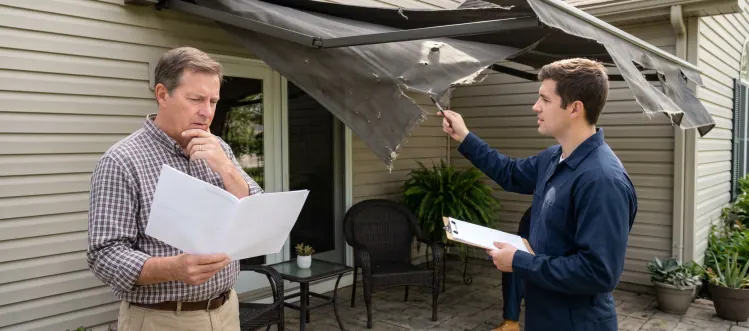
Most motorized shade warranties exclude wind damage despite outdoor exposure. Coverage gaps between motors and fabric create unexpected repair costs.
You've invested thousands in a beautiful motorized patio shade system, only to discover six months later that the warranty doesn't cover the wind damage that just destroyed your fabric. This scenario plays out more often than you'd think, leaving homeowners frustrated and facing unexpected repair bills. The reality is that motorized patio shade warranties contain more exclusions and fine print than almost any other home improvement product, yet most people never read beyond the headline coverage periods.
Understanding what your motorized shade warranty actually covers can save you thousands in unexpected costs and help you make smarter purchasing decisions. The key is knowing that these warranties typically split coverage between multiple components (motors, fabric, hardware, installation), each with different terms, exclusions, and claim processes. This guide reveals the coverage gaps that catch homeowners off-guard and shows you exactly what to look for before you sign on the dotted line.
Key Takeaways
- Wind Damage Exclusions: Most warranties exclude wind damage despite outdoor exposure, leaving fabric replacement costs entirely on the homeowner even with proper installation and use.
- Coverage Split: Motor warranties (typically 5-8 years) and fabric warranties (often 3-5 years) have different terms, creating gaps where neither component is covered simultaneously.
- Installation Voids: Improper mounting, electrical work, or structural modifications can void your entire warranty without warning, even for issues unrelated to the installation error.
- Service Call Fees: 'Free' warranty repairs often include $150-300 service call fees, diagnostic charges, and travel costs that aren't covered even under full warranty.
- Weather Sensor Claims: Automated sensors designed to protect your shade can trigger warranty claims when they malfunction, potentially voiding coverage for related damage.
Why Most Motorized Shade Warranties Don't Cover Wind Damage
The biggest shock for new motorized shade owners comes when they discover that wind damage, the most common cause of patio shade failure, is specifically excluded from most warranties. This exclusion exists despite the fact that these systems are designed for outdoor use and manufacturers market them as weather-resistant. The reasoning from manufacturers is that wind conditions vary dramatically by location and installation, making it impossible to guarantee performance across all scenarios.
What makes this particularly frustrating is that comprehensive outdoor warranties often emphasize 'weather resistance' in their marketing materials while burying wind damage exclusions in the fine print. Even shades rated for specific wind speeds (like 25-35 mph) typically void warranty coverage if damage occurs during winds within those rated limits. The manufacturer's position is that proper use requires retracting the shade before wind speeds reach the rated threshold, regardless of whether you're home or have automated sensors.
Here's how different warranty types handle wind damage exclusions:
| Warranty Type | Wind Damage Coverage | Typical Exclusion Language |
|---|---|---|
| Standard Manufacturer | Excluded | Acts of nature, weather events |
| Extended Protection | Limited Coverage | Winds over 20 mph excluded |
| Installation Warranty | Not Applicable | Covers workmanship only |
| Fabric Only | Excluded | Normal wear and environmental damage |
Common Exclusions
- Acts of Nature: Wind, hail, lightning, and storm damage are explicitly excluded even when shades are properly installed and within rated specifications.
- Improper Use: Leaving shades extended during any weather event, regardless of wind speed ratings, can void coverage for subsequent damage or wear.
- Wear and Tear: Normal fading, stretching, or fabric degradation from UV exposure is considered expected wear rather than a warrantable defect.
- Vandalism and Accidents: Damage from pets, children, outdoor furniture, or deliberate misuse falls outside warranty coverage regardless of the cause.
- Environmental Factors: Salt air, pollution, bird droppings, tree sap, and other environmental contaminants that cause staining or deterioration aren't covered.
The reality is that wind damage exclusions make outdoor shade warranties significantly less valuable than they appear. Since wind is the primary threat to these systems, you're essentially paying for warranty coverage that excludes the most likely failure scenario. Smart buyers factor this into their purchasing decision by either choosing systems with better wind ratings, investing in automated wind sensors, or budgeting for fabric replacement as a maintenance expense rather than expecting warranty coverage.
The Motor vs. Fabric Coverage Gap That Catches Homeowners Off-Guard
One of the most confusing aspects of motorized shade warranties is that motors and fabric are covered under completely separate warranty terms, often from different companies. Your motor might have a five-year warranty from the manufacturer while the fabric carries a three-year warranty from a different supplier. This creates scenarios where one component fails and needs replacement, but the warranty on the other component doesn't cover compatibility issues or reinstallation costs.
The coverage gap becomes particularly problematic when motor failure damages fabric or vice versa. If your motor malfunctions and tears the fabric during retraction, you might find that the motor warranty covers the motor replacement but not the fabric damage, while the fabric warranty excludes damage caused by mechanical failure. This leaves you paying for fabric replacement plus labor costs to reinstall both components, even though the original failure was covered under warranty.
Coverage Conflicts
- Component Isolation: Motor warranties typically exclude fabric damage caused by mechanical failure, while fabric warranties exclude damage from motor malfunctions or improper operation.
- Labor Gaps: Replacing one component often requires removing both, but warranty coverage usually only includes labor for the specific failed component being replaced.
- Compatibility Issues: Upgrading a motor under warranty might require fabric modifications or replacement that aren't covered under either warranty, creating unexpected costs.
- Timing Mismatches: When warranties expire at different times, you might face scenarios where the working component isn't covered for damage during repair of the failed component.
- Vendor Conflicts: Different warranty providers often dispute responsibility for cross-component damage, leaving homeowners to resolve conflicts between manufacturers or installers.
This coverage split means you need to read and understand multiple warranty documents, not just one comprehensive policy. The smartest approach is to ask upfront about cross-component coverage and get written clarification about what happens when one component damages another. Some installers offer unified warranties that cover the entire system, which eliminates these gaps but typically costs more upfront.
How Installation Errors Void Your Warranty Without Warning
Installation-related warranty voids are particularly sneaky because they can affect your coverage months or years after installation, often discovered only when you file a claim. Common installation errors like improper electrical connections, inadequate structural mounting, or incorrect motor programming can void your warranty even if they don't immediately cause problems. The issue is that manufacturers require installation to meet specific standards that aren't always clearly communicated to installers or homeowners.
What's especially frustrating is that minor installation deviations can void warranty coverage for completely unrelated failures. If your installer used slightly different mounting hardware than specified and your motor fails due to a manufacturing defect six months later, the warranty claim might be denied because the installation didn't meet manufacturer specifications. This puts homeowners in the difficult position of ensuring their installer follows exact protocols they may not even be aware of.
Installation Pitfalls
- Electrical Violations: Improper wiring, inadequate circuit protection, or non-compliant electrical connections can void the entire system warranty, not just electrical components.
- Structural Mounting: Using incorrect fasteners, inadequate backing, or mounting to non-structural elements can void coverage even for motor or fabric failures unrelated to mounting.
- Programming Errors: Incorrect limit settings, improper sensor calibration, or wrong motor configuration can void warranty coverage for subsequent mechanical failures or damage.
- Code Compliance: Installation that doesn't meet local building codes or manufacturer specifications can void warranty coverage regardless of whether the violation caused the failure.
- Documentation Requirements: Many warranties require specific installation documentation, photos, or certifications that installers often skip, leaving homeowners without recourse for legitimate claims.
The best protection against installation-related warranty voids is choosing installers who understand manufacturer requirements and provide their own workmanship warranties. Ask for written confirmation that installation will meet all manufacturer specifications and request copies of any required documentation before the installer leaves. Some comprehensive warranty programs include installation coverage that protects against these scenarios, though they typically cost more upfront.
What 'Lifetime Warranty' Actually Means in Motorized Shade Terms
The term 'lifetime warranty' in motorized shade marketing is one of the most misleading phrases in the industry, often referring to very specific components under very specific conditions rather than the entire system. Most 'lifetime' warranties apply only to structural hardware like aluminum housings or mounting brackets, not to motors, fabric, or electrical components that actually fail. The 'lifetime' is also typically defined as the expected lifespan of the product (often 10-15 years) or the original homeowner's occupancy, not an actual lifetime.
Even when legitimate, lifetime warranties often come with escalating deductibles, service fees, or pro-rated replacement costs that make them less valuable over time. A lifetime warranty on hardware might cover the aluminum housing but require you to pay increasing percentages of replacement costs after certain time periods. By year ten, you might be responsible for 50% of replacement costs under a 'lifetime' warranty, making the coverage significantly less valuable than it initially appeared.
Lifetime Limitations
- Component Restrictions: Lifetime coverage typically applies only to non-moving structural parts like housings and brackets, not motors, fabric, or electrical components that commonly fail.
- Original Owner Only: Most lifetime warranties are non-transferable and void when the home is sold, regardless of how recently the system was installed.
- Pro-rated Coverage: Many lifetime warranties include increasing deductibles or pro-rated replacement costs that make coverage less valuable as the system ages.
- Service Fee Escalation: Even under lifetime warranty, service call fees, diagnostic charges, and labor costs often increase annually or are excluded entirely after certain time periods.
- Manufacturer Dependency: Lifetime warranties become worthless if the manufacturer goes out of business, gets acquired, or discontinues the product line you own.
When evaluating lifetime warranty claims, focus on what specific components are covered and for how long the coverage remains meaningful. A ten-year comprehensive warranty is often more valuable than a lifetime warranty with significant limitations or escalating costs. Always ask for written clarification of what 'lifetime' means in your specific warranty and what costs you'll be responsible for at different time intervals.
The Service Call Fees Hidden in Your Warranty Fine Print
One of the most frustrating discoveries for homeowners with warranty issues is that 'free' warranty repairs often come with substantial service call fees, diagnostic charges, and travel costs that aren't covered under the warranty terms. These fees can range from $150-400 per visit, meaning a simple motor replacement under warranty might still cost you several hundred dollars in service fees. The warranty covers the part, but not the time and expense of getting a technician to your home to install it.
The fee structure becomes particularly expensive for warranty claims that require multiple visits, such as diagnosing intermittent electrical issues or waiting for special-order parts. Each diagnostic visit, follow-up appointment, and final repair can trigger separate service fees, potentially making warranty repairs cost more than paying for the repair outright. Some warranties cap these fees or include a certain number of free service calls, but many don't, leaving homeowners with unexpected costs for covered repairs.
Here's how service fees typically apply across different warranty scenarios:
| Repair Type | Parts Coverage | Labor Coverage | Service Call Fee |
|---|---|---|---|
| Motor Replacement | 100% Covered | Covered | $150-250 |
| Electrical Diagnosis | N/A | Not Covered | $200-300 |
| Fabric Replacement | 100% Covered | 50% Covered | $175-275 |
| Sensor Calibration | Covered if Defective | Not Covered | $125-200 |
Hidden Costs
- Diagnostic Fees: Initial service calls to identify the problem often cost $150-250 even when the issue is clearly covered under warranty and requires obvious repairs.
- Travel Charges: Many warranties exclude travel time and mileage, especially for rural or distant locations, adding $50-150 to each service visit regardless of the repair.
- Multiple Visit Fees: Complex repairs requiring several appointments can trigger service fees for each visit, potentially costing more than the original repair would have cost.
- Emergency Rates: Warranty service during weekends, holidays, or after hours often includes premium service rates that aren't covered under standard warranty terms.
- Parts Shipping: Expedited shipping for warranty replacement parts is typically at the homeowner's expense, adding $50-100 to urgent repairs even when parts are free.
Before purchasing, ask specifically about service call fees and whether the warranty includes any free diagnostic visits or caps on service charges. Some premium warranties include comprehensive service coverage, while others leave you responsible for substantial fees even for straightforward warranty repairs. Factor these potential costs into your overall budget when comparing warranty options.
Why Extended Warranties Make Sense for Retractable Patio Systems
Extended warranties for motorized patio shades often provide better value than manufacturer warranties because they're designed to address the real-world failure patterns these systems experience. Unlike manufacturer warranties that focus on defects, extended warranties typically cover wear and tear, environmental damage, and the component interaction issues that cause most actual failures. They also often include unified coverage for the entire system rather than splitting coverage between motors, fabric, and hardware.
The economics of extended warranties make particular sense for retractable systems because repair costs often exceed the warranty premium within the first few years of ownership. A typical motor replacement costs $800-1200 including labor, while fabric replacement ranges from $600-1500 depending on size and material. Extended warranties that cost $300-600 upfront can provide coverage that saves thousands in repair costs, especially when they include service call coverage and cross-component protection.
Extended Benefits
- Unified Coverage: Extended warranties often cover the entire system as one unit, eliminating gaps between motor, fabric, and hardware coverage that plague manufacturer warranties.
- Wear Protection: Unlike manufacturer warranties that exclude normal wear, extended warranties typically cover fabric fading, motor wear, and hardware deterioration from regular use.
- Service Inclusion: Many extended warranties include service calls, diagnostic fees, and labor costs that manufacturer warranties exclude, providing true comprehensive coverage.
- Environmental Coverage: Extended warranties often cover damage from sun, rain, wind (within limits), and other environmental factors that manufacturer warranties specifically exclude.
- Transferable Options: Some extended warranties can be transferred to new homeowners, adding value if you sell your home and making the coverage more flexible than manufacturer warranties.
When considering extended warranty options, focus on coverage that addresses the specific failure modes your system is likely to experience based on your climate, usage patterns, and installation environment. Extended warranties work best when they're purchased at installation and include comprehensive service coverage, not just parts replacement. The key is finding coverage that eliminates the gaps and exclusions that make manufacturer warranties less useful for real-world problems.
How Weather Sensors Can Trigger Warranty Claims You Never Expected
Weather sensors designed to protect your motorized shade system can actually create warranty complications when they malfunction or provide false readings. A sensor stuck in the 'high wind' position will constantly retract your shade, causing excessive motor wear that might not be covered under warranty because it's considered abnormal use. Conversely, a sensor that fails to detect dangerous conditions and doesn't retract the shade can void warranty coverage for subsequent wind damage.
The warranty implications become particularly complex because sensor malfunctions often cause cascading failures across multiple system components. A faulty sun sensor that keeps deploying the shade during high winds can damage fabric, overheat the motor, and stress mounting hardware simultaneously. Determining which component failed first and whether the sensor malfunction voids coverage for related damage requires careful documentation and often leads to warranty disputes between homeowners and manufacturers.
Sensor Complications
- False Readings: Sensors providing incorrect wind, sun, or rain data can cause abnormal system operation that voids warranty coverage for resulting wear or damage.
- Calibration Drift: Sensors that gradually lose accuracy over time can cause subtle system abuse that accumulates into major component failures not covered under warranty.
- Integration Failures: Problems with sensor communication to the motor controller can cause erratic operation that damages multiple components while making warranty fault determination difficult.
- Override Conflicts: Manual overrides of sensor-controlled operation can void warranty coverage if they result in damage, even when the override was necessary due to sensor malfunction.
- Environmental Interference: Sensors affected by nearby electronics, lighting, or structural changes can provide false readings that lead to warranty-voiding operation patterns.
To protect your warranty when using weather sensors, document any sensor malfunctions immediately and avoid manual overrides unless absolutely necessary. Keep records of sensor calibration, cleaning, and any environmental changes that might affect sensor performance. Some warranties specifically exclude damage caused by sensor malfunction, while others cover it under certain conditions, so understanding your specific coverage is crucial for protecting your investment.
Protecting Your Shade Investment
Understanding motorized patio shade warranties requires looking beyond the headline coverage periods to examine the exclusions, gaps, and hidden costs that can leave you responsible for expensive repairs. The most important factors are wind damage exclusions, the split between motor and fabric coverage, installation requirements that can void your warranty, and service fees that make 'free' repairs costly. Smart buyers focus on comprehensive coverage that addresses real-world failure patterns rather than just manufacturer defect protection.
The best warranty protection comes from choosing systems with unified coverage, understanding exactly what triggers warranty voids, and budgeting for the costs that warranties don't cover. Whether you opt for manufacturer warranties, extended protection plans, or self-insurance through maintenance reserves, the key is making informed decisions based on realistic expectations of what warranty coverage actually provides. If you're considering motorized patio shades and want guidance on warranty options that make sense for your specific situation, we can help you navigate the coverage landscape and choose protection that actually protects your investment.
Author
Lane Frazier has spent 20 years installing custom motorized shades and helping homeowners understand the warranty complexities that come with these sophisticated systems. His experience with warranty claims and manufacturer relationships gives him unique insight into what coverage actually matters when problems arise. Lane's practical approach focuses on helping clients choose warranty protection that addresses real-world failure patterns rather than just marketing promises.
Ready For a Quote?
Get your custom shade quote Today.
Free, no-pressure consultation. We measure, photograph, and send a written line-item proposal within a week. Most installs ship in 3–5 weeks.
Call the workshop
(512) 939-3446
Mon–Fri · 8a–5p CT · Austin, TX
Prefer to talk it through? Calls are answered by the same team that builds your quote — no call centers, no gatekeepers.
Custom exterior shades, motorized patio screens, awnings, and interior window treatments for Austin and Central Texas.
How To Contact Us
Austin, TX 78734
Monday - Friday 8 AM - 5 PM
navigate
Copyright © 2026 | Treaty Oak Shade Co. All Rights Reserved. | Privacy Policy