
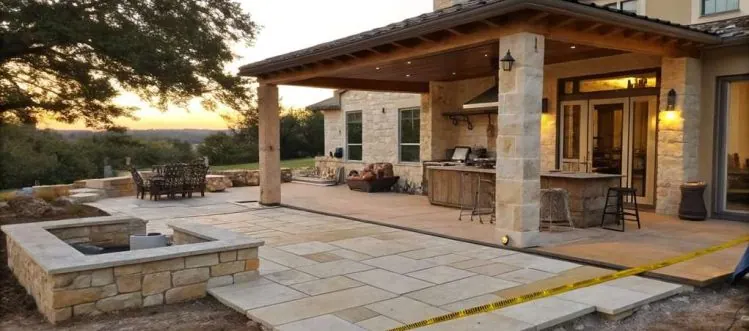
Quick Take: Preparing patios for shade enclosure installation involves precise measurements, regulatory compliance, and thorough site evaluation to ensure a seamless and lasting addition.
Installing a shade enclosure starts with precise measurements using a reliable 100-foot steel tape to ensure proper fabric coverage and hardware clearance. Inaccurate measurements can cause costly installation issues. Families in Lakeway must also follow local building codes, like the 2021 IBC and IRC, and secure HOA approvals before moving forward.
A thorough site assessment is equally important to confirm structural support, locate mounting points, and account for wind exposure. By handling these steps carefully, homeowners can streamline installation and ensure a durable, long-lasting outdoor space.
Key Takeaways
- Check with local authorities and your HOA to secure any required permits before starting your patio shade enclosure installation.
- Accurately measure your patio using a 100-foot steel tape measure, and sketch a detailed layout noting mounting locations and any obstacles.
- Clear the area by removing furniture, lighting, and other items that might get in the way during installation.
- Inspect the mounting surfaces to confirm they’re structurally sound and capable of supporting the enclosure under various weather conditions.
- Observe sunlight patterns, wind exposure, and drainage to help determine the best placement and materials for your shade enclosure.
Measuring Your Patio Space With Professional Precision
Key Insight: Measuring your patio space for shade enclosure installation demands precision and professional techniques to ensure optimal fit and structural integrity.
Correct measurements reduce the risk of fabric sagging, mounting issues, or inadequate coverage, which can compromise both aesthetics and functionality. That’s why using specialized tools like steel measuring tapes and plumb bobs is crucial to capture exact dimensions, including projection and lateral spans, directly at the intended installation height. Additionally, considering the use of interior roller shades can provide a stylish option for enhancing your patio’s shade.
Detailed spatial analysis involves accounting for environmental factors such as wind exposure and seasonal temperature fluctuations, which affect fabric tension and longevity. Documenting measurements with clear diagrams and noting obstacles or mounting points streamlines the installation process, fostering efficient planning and minimizing costly errors or adjustments. The importance of accurate measurement techniques cannot be understated in achieving a successful installation.
Key measurement considerations include:
- Using a 100-foot steel tape measure ensures precise length and width capture across expansive patio areas.
- Measuring at installation height with a ladder and plumb bob guarantees vertical alignment and accurate projection distances.
- Adding 1.5 inches to width dimensions accommodates full fabric coverage beyond mounting brackets
- Accounting for a 1.375-inch fabric reduction compensates for mounting hardware clearance and tensioning requirements.
- Creating detailed, annotated diagrams visualizes mounting points and potential obstructions for seamless installation.
- Recording all data systematically in a dedicated notepad supports organized planning and reliable reference throughout the project.
Meticulous measurement is the foundation of a successful shade enclosure that enhances outdoor living spaces with both durability and style. Investing time and expertise in this initial step ensures your patio shade system performs flawlessly through seasonal changes and weather conditions. Embrace a methodical approach to measurement to transform your patio into a comfortable, protected retreat that meets your aesthetic and functional needs perfectly. Additionally, understanding the benefits of motorized patio covers can further inform your decision-making process regarding the type of shade enclosure to install.
Understanding Local Building Codes and Requirements
Key Insight:Understanding Lakeway’s adoption of the 2021 International Building Code (IBC), International Residential Code (IRC), and International Energy Conservation Code (IECC) is critical for homeowners planning patio shade enclosures. These codes regulate structural integrity, energy efficiency, and safety standards, making thorough compliance a non-negotiable step. City-specific mandates like those in the Lakeway Design Manual and the 2023 National Electrical Code (NEC) have evolved to address local climate and environmental factors, reinforcing the importance of detailed knowledge before installation. Additionally, incorporating motorized options can enhance convenience and functionality for outdoor living spaces. Furthermore, utilizing custom shades can provide tailored solutions that meet both aesthetic and functional requirements.
Code compliance intersects with community governance, notably through Homeowners Association (HOA) architectural reviews and approvals. Engaging experienced contractors familiar with both municipal codes and HOA stipulations facilitates seamless documentation and adherence to height restrictions and electrical safety. This dual-layered approval process ensures the enclosure not only meets legal standards but also aligns with neighborhood aesthetics and regulations, safeguarding your investment.
Key compliance considerations to streamline your patio shade enclosure project include:
- Navigating the permit application process tailored to specific project scopes and structural modifications
- Aligning design specifications with Lakeway’s height limits and material requirements as per the city’s Design Manual
- Ensuring all electrical installations conform to the 2023 National Electrical Code for safety and inspection approval
- Coordinating with HOA architectural committees to secure mandatory pre-installation approvals and avoid violations
- Partnering with licensed contractors who specialize in local code interpretation and municipal inspection protocols
- Considering custom exterior screens to enhance both compliance and aesthetic appeal.
Embracing a proactive approach to Lakeway’s building codes and HOA regulations transforms potential obstacles into manageable milestones. Homeowners gain confidence in their project’s compliance and durability while minimizing risks associated with non-compliance penalties. That’s why investing in professional expertise and meticulous preparation is the cornerstone of a successful patio shade enclosure installation, setting the stage for lasting enjoyment and value enhancement.
Selecting Strategic Mounting Points for Maximum Coverage
Quick Take: Identifying optimal mounting points for shade enclosures is essential to maximize coverage, structural integrity, and environmental comfort. Strategic placement ensures durable connections, effective water drainage, and dynamic airflow, aligning with architectural features and sun patterns to deliver consistent, long-lasting shade solutions.
Meticulous evaluation of existing structures—such as walls, beams, and outdoor fixtures—is critical to anchor securely into load-bearing materials rather than superficial surfaces. This foundational stability prevents wear and enhances safety, which is indispensable for both temporary and permanent shade installations. Integrating height differentials between mounting points facilitates natural water runoff and optimizes shade distribution, balancing protection and ventilation.
Understanding solar trajectories and ambient conditions guides the arrangement of shade sails or canopies to maximize UV protection during peak daylight hours. That’s why incorporating diagonal or multi-angle sail configurations not only expands coverage but also introduces architectural interest and spatial depth. Simultaneously, ensuring weight-bearing capacity through thorough structural assessments or engineered pole foundations guarantees resilience against environmental stressors like wind or rain.
Key considerations for strategic mounting point selection include:
- Structural Soundness: Prioritize anchoring to solid framing elements or reinforced masonry rather than surface cladding to ensure long-term durability.
- Height Ratio Optimization: Maintain approximately a 1:5 height difference between highest and lowest points to facilitate efficient water drainage and airflow.
- Sun Path Alignment: Position sails in accordance with seasonal and daily sun angles to sustain consistent shade over active outdoor zones
- Load Capacity Evaluation: Conduct comprehensive inspections to confirm existing or new supports can tolerate dynamic and static loads imposed by shade materials
- Material Synergy: Utilize corrosion-resistant hardware and complementary finishes to extend lifespan and maintain aesthetic coherence with surrounding architecture.
- Spatial Design Integration: Leverage diagonal or multi-point arrangements to enhance both functional coverage and visual appeal, adapting to irregular site geometries
Success hinges on harmonizing engineering principles with environmental and spatial dynamics to create shade structures that are not only functional but also resilient and visually compelling. That mindset shift—from merely hanging fabric to architecting a microclimate—empowers homeowners and designers to invest confidently in solutions that enhance outdoor living experiences sustainably. Moving forward, embracing these strategic mounting strategies will ensure shade installations remain effective, safe, and aesthetically integrated for years to come.
Gathering Essential Tools and Hardware
Key Insight: Assembling the right tools and hardware tailored to your shade enclosure installation ensures durability, precision, and long-term weather resistance. Selecting marine-grade or UV-rated components compatible with your fabric type is crucial for structural integrity and optimal performance.
Organizing professional-grade mounting hardware before beginning installation streamlines workflow and reduces errors. Understanding design-specific hardware requirements—whether for triangular or rectangular shade configurations—enables precise tension adjustment and enhanced stability. This strategic preparation minimizes maintenance needs and extends the lifespan of your outdoor shading solution.
Essential hardware and tool considerations include:
- Marine-grade stainless steel or UV-resistant hardware to withstand outdoor elements and corrosion
- Comprehensive kits containing turnbuckles, spring hooks, thimbles, and heavy-duty D-rings for versatile mounting options
- Retractable components spanning 4.8 to 8 inches, allowing fine-tuned tension control and adaptability to fabric stretch
- Threading tools and ball chain mechanisms designed for smooth operation and consistent shade tension
- Mounting brackets, eye bolts, and connector pieces organized for efficient installation and secure attachment
- Compatibility checks between hardware specifications and shade fabrics such as HDPE, SolaMesh, Polytex+, or Comtex+ to ensure cohesive performance
Prioritizing high-quality hardware aligned with your shade design and material choice is foundational to a successful installation. That’s why investing time in gathering and verifying appropriate tools empowers homeowners to achieve stable, weather-resistant enclosures with minimal upkeep. Moving forward, this proactive approach supports both aesthetic appeal and functional reliability, helping you enjoy your outdoor space fully protected.
Preparing the Installation Surface and Surroundings
Quick Take: Properly preparing your installation surface and surroundings is crucial for a secure, durable shade enclosure setup, ensuring long-term functionality and aesthetic appeal. This involves precise measurements, material assessment, and environmental considerations to optimize mounting stability and weather resilience.
Effective surface preparation starts with meticulously measuring patio dimensions and pinpointing exact mounting points, which guarantees a tailored fit that enhances structural integrity. Removing any obstacles such as outdoor furniture, garden lighting, or decorative items creates an unobstructed workspace, minimizing installation errors and delays. These careful steps prevent misalignment issues and wear caused by improper mounting.
A thorough evaluation of the substrate—whether concrete, wood, or brick—determines the ideal anchoring technique and hardware selection, directly impacting load-bearing capacity and safety. Ensuring surfaces are level and locating secure studs or anchors helps avoid future damage or instability, while scheduling installation during dry weather and accounting for drainage and sunlight exposure supports optimal material performance and longevity.
Key preparation elements to prioritize for a flawless installation include:
- Assessing material type and condition to select compatible fasteners and anchors
- Drilling precise holes with correct diameters and cleaning debris for effective chemical anchor bonding
- Locating structural supports such as wood studs or reinforced masonry for secure bracket attachment
- Leveling uneven surfaces to maintain proper alignment and prevent stress points
- Clearing the area of all obstructions to facilitate safe, efficient installation workflow
- Considering environmental factors like seasonal sun angles and water runoff patterns for enhanced durability
Investing time in comprehensive surface and environmental preparation sets the stage for a professionally installed shade enclosure that performs reliably and enhances outdoor living spaces. That’s why embracing a systematic approach not only mitigates risks but also maximizes the lifespan and visual harmony of your installation. Moving forward, applying these expert practices empowers homeowners to confidently achieve a resilient, aesthetically pleasing shade solution.
In Summary
Preparing patios for shade enclosure installation demands precise measurements and adherence to local building codes to ensure safety and durability. Lakeway families should carefully select mounting points that provide structural support and gather all necessary tools in advance. Proper surface preparation is crucial to create a stable base that supports the enclosure securely. These steps collectively facilitate a seamless installation experience and long-lasting outdoor comfort.
Treaty Oak Shade, as the premier custom motorized patio shade company in Austin, Texas, excels in guiding homeowners through this preparation process. Our expertise ensures that every project complies with regulations while maximizing functionality and aesthetics. By partnering with Treaty Oak Shade, Lakeway families receive tailored solutions that enhance outdoor living spaces efficiently. Our commitment to quality craftsmanship and customer support makes us the ideal choice for shade enclosure installations.
Contact Us & Discover How We Can Help You Today!
(512) 939-3446
15218 Nightingale Ln
Austin, TX 78734
Ready For a Quote?
Get your custom shade quote Today.
Free, no-pressure consultation. We measure, photograph, and send a written line-item proposal within a week. Most installs ship in 3–5 weeks.
Call the workshop
(512) 939-3446
Mon–Fri · 8a–5p CT · Austin, TX
Prefer to talk it through? Calls are answered by the same team that builds your quote — no call centers, no gatekeepers.
Custom exterior shades, motorized patio screens, awnings, and interior window treatments for Austin and Central Texas.
How To Contact Us
Austin, TX 78734
Monday - Friday 8 AM - 5 PM
navigate
Copyright © 2026 | Treaty Oak Shade Co. All Rights Reserved. | Privacy Policy