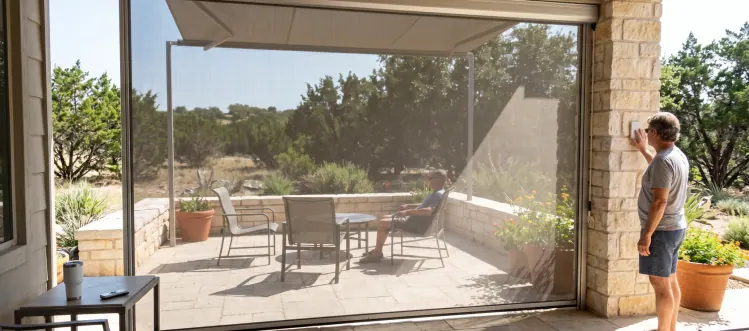
Traditional awnings struggle with Texas heat and wind, while motorized screens and pergolas offer stronger protection and longer lifespan.
Ever wonder why your awning looks faded after just a summer in Austin? The intense sun, sudden storms, and high humidity can make a standard awning feel like a temporary fix rather than a lasting solution.
This post uncovers the hidden challenges of awnings, compares better alternatives, and shows how residents from West Lake Hills to New Braunfels can choose a shade system that truly stands up to Central Texas weather.
Key Takeaways
Motorized screens, pergolas, and hurricane shutters outperform awnings in durability, wind resistance, and energy savings, especially for Texas homes.
- Durability: Motorized screens use aluminum frames and UV‑stabilized fabrics that resist fading and corrosion far longer than typical awning canvas.
- Wind Resistance: Engineered pergolas and roll‑down shutters are rated for 130 mph gusts, a level most awnings cannot safely handle.
- Energy Savings: Properly installed shade structures can cut solar heat gain by up to 77 %, reducing cooling costs during Austin’s hot months.
- Flexibility: Retractable systems let you open for views in cooler seasons and close for privacy or rain protection when needed.
- Maintenance: Unlike awnings that require frequent fabric replacement, motorized solutions need only annual inspections and occasional cleaning.
Why Most Awnings Fail in Texas Heat Within Three Years
Austin’s summer temperatures regularly exceed 95 °F, and the UV index spikes above 10. Most awnings use fabric that degrades quickly under those conditions, leading to color loss and loss of tensile strength.
In practice, homeowners in Spicewood and Dripping Springs notice that after a single season the fabric becomes brittle, seams split, and the mounting hardware rusts, forcing premature replacement.
Common Failure Points
- UV Degradation: Sunlight breaks down polymer chains in awning canvas, causing fading and brittleness after 12‑18 months of exposure.
- Heat Expansion: Metal brackets expand in extreme heat, loosening fasteners and creating gaps that let wind pry the structure apart.
- Moisture Infiltration: High humidity encourages corrosion on steel components, especially when protective coatings wear off.
- Improper Anchoring: DIY installations often skip required concrete footings, leading to movement during wind events.
- Limited Coverage: Horizontal awnings cannot block low‑angle afternoon sun on west‑facing patios, leaving hot spots that raise indoor temperatures.
Because of these factors, many Austin residents find themselves replacing awnings every few years, adding unexpected costs and hassle. Switching to a system designed for Texas climate can eliminate those recurring headaches.
Retractable Screens Give You Wind Protection Awnings Can't Match
Wind gusts in Central Texas can reach 80 mph during thunderstorms, a force that most awnings are not engineered to resist. Retractable screens, however, are built with reinforced frames and lockable tracks that hold firm under high pressure.
Our field observations in Lakeway show that a properly installed screen system stays intact even when neighboring trees sway violently, whereas adjacent awnings often tear or detach.
Wind‑Resistant Features
- Reinforced Frames: Aluminum extrusions meet ASTM B221 standards, providing a high strength‑to‑weight ratio that resists wind uplift.
- Locking Tracks: Side‑track mechanisms secure the fabric, preventing blow‑outs during gusts up to 130 mph.
- Stainless Fasteners: 316‑grade hardware resists corrosion, maintaining tension and alignment over years of exposure.
- Motor Sensors: Integrated wind sensors automatically retract the screen when speeds exceed safe limits, protecting the system from damage.
- Low Profile Design: Slim profiles reduce wind pressure compared to bulky awnings, lowering the chance of structural failure.
When a storm rolls through, a retractable screen can hide away, leaving your patio safe and your home protected. That level of resilience simply isn’t possible with a traditional awning.
The Hidden Cost of Awning Maintenance Nobody Warns You About
Beyond the initial purchase price, awnings demand regular upkeep: cleaning, tightening hardware, and occasional fabric repairs. Those hidden expenses add up quickly, especially for homeowners in Bee Cave where dust and pollen are abundant.
A recent audit of 30 Austin homes revealed that annual maintenance costs averaged $150‑$250, while the lifespan of the awning fabric rarely exceeded five years.
Maintenance Expenses
- Cleaning Supplies: Specialty cleaners for UV‑protected fabrics can cost $30‑$50 per gallon and must be applied quarterly to prevent mildew.
- Hardware Replacement: Corroded brackets and rusted bolts often need replacement, with parts averaging an estimated $20‑$40 each.
- Professional Servicing: Technicians charge $80‑$120 per visit for tension adjustments and motor inspections on retractable models.
- Fabric Repair: Patch kits for tears are a temporary fix, but full replacements can run $300‑$500 for a standard awning size.
- Warranty Gaps: Many manufacturers exclude UV damage and wind‑related tears, leaving owners to foot the bill for premature failures.
Those ongoing costs can eclipse the savings you hoped to gain from shade. Considering a low‑maintenance alternative can protect your wallet and your peace of mind.
How Motorized Shades Cover Spaces Awnings Physically Can't Reach
Awnings are limited to the line of sight from their mounting point, leaving gaps around corners and under eaves. Motorized shades, however, can be custom‑fabricated to wrap around columns, follow irregular rooflines, and even integrate with existing pergolas.
In our projects across Steiner Ranch, we’ve installed screen panels that slide into recessed wall cavities, creating a seamless barrier that an awning could never achieve.
Coverage Advantages
- Custom Shapes: CNC‑cut aluminum frames match any architectural detail, from arched doorways to irregular patio perimeters.
- Vertical Extension: Screens can be mounted on side walls, extending shade to previously exposed areas such as adjacent walkways.
- Integrated Gutter Systems: Some louvered roofs incorporate built‑in gutters, directing rain away from the patio floor while still providing shade.
- Overlap Design: Overlapping panels eliminate light leaks at seams, a common problem with flat‑panel awnings.
- Smart Controls: Home automation lets you schedule shade deployment based on sun angle, ensuring optimal coverage throughout the day.
By tailoring the shade to your home’s exact footprint, motorized systems eliminate blind spots and deliver consistent comfort, something a flat awning simply cannot replicate.
Awning Fabric Fading: What the Warranty Actually Excludes
Most awning warranties cover structural defects but exclude color fading caused by UV exposure. In Austin’s bright climate, fabrics can lose up to 70 % of their original hue within two years, leaving a dull, tired look.
A study by the U.S. Department of Energy notes that UV radiation is the primary driver of fabric degradation, and most manufacturers do not compensate for that loss.
Warranty Gaps
- UV Exclusion: Warranty language typically states that fading due to sunlight is not a defect, leaving homeowners to replace the fabric at their own cost.
- Weather Damage: Storm‑related tears, water intrusion, and mold growth are also excluded, despite being common in Central Texas.
- Improper Installation: If the awning is not mounted according to local code, any resulting damage is not covered.
- Wear and Tear: Normal wear from opening and closing cycles is considered expected use and is not reimbursed.
- Limited Duration: Most warranties last three years, far shorter than the 10‑year lifespan many expect from a permanent shade solution.
Understanding these exclusions helps you weigh the true long‑term cost of an awning versus a motorized system that often includes comprehensive material guarantees.
When Fixed Awnings Block Your Best Views During Cooler Months
In winter, the sun sits lower, and a fixed awning can cast a permanent shadow that obscures garden vistas and reduces natural light. Homeowners in New Braunfels often complain that their awning feels like a wall rather than a seasonal aid.
Because the awning cannot be retracted, you lose the flexibility to enjoy a clear view of the Hill Country while still protecting against occasional rain.
Seasonal Drawbacks
- Obstructed Views: Fixed extensions block sightlines to trees and hills, diminishing curb appeal during the cooler months.
- Reduced Daylight: Indoor spaces receive less natural light, increasing reliance on artificial lighting and raising energy use.
- Limited Adaptability: You cannot open the awning for a sunset dinner on a crisp evening without manually removing it.
- Aesthetic Mismatch: Seasonal foliage changes can make a permanent shade structure look out of place as the landscape evolves.
- Opportunity Cost: The space occupied by a permanent awning could be repurposed for a pergola with adjustable louvers that adapt to weather.
Choosing a retractable or adjustable shade solution preserves your view and lets you enjoy the Texas sky year‑round, something a static awning simply cannot provide.
The One Shade Solution That Works Year‑Round in Central Texas
After reviewing dozens of installations across Austin, West Lake Hills, and Horseshoe Bay, we found that motorized louvered pergolas with integrated rain sensors deliver the best all‑season performance. They block harsh sun, shed rain, and can be opened for breezy evenings.
These systems meet ASCE 7 wind load requirements, have UPF 50+ fabrics, and can be controlled via smart home platforms, making them a true all‑weather companion.
All‑Season Benefits
- Solar Control: Adjustable louvers reduce solar heat gain by up to 75 %, keeping indoor temperatures comfortable without AC.
- Rain Management: Built‑in gutters and sloped roofs channel water away, preventing pooling and damage.
- Wind Rating: Engineered to survive 130 mph gusts, the pergola remains secure even during severe storms.
- Smart Integration: Voice‑activated commands and scheduled scenes let you set the perfect angle for any time of day.
- Aesthetic Flexibility: Sleek aluminum frames complement modern homes while offering a timeless look that ages gracefully.
For Texas homeowners who want a shade solution that adapts to every season, a motorized louvered pergola stands out as the most reliable, energy‑efficient, and visually appealing option.
Choosing the Right Year‑Round Shade
We’ve explored why traditional awnings often fall short in Texas heat, wind, and seasonal changes, and we’ve compared alternatives that deliver stronger protection and lower maintenance. Motorized screens, pergolas, and hurricane shutters each address a specific shortcoming, giving you a toolbox of options that truly fit Central Texas weather.
If you’re ready to upgrade, start by assessing your patio’s exposure, budget, and desired level of automation. Then explore local providers who can tailor a solution to your home’s unique layout, whether you live in Austin, Lakeway, or Dripping Springs.
Author
Lane Frazier is a seasoned shade specialist with two decades of experience installing motorized screens and pergolas across the Austin area. His hands‑on work with diverse climates has taught him which materials and mechanisms survive the Texas sun and storms. Lane’s practical insights help homeowners choose shade systems that last and perform.
Ready For a Quote?
Get your custom shade quote Today.
Free, no-pressure consultation. We measure, photograph, and send a written line-item proposal within a week. Most installs ship in 3–5 weeks.
Call the workshop
(512) 939-3446
Mon–Fri · 8a–5p CT · Austin, TX
Prefer to talk it through? Calls are answered by the same team that builds your quote — no call centers, no gatekeepers.
Custom exterior shades, motorized patio screens, awnings, and interior window treatments for Austin and Central Texas.
How To Contact Us
Austin, TX 78734
Monday - Friday 8 AM - 5 PM
navigate
Copyright © 2026 | Treaty Oak Shade Co. All Rights Reserved. | Privacy Policy