Motor quality and wind engineering requirements drive 60% of cost variation in motorized awnings. Size calculations alone miss the real price drivers.
You've probably seen motorized awning quotes ranging from $3,000 to $15,000 and wondered why there's such a massive price gap. Most homeowners focus on size calculations, thinking a 12-foot awning should cost twice as much as a 6-foot model. The reality is far more complex, with motor quality, wind load engineering, and smart home integration creating the biggest cost variations.
Understanding these cost drivers helps you make informed decisions and avoid expensive surprises during installation. From the difference between basic tubular motors and premium automation systems to structural mounting requirements that can double your project budget, this guide reveals what actually determines your final investment.
Key Takeaways
- Motor Quality Impact: Premium motors with wind sensors and smart integration add $2,000-$4,000 compared to basic tubular motors, but provide superior longevity and automated protection.
- Wind Load Engineering: Structural requirements for wind resistance can triple installation costs when custom mounting solutions or reinforcement become necessary for safety compliance.
- Smart Integration Complexity: Full home automation with sensors, hubs, and professional programming often costs more than the awning itself, ranging from $3,000-$8,000 for complete systems.
- Installation Variables: Mounting surface complexity, electrical requirements, and permit needs create 40% cost variations that contractors frequently underestimate during initial quotes.
- Fabric Longevity Economics: Solution-dyed acrylic fabrics cost 30% more upfront but last twice as long as standard options, significantly impacting total ownership costs over 10-15 years.
Why Size Calculations Miss the Real Cost Driver in Motorized Awnings
Most homeowners approach motorized awning pricing with a simple assumption: bigger awnings cost more money. While size does influence price, it's actually one of the least significant factors in determining your final investment. A 10x12 foot awning with a basic motor might cost $4,500, while an 8x10 foot awning with premium automation and wind sensors can easily reach $12,000.
The real cost drivers lie in the mechanical complexity and engineering requirements that size calculations completely ignore. Motor torque requirements, fabric tensioning systems, and structural mounting needs vary dramatically based on projection depth, wind exposure, and automation features. Professional installation costs reflect these hidden complexities that become apparent only during detailed site assessments.
Here's how different awning dimensions compare when factoring in motor requirements and structural complexity:
| Awning Size | Basic Motor Cost | Premium Motor Cost | Structural Requirements |
|---|---|---|---|
| 8x10 feet | $3,200-$4,500 | $6,500-$9,200 | Standard mounting |
| 10x12 feet | $4,100-$5,800 | $7,800-$11,500 | Reinforced brackets |
| 12x16 feet | $5,500-$7,200 | $9,500-$14,000 | Custom engineering |
| 14x20 feet | $7,800-$10,500 | $12,500-$18,000 | Structural analysis required |
Hidden Complexity Factors
- Projection Depth Impact: Awnings extending beyond 10 feet require higher torque motors and reinforced arm assemblies, adding $1,500-$3,000 regardless of overall width.
- Fabric Tensioning Systems: Larger awnings need sophisticated tensioning mechanisms to prevent sagging, with premium systems costing $800-$1,500 more than basic spring-loaded arms.
- Wind Load Calculations: Extended projections create exponentially higher wind loads, requiring structural engineering analysis that can add $2,000-$4,000 to projects.
- Motor Torque Requirements: High-torque motors for large awnings cost 60% more than standard units, plus require upgraded electrical circuits and control systems.
- Mounting Point Distribution: Wide awnings need additional mounting points and structural reinforcement, often doubling hardware and installation labor costs compared to compact units.
Smart buyers focus on projection requirements and automation features before considering overall dimensions. A well-engineered 8x10 awning with premium components will outperform and outlast a larger unit with basic hardware. Understanding these relationships helps you invest in the right combination of size and quality for your specific installation.
The Motor Quality Gap That Separates $3,000 from $8,000 Installations
The motor represents the heart of any motorized awning system, and the quality gap between basic and premium options creates the most dramatic price variations in the industry. Entry-level tubular motors from generic manufacturers might power your awning for $300-$500, while premium automation systems with integrated sensors and smart controls can easily cost $2,500-$4,000 before installation.
This price difference reflects fundamental engineering approaches to motor design, control systems, and integration capabilities. Basic motors provide simple up/down functionality with manual switches, while premium systems offer wind sensing, sun tracking, smartphone control, and integration with home automation platforms. The longevity difference is equally dramatic, with quality motors lasting 15-20 years compared to 5-8 years for budget alternatives.
Motor Performance Tiers
- Basic Tubular Motors: Generic 120V motors with manual switches cost $300-$600 but lack weather protection, precise positioning, or smart features that prevent damage.
- Mid-Range Automation: Branded motors with remote controls and basic sensors range from $800-$1,500, offering wind protection and programmable positioning for improved longevity.
- Premium Smart Motors: High-end systems with IoT connectivity, multiple sensors, and home automation integration cost $2,000-$4,000 but provide comprehensive protection and convenience.
- Commercial-Grade Systems: Industrial motors with advanced diagnostics and redundant safety systems range from $3,500-$6,000, designed for continuous operation and extreme weather resistance.
- Integrated Control Hubs: Centralized systems managing multiple awnings with weather stations and smartphone apps add $1,500-$3,000 to overall project costs but enable sophisticated automation.
Motor selection impacts not just initial cost but long-term reliability, energy consumption, and maintenance requirements. Premium motors with proper sensors can prevent thousands in storm damage by automatically retracting before dangerous winds arrive. The upfront investment in quality motors typically pays for itself through extended lifespan and reduced repair costs.
How Wind Load Requirements Triple Your Project Budget Overnight
Wind load engineering represents the most underestimated cost factor in motorized awning installations, capable of transforming a straightforward $4,000 project into a $15,000 structural engineering challenge. Most homeowners don't realize that awnings extending beyond 8 feet or installed in exposed locations may require professional wind load analysis, custom mounting systems, and structural reinforcement to meet local building codes.
The physics are unforgiving: a 12-foot awning projection creates wind loads that increase exponentially, not linearly, with size. What appears to be a simple doubling of dimensions can create four times the structural stress, requiring completely different mounting hardware, reinforcement strategies, and professional engineering oversight. Installation complexity escalates rapidly when standard mounting solutions prove inadequate for site-specific wind exposure.
Engineering Requirements
- Structural Analysis Costs: Professional wind load calculations range from $1,500-$4,000 depending on awning size and site complexity, required for most installations exceeding 100 square feet.
- Custom Mounting Hardware: Engineered bracket systems and reinforced attachment points add $2,000-$5,000 compared to standard mounting hardware when wind loads exceed typical specifications.
- Building Reinforcement: Older homes may require structural upgrades to wall framing or roof attachment points, adding $3,000-$8,000 in carpentry and engineering costs.
- Wind Sensor Integration: Automatic retraction systems become mandatory for high-exposure installations, adding $800-$2,000 in sensors, controls, and professional calibration services.
- Permit and Inspection Fees: Engineered installations require building permits and structural inspections, adding $500-$1,500 in municipal fees and professional oversight costs.
Experienced installers assess wind exposure during initial site visits, identifying potential engineering requirements before providing quotes. Coastal properties, hilltop locations, and areas with frequent severe weather often require enhanced structural solutions that dramatically impact project budgets. Understanding these requirements upfront prevents costly surprises and ensures safe, compliant installations.
Smart Home Integration Costs More Than the Awning Itself
Modern homeowners increasingly expect motorized awnings to integrate seamlessly with existing smart home ecosystems, but the complexity and cost of proper integration often exceeds the awning hardware itself. A basic motorized awning might cost $5,000, while adding comprehensive smart home integration with weather monitoring, voice control, and automated scheduling can easily add another $6,000-$10,000 to the project.
The integration challenge involves multiple systems working together: weather stations for environmental monitoring, hub devices for communication, smartphone apps for control, and professional programming to coordinate everything reliably. Each component requires specific hardware, software licensing, and professional configuration that compounds costs rapidly as system sophistication increases.
Integration Components
- Weather Station Systems: Professional-grade weather monitoring with wind, rain, and sun sensors costs $1,500-$3,500 including calibration and integration with awning controls.
- Smart Hub Requirements: Dedicated automation hubs for awning control and home integration range from $800-$2,500 depending on protocol support and device capacity.
- Professional Programming: Custom automation sequences, voice control setup, and system integration require 8-15 hours of professional programming at $150-$250 per hour.
- Network Infrastructure: Reliable outdoor wireless coverage may require additional access points or mesh network upgrades costing $500-$1,500 for proper connectivity.
- Ongoing Subscription Costs: Cloud-based monitoring and control services often require monthly fees of $15-$50, adding $180-$600 annually to ownership costs.
Smart integration delivers genuine convenience and protection benefits, but requires careful planning and realistic budget expectations. The most successful installations focus on essential automation features rather than attempting to integrate every possible smart home capability. Prioritizing weather protection and basic scheduling provides the best return on integration investment.
The Installation Complexity Most Contractors Underestimate by 40%
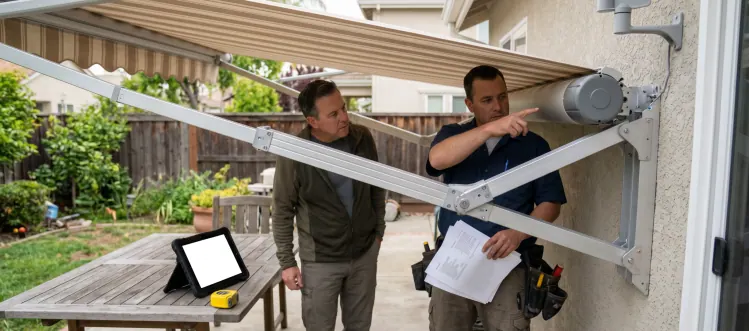
Installation complexity represents the most frequently underestimated cost component in motorized awning projects, with contractors routinely discovering site conditions that increase labor requirements by 40-60% beyond initial estimates. What appears to be a straightforward wall-mounted installation can quickly become a complex project involving electrical upgrades, structural modifications, and permit requirements that weren't apparent during initial site visits.
The challenge stems from the multiple trades required for proper motorized awning installation: structural work for mounting, electrical work for motor circuits, and specialized awning expertise for proper tensioning and programming. Each trade brings potential complications that compound project complexity and duration, particularly when installation requirements exceed standard residential construction practices.
Complexity Factors
- Electrical Circuit Requirements: New GFCI circuits for motors often require panel upgrades or lengthy wire runs, adding $800-$2,500 in electrical work beyond basic motor connections.
- Mounting Surface Challenges: Stucco, brick, or composite siding may require specialized fasteners and waterproofing techniques that double standard installation time and material costs.
- Access Limitations: Second-story installations or restricted access areas require scaffolding or specialized equipment rental, adding $500-$1,500 in setup and safety costs.
- Coordination Between Trades: Electrical, structural, and awning specialists must coordinate scheduling and work sequences, often extending project timelines and increasing labor coordination costs.
- Permit and Inspection Delays: Municipal approval processes can extend projects by 2-4 weeks, requiring multiple site visits and increasing overall labor costs through scheduling inefficiencies.
Experienced contractors conduct thorough site assessments and involve all necessary trades in the initial evaluation process. This upfront investment in planning prevents cost overruns and ensures realistic project timelines. Homeowners should expect detailed site surveys and comprehensive quotes that account for all potential complications rather than optimistic estimates based on ideal conditions.
Fabric Choice Drives Replacement Cycles and Long-Term Value
Fabric selection creates one of the most significant long-term cost implications in motorized awning ownership, with premium materials costing 50-70% more initially but potentially lasting twice as long as budget alternatives. The difference between a $800 polyester fabric and a $2,200 solution-dyed acrylic can determine whether you replace your awning fabric every 5 years or every 12 years, dramatically impacting total ownership costs.
The science behind fabric longevity involves UV resistance, colorfastness, water repellency, and dimensional stability under tension. Quality fabric systems incorporate advanced polymer chemistry and manufacturing processes that resist degradation from sun exposure, weather cycling, and mechanical stress. Understanding these differences helps homeowners make informed decisions about upfront investment versus long-term value.
Here's how different fabric types compare in terms of cost, longevity, and performance characteristics:
| Fabric Type | Initial Cost | Expected Lifespan | UV Resistance |
|---|---|---|---|
| Basic Polyester | $600-$1,200 | 4-6 years | Fair |
| Vinyl Composite | $900-$1,600 | 6-8 years | Good |
| Solution-Dyed Acrylic | $1,400-$2,500 | 10-15 years | Excellent |
| Premium Acrylic Plus | $2,000-$3,200 | 12-18 years | Superior |
Fabric Performance Factors
- UV Degradation Resistance: Solution-dyed acrylics maintain color and strength for 10+ years while polyester fabrics show significant fading and weakening within 3-5 years of exposure.
- Water Repellency Longevity: Premium fabrics retain water-shedding properties throughout their lifespan, while budget materials lose effectiveness within 2-3 years, leading to pooling and stretching.
- Dimensional Stability: High-quality fabrics resist stretching and sagging under tension, maintaining proper awning geometry and operation throughout their service life.
- Cleaning and Maintenance: Premium fabrics resist staining and mildew growth, requiring less frequent professional cleaning and chemical treatments that add to ownership costs.
- Warranty Coverage: Quality fabric manufacturers offer 8-12 year warranties compared to 2-4 years for budget options, providing protection against premature failure and replacement costs.
Fabric replacement represents a major expense requiring partial system disassembly and professional installation. Choosing premium fabrics upfront typically proves more economical than replacing budget materials multiple times over the awning's lifespan. The best approach considers both initial investment and projected replacement cycles when calculating total cost of ownership.
When Custom Mounting Solutions Cost More Than Standard Awnings
Custom mounting situations can transform a standard $5,000 awning installation into a $15,000 engineering project when standard attachment methods prove inadequate for specific architectural or structural conditions. Homes with unusual rooflines, insufficient wall structure, or aesthetic requirements often need completely custom mounting solutions that require engineering analysis, fabricated hardware, and specialized installation techniques.
The most expensive scenarios involve freestanding structures, roof-mounted systems, or installations on buildings with inadequate structural support. These situations require custom engineering solutions that can cost more than the awning itself, but may be the only viable option for achieving proper shade coverage in challenging architectural environments.
Custom Solutions
- Freestanding Support Structures: Independent posts and beams for awnings without suitable wall attachment can cost $8,000-$15,000 including foundations, structural engineering, and architectural integration.
- Roof-Mounted Systems: Installations requiring roof penetrations and structural reinforcement add $3,000-$7,000 in waterproofing, flashing, and structural modifications beyond standard wall mounting.
- Architectural Integration: Custom powder coating, specialized hardware finishes, or architectural detailing to match existing building elements can add $2,000-$5,000 in fabrication and finishing costs.
- Structural Reinforcement: Older buildings or those with inadequate wall framing may require internal structural upgrades costing $4,000-$10,000 before awning installation becomes feasible.
- Multi-Story Coordination: Complex installations spanning multiple building levels require specialized engineering and installation techniques that can double or triple standard labor costs.
Custom mounting solutions require early involvement of structural engineers and experienced awning specialists to develop feasible approaches. While expensive, these solutions often represent the only way to achieve proper shade coverage in challenging situations. The key is understanding custom requirements early in the planning process to avoid surprises and ensure realistic budget expectations.
Making Smart Awning Investment Decisions
Understanding the real factors that drive motorized awning costs helps you make informed decisions and avoid expensive surprises during your project. Motor quality, wind engineering requirements, smart integration complexity, and installation variables create far more cost variation than simple size calculations. Focus on the components that provide long-term value: quality motors with weather protection, durable fabrics with extended warranties, and proper structural mounting that ensures safe operation.
The most successful awning investments balance upfront costs with long-term performance and reliability. Rather than choosing the lowest initial price, consider total ownership costs including maintenance, fabric replacement, and potential storm damage from inadequate systems. If you're ready to explore motorized awning options that match your specific needs and budget, we can help you navigate these complex decisions and ensure your investment delivers lasting value and protection.
Author
Lane Frazier brings two decades of hands-on experience with motorized shade installations throughout Central Texas, specializing in the complex engineering and integration challenges that drive project costs. His expertise in Somfy automation systems and custom mounting solutions helps homeowners understand the true factors behind awning pricing. Lane's practical knowledge of wind load requirements, smart home integration, and fabric performance comes from installing hundreds of systems across diverse architectural styles and challenging site conditions.
Ready For a Quote?
Get your custom shade quote Today.
Free, no-pressure consultation. We measure, photograph, and send a written line-item proposal within a week. Most installs ship in 3–5 weeks.
Call the workshop
(512) 939-3446
Mon–Fri · 8a–5p CT · Austin, TX
Prefer to talk it through? Calls are answered by the same team that builds your quote — no call centers, no gatekeepers.
Custom exterior shades, motorized patio screens, awnings, and interior window treatments for Austin and Central Texas.
How To Contact Us
Austin, TX 78734
Monday - Friday 8 AM - 5 PM
navigate
Copyright © 2026 | Treaty Oak Shade Co. All Rights Reserved. | Privacy Policy