Wind tolerance determines which system actually works long-term. Most homeowners choose based on initial cost rather than operational reality.
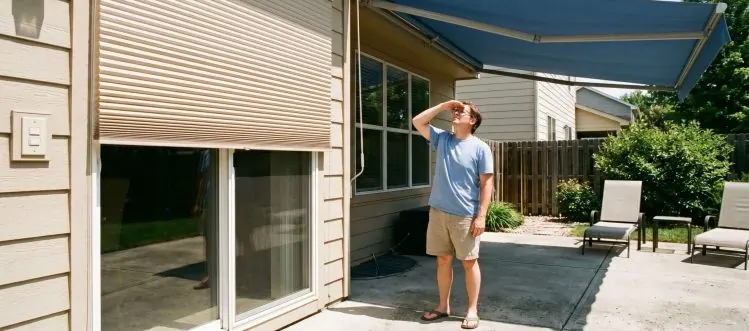
You're standing on your patio at 3 PM on a blazing summer afternoon, squinting against the glare and feeling the heat radiating off every surface. The outdoor space you invested thousands to create is basically unusable during the hours you'd actually want to enjoy it. Now you're weighing two popular solutions: motorized patio shades that drop down like window blinds, or retractable awnings that extend overhead like a fabric roof.
The choice between these systems isn't just about preference or budget, though those matter. It's about understanding which technology actually works in your specific environment, how much ongoing attention each requires, and what happens when the wind picks up. Most homeowners focus on the wrong factors upfront and end up frustrated with their investment within the first year.
Key Takeaways
- Wind Tolerance: Motorized shades handle gusts up to 25-30 mph when properly tensioned, while most retractable awnings must retract at 15-20 mph to prevent structural damage.
- Coverage Flexibility: Motorized shades offer precise positioning for partial coverage and glare control, whereas awnings provide all-or-nothing overhead protection that can't adjust to changing sun angles.
- Maintenance Reality: Awnings require seasonal fabric cleaning, annual hardware inspections, and potential re-tensioning, while motorized shades need occasional track cleaning and fabric replacement every 7-10 years.
- Installation Complexity: Retractable awnings demand substantial structural mounting and often electrical permits, while motorized shades typically mount to existing structures with minimal modifications.
- Long-term Costs: Factor in fabric replacement cycles, motor repairs, and seasonal maintenance when calculating total ownership costs, as these can double your initial investment over 10 years.
Why Most Homeowners Choose the Wrong Solution for Their Space
Walk into any home improvement store and you'll see both motorized shades and retractable awnings displayed with glossy photos of perfect patios. The marketing focuses on the end result, happy families enjoying outdoor spaces, but skips the crucial details about how these systems actually perform in real-world conditions. Most people make their decision based on aesthetics or initial price, not understanding that their home's specific challenges will determine which option actually works.
The biggest mistake is assuming both systems solve the same problem the same way. Motorized patio shades create a vertical barrier that blocks side-angle sun and wind while maintaining visibility and airflow. Retractable awnings create overhead coverage that provides complete shade and rain protection but can't address low-angle sun or side winds. Your patio's orientation, surrounding structures, and local weather patterns should drive this choice, not showroom appeal.
Decision Mistakes
- Orientation Oversight: Choosing awnings for east or west-facing spaces where low-angle morning and evening sun comes from the sides, not overhead.
- Wind Zone Ignorance: Installing retractable awnings in areas with frequent afternoon gusts without understanding their 15-20 mph operational limits.
- Maintenance Blindness: Selecting awnings without considering the seasonal cleaning, fabric care, and hardware inspection requirements that motorized shades don't demand.
- Size Assumptions: Assuming bigger is better without realizing that larger awnings become exponentially more vulnerable to wind damage and require more robust mounting.
- Integration Neglect: Failing to consider how the system integrates with existing architecture, nearby trees, or other outdoor features that could interfere with operation.
The key insight most people miss is that these aren't competing products, they're solutions to different outdoor comfort challenges. Understanding your specific problem, whether it's side-angle glare, overhead heat, wind exposure, or rain protection, should determine which technology makes sense. The wrong choice doesn't just waste money, it leaves your original comfort problem unsolved.
How Wind Speed Determines Which Option Will Actually Work
Wind is the silent killer of outdoor shade systems, and most homeowners underestimate its impact until they're dealing with damaged equipment or constant retractions. Motorized patio shades with proper zip-track retention systems can typically operate in winds up to 25-30 mph, depending on fabric type and installation quality. Retractable awnings, even high-end models, usually require retraction at 15-20 mph to prevent structural damage to the arms and fabric.
The difference comes down to physics and design intent. Motorized shades present a vertical surface with side channels that contain the fabric, distributing wind load across the entire mounting structure. Retractable awnings extend horizontally, creating a large surface area that catches wind like a sail. Even with wind sensors that automatically retract the awning, you're still dealing with a system that becomes unusable during many of the breezy afternoons when you'd most want shade.
Wind Performance
- Operational Thresholds: Quality motorized shades remain functional in 25-30 mph gusts, while most awnings auto-retract at 15-20 mph for safety.
- Fabric Behavior: Zip-track systems keep shade fabric contained during wind events, whereas awning fabric can flap violently and stress mounting hardware.
- Sensor Response: Wind sensors on awnings trigger immediate retraction, leaving you without coverage, while shades can ride out moderate wind events.
- Damage Patterns: Failed awnings typically show arm damage, fabric tears, or mounting failures, while shade failures usually involve track issues or motor strain.
- Recovery Time: Motorized shades resume normal operation immediately after wind subsides, while awnings may need manual inspection before re-extension.
If you live in an area with frequent afternoon winds, regular thunderstorms, or gusty conditions, this factor alone should drive your decision. A retractable awning that spends half its time retracted isn't providing the coverage you paid for. Wind patterns in your specific location matter more than manufacturer specifications tested in controlled conditions.
The Maintenance Reality Nobody Talks About Before You Buy
Showroom demonstrations don't include the part where you're on a ladder cleaning bird droppings off awning fabric or troubleshooting why your motorized shade isn't tracking properly. Both systems require ongoing care, but the type and frequency of maintenance differs significantly. Retractable awnings need seasonal fabric cleaning, annual hardware lubrication, and periodic re-tensioning of arms and springs. The fabric collects debris, pollen, and moisture that can lead to mildew if not properly maintained.
Motorized patio shades have their own maintenance requirements, but they're typically less intensive. The main tasks involve keeping the side tracks clean and free of debris, occasional fabric cleaning (which is easier since the fabric hangs vertically), and motor maintenance every 5-7 years. However, when motorized shades do fail, the repairs often involve motor replacement or track realignment, which can be more complex than awning arm adjustments.
Care Requirements
- Cleaning Frequency: Awning fabrics need quarterly cleaning to prevent mildew and staining, while vertical shade fabrics shed debris naturally and need less frequent attention.
- Hardware Inspection: Awning arms, springs, and mounting hardware require annual inspection and lubrication, whereas shade tracks need periodic debris removal but less mechanical maintenance.
- Fabric Replacement: Both systems need fabric replacement every 7-10 years, but awning fabric replacement is more complex due to the tensioning and mounting system.
- Motor Servicing: Tubular motors in both systems last 5-10 years but awning motors work harder due to larger fabric loads and wind exposure.
- Seasonal Prep: Awnings benefit from retraction during winter months in harsh climates, while motorized shades can typically remain operational year-round.
Factor maintenance into your total cost of ownership calculation. If you're not comfortable with regular cleaning and inspection tasks, or if you travel frequently and can't maintain consistent care schedules, these differences matter. Some homeowners discover they're paying for professional maintenance services they hadn't budgeted for.
Why Motorized Shades Win for Partial Coverage Every Time
The ability to fine-tune coverage throughout the day is where motorized patio shades really shine. Unlike retractable awnings that are either fully extended or fully retracted, motorized shades can stop at any position. This means you can block the harsh 4 PM western sun while still maintaining an open view above, or drop the shade halfway to cut glare while preserving airflow. This flexibility becomes crucial as the sun's angle changes throughout the day and seasons.
Real-world usage patterns show that homeowners adjust motorized shades multiple times per day, optimizing for changing light conditions, privacy needs, or weather. Somfy motors with preset positions make these adjustments effortless, allowing you to program 'morning', 'afternoon', and 'evening' positions that account for your patio's specific sun exposure. Retractable awnings, by contrast, offer binary choices that often leave you with either too much coverage or not enough.
Here's how positioning flexibility compares between motorized shades and retractable awnings across different scenarios.
| Scenario | Motorized Shades | Retractable Awnings |
|---|---|---|
| Morning glare control | 25-50% deployment blocks side sun | Full extension blocks overhead only |
| Afternoon heat | 75-100% deployment with airflow | Full coverage but blocks all air movement |
| Evening privacy | 50-75% for privacy, view above | No privacy control, overhead only |
| Windy conditions | Partial deployment remains safe | Must fully retract for safety |
| Light rain | Full deployment provides side protection | Overhead protection only |
Positioning Advantages
- Variable Coverage: Motorized shades stop at any position for precise light control, while awnings provide all-or-nothing coverage that can't adapt to changing conditions.
- Preset Programming: Quality motors allow multiple preset positions for different times of day, whereas awnings typically have only extend/retract functions.
- Privacy Control: Partial deployment provides privacy screening while maintaining visibility above, something awnings can't offer due to their overhead positioning.
- Wind Adaptation: Shades can be partially lowered during windy conditions to maintain some coverage, while awnings must fully retract for safety.
- Seasonal Adjustment: Lower winter sun angles require different coverage than summer, easily accommodated with adjustable shades but not fixed awning projections.
If your outdoor space faces multiple directions or if you use it at different times throughout the day, this positioning flexibility becomes invaluable. The ability to fine-tune coverage means you're actually using your shade system instead of working around its limitations.
When Retractable Awnings Are Worth the Extra Investment
Despite their limitations, retractable awnings excel in specific situations where their overhead coverage and rain protection capabilities outweigh the positioning and wind constraints. Large outdoor dining areas, poolside lounging spaces, and patios used primarily during midday hours benefit most from the complete overhead coverage that awnings provide. The ability to create a true outdoor room with protection from both sun and rain makes awnings worthwhile for homeowners who prioritize weather protection over flexibility.
Premium retractable awnings with Sunbrella acrylic fabrics and robust arm systems can handle larger projections than motorized shades, sometimes extending 12-14 feet from the mounting wall. This makes them ideal for covering outdoor kitchens, dining sets, or multiple seating areas simultaneously. When you need to protect a large area and don't require frequent position adjustments, the overhead coverage model makes more sense than multiple motorized shades.
Awning Advantages
- Rain Protection: Overhead fabric with proper pitch sheds water effectively, allowing outdoor use during light rain when shades would be inadequate.
- Large Area Coverage: Single awnings can cover 12-14 foot projections, protecting entire outdoor dining or entertaining areas with one system.
- Complete Shade: Full overhead coverage eliminates all direct sunlight, creating cooler temperatures than partial shade systems can achieve.
- Outdoor Room Feel: Extended awnings create defined outdoor spaces that feel more enclosed and intimate than open-sided shade coverage.
- Furniture Protection: Overhead coverage protects outdoor furniture, cushions, and equipment from both sun damage and precipitation when extended.
The investment in a quality retractable awning makes sense when your outdoor space has specific requirements that align with what awnings do best. If you frequently entertain outdoors, have valuable furniture to protect, or live in an area with predictable weather patterns that allow for extended operation, the higher cost and maintenance requirements become worthwhile.
The Installation Factor That Changes Your Total Cost by Thousands
Installation complexity varies dramatically between these systems, and the differences can add thousands to your project cost depending on your home's structure and local permitting requirements. Motorized patio shades typically mount to existing structures like pergolas, covered patios, or building walls using standard bracket systems. Most installations can be completed in a few hours without structural modifications or electrical permits, especially when using battery-powered motors.
Retractable awnings present more installation challenges. They require substantial structural mounting capable of supporting both the awning weight and wind loads, often necessitating reinforcement of mounting surfaces. Electrical work for hardwired motors may require permits and licensed electrician involvement. Additionally, many municipalities classify large retractable awnings as structures requiring building permits, adding time and cost to the installation process.
Installation complexity and associated costs vary significantly between motorized shades and retractable awnings.
| Installation Factor | Motorized Shades | Retractable Awnings |
|---|---|---|
| Structural requirements | Standard brackets, minimal load | Heavy-duty mounting, wind load rated |
| Permit requirements | Usually none required | Often requires building permits |
| Electrical complexity | Battery power or simple wiring | May need dedicated circuits |
| Installation time | 2-4 hours typical | 1-3 days with permits |
| Additional costs | $200-500 for mounting | $500-2000 for reinforcement |
Installation Factors
- Structural Requirements: Awnings need robust mounting for wind loads and projection weight, while shades typically use standard bracket systems on existing structures.
- Permit Complexity: Large awnings often require building permits and inspections, whereas most shade installations fall below permit thresholds.
- Electrical Work: Hardwired awning motors may need dedicated circuits and electrical permits, while battery-powered shade motors avoid electrical complications.
- Timeline Impact: Awning installations can take days due to structural work and permits, while shade installations typically complete in hours.
- Modification Costs: Mounting surface reinforcement for awnings can add $500-2000 to project costs, while shades rarely require structural modifications.
Don't underestimate how installation requirements affect your total investment. A seemingly affordable awning can become expensive once you factor in structural reinforcement, permits, electrical work, and extended installation time. Get detailed installation assessments before making your final decision.
Why Your Home's Architecture Eliminates Half Your Options
Your home's existing structure determines which shade solution is even possible, and many homeowners discover architectural limitations only after they've started planning their project. Retractable awnings require substantial overhead mounting points like solid walls, roof eaves, or heavy-duty pergola beams capable of handling significant loads. Homes with large roof overhangs, decorative trim work, or insufficient wall space above windows and doors may not accommodate awning installations without major modifications.
Motorized patio shades offer more architectural flexibility since they can mount to various structures including pergolas, gazebos, existing shade structures, or purpose-built frames. However, they need clear vertical space for fabric travel and side-mounting points for track systems. Homes with architectural features like outdoor fireplaces, built-in seating, or landscaping that extends close to the house may find shade installation challenging without creative mounting solutions.
Architectural Constraints
- Mounting Surface: Awnings need solid overhead mounting with load-bearing capacity, while shades can utilize various vertical and horizontal mounting points.
- Clearance Requirements: Awnings require clear overhead space for extension, whereas shades need unobstructed vertical travel paths for fabric deployment.
- Structural Integration: Existing pergolas and covered patios often accommodate shades better than awnings due to mounting point availability and load distribution.
- Aesthetic Compatibility: Modern homes with clean lines may favor the sleek profile of retracted shades over the bulk of awning cassettes and arms.
- Modification Limitations: Historic homes or HOA-restricted communities may prohibit the structural changes required for awning installation but allow shade systems.
Before falling in love with either option, have a qualified installer assess your specific architecture. What looks possible in photos may not work with your home's unique features, roof lines, or structural limitations. Understanding these constraints early prevents disappointment and helps you focus on solutions that actually fit your space.
Making the Right Choice for Your Space
The decision between motorized patio shades and retractable awnings comes down to understanding your specific needs, constraints, and usage patterns rather than following generic recommendations. If you need flexibility, wind tolerance, and precise light control, motorized shades deliver better long-term satisfaction. If you prioritize complete overhead coverage, rain protection, and large-area shading, retractable awnings justify their higher complexity and cost.
Success with either system requires honest assessment of your local weather conditions, architectural constraints, and maintenance capabilities. The best outdoor shade solution is the one that actually gets used consistently rather than the one that looks most impressive when fully deployed. If you're ready to explore which option works best for your specific situation, we can help you evaluate your space and recommend the most suitable system for your needs.
Author
Lane Frazier is the owner of Treaty Oak Shade Company and brings over 20 years of hands-on experience installing motorized shade systems throughout the Austin area. His expertise in matching shade solutions to local weather conditions and architectural constraints helps homeowners avoid costly mistakes and choose systems that actually work long-term. Lane's practical approach focuses on real-world performance rather than showroom appeal, ensuring clients get shade solutions that enhance their outdoor living for years to come.
Ready For a Quote?
Get your custom shade quote Today.
Free, no-pressure consultation. We measure, photograph, and send a written line-item proposal within a week. Most installs ship in 3–5 weeks.
Call the workshop
(512) 939-3446
Mon–Fri · 8a–5p CT · Austin, TX
Prefer to talk it through? Calls are answered by the same team that builds your quote — no call centers, no gatekeepers.
Custom exterior shades, motorized patio screens, awnings, and interior window treatments for Austin and Central Texas.
How To Contact Us
Austin, TX 78734
Monday - Friday 8 AM - 5 PM
navigate
Copyright © 2026 | Treaty Oak Shade Co. All Rights Reserved. | Privacy Policy