
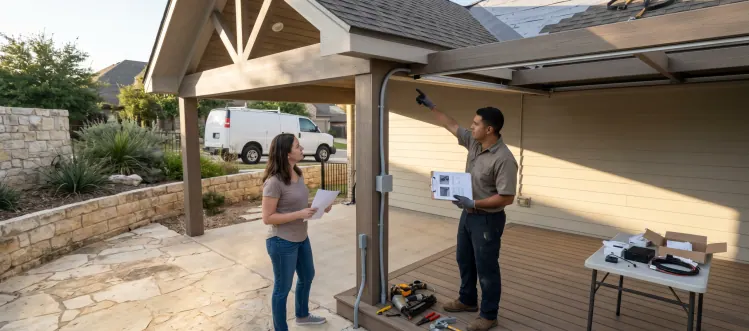
Most motorized roof shade quotes miss 40-60% of total project costs. Electrical permits, structural assessments, and smart integration typically add $2,000-3,500 to base pricing.
You've received that first quote for motorized roof shades and the number seems reasonable, maybe even exciting. The salesperson walked your patio, measured the space, and promised automated comfort at the touch of a button. What they didn't tell you about are the electrical permits, structural reinforcements, smart home integration fees, and weather sensor requirements that can push your $3,000 estimate well past $5,500.
The reality is that motorized shade systems involve far more complexity than most homeowners realize. From Austin to Lakeway, from Cedar Park to New Braunfels, we're seeing the same pattern: initial quotes that focus solely on the shade unit while glossing over installation realities. Understanding these hidden costs upfront helps you budget accurately and avoid project delays that come from unexpected expenses.
Key Takeaways
- Electrical Reality: Dedicated circuits, permits, and GFCI protection typically add $800-1,500 to your project before the first shade motor gets installed.
- Smart Integration: Connecting to existing home automation systems requires hubs, programming, and compatibility modules that cost $400-900 beyond basic remote control.
- Weather Protection: Wind sensors, rain detection, and automatic retraction systems are essential in Texas but add $600-1,200 to prevent storm damage.
- Permit Requirements: Most motorized installations need electrical permits and structural assessments, adding $300-700 in fees plus potential engineering costs.
- Fabric Upgrades: Commercial-grade fabrics that actually withstand Austin's UV exposure and wind loads cost 60-80% more than standard residential options.
Why Your $3,000 Motorized Shade Quote Becomes $5,500 by Project End
That initial quote looks straightforward until you dig into what's actually included. Most contractors provide base pricing that covers the shade unit, basic mounting hardware, and simple installation labor. What's missing are the electrical modifications, permit fees, structural reinforcements, and integration costs that turn a seemingly affordable project into a major investment. The pattern repeats whether you're in Westlake Hills or Dripping Springs.
The disconnect happens because many shade companies focus on product sales rather than complete installation realities. They'll quote the motorized blind hardware but assume your electrical system is ready, your structure can handle wind loads, and you'll be satisfied with basic remote control. In practice, most installations require significant additional work to meet code requirements and deliver the automated convenience customers actually want.
Here's how typical cost escalation breaks down from initial quote to final invoice:
| Cost Category | Initial Quote* | Actual Cost* | Increase |
|---|---|---|---|
| Shade Unit & Basic Install | $3,000 | $3,000 | 0% |
| Electrical Circuit & Permits | $0 | $1,200 | New |
| Smart Integration | $0 | $650 | New |
| Weather Sensors | $0 | $800 | New |
| Structural Reinforcement | $0 | $450 | New |
| Total Project Cost | $3,000 | $6,100 | 103% |
*Illustrative costs. Actual costs may vary.
Cost Escalation Factors
- Electrical Upgrades: Most homes need dedicated 20-amp circuits with GFCI protection, requiring permits and licensed electrician work that wasn't in the original scope.
- Code Compliance: Austin's electrical codes require specific wiring methods and protection devices that add complexity beyond basic motor connections.
- Integration Hardware: Smart home connectivity requires hubs, bridge devices, and programming time that contractors often quote separately after initial proposals.
- Weather Protection: Texas wind and storm patterns make sensors and automatic retraction systems essential, not optional upgrades.
- Structural Assessment: Roof attachments and wind load calculations often reveal reinforcement needs that weren't apparent during initial measurements.
The key is getting detailed quotes that include all installation realities upfront. Reputable contractors will walk through electrical requirements, permit needs, and integration options during initial consultations. When quotes seem too good to be true or lack detail about electrical work and code compliance, expect significant cost increases once work begins.
The Electrical Work Nobody Mentions During Initial Consultations
Most motorized roof shades require dedicated electrical circuits, but contractors rarely explain this during initial visits. They'll measure your space and discuss fabric options while glossing over the fact that your existing electrical system probably can't support multiple motors, control hubs, and weather sensors. The reality hits when installation day arrives and the electrician explains why your project needs permits, new circuits, and code-compliant wiring.
Austin's electrical requirements follow National Institute of Standards and Technology guidelines that mandate GFCI protection, proper grounding, and specific circuit sizing for motorized equipment. What looks like a simple plug-in installation actually requires hardwired connections, junction boxes, and conduit runs that weren't visible during the initial consultation. From Cedar Park to San Marcos, the electrical scope typically doubles the complexity of shade installations.
Electrical Requirements
- Dedicated Circuits: Each motorized system needs its own 20-amp circuit to prevent overloading and ensure reliable operation during peak summer cooling loads.
- GFCI Protection: Code requires ground fault protection for outdoor electrical equipment, adding specialized breakers and outlet configurations to your electrical panel.
- Permit Fees: Electrical work triggers permit requirements in most Austin-area jurisdictions, adding $150-400 in fees plus inspection scheduling delays.
- Licensed Labor: Only TDLR-licensed electricians can perform the hardwired connections, and their rates are significantly higher than general installation labor.
- Code Compliance: Proper conduit, junction boxes, and grounding methods add material costs and labor time that basic quotes don't include.
The electrical scope becomes clear once you understand that motorized shades are permanently installed equipment, not plug-in appliances. Smart contractors will assess your electrical capacity and explain permit requirements during initial consultations. When they don't, you're looking at project delays and cost overruns once the electrical realities become apparent.
Smart Home Integration Costs That Blindside Most Homeowners
Everyone wants their motorized shades to work with Alexa, integrate with their security system, and respond to automated schedules. What they don't expect is the additional hardware, programming, and compatibility modules required to make this happen. Basic motorized shades come with simple remote controls, but true smart home integration requires bridge devices, hub programming, and often additional sensors that weren't part of the original quote.
The integration complexity varies dramatically depending on your existing smart home setup. If you're running Lutron, Control4, or similar systems, compatibility modules and professional programming can add $800-1,500 to your project. Even basic smartphone control through Somfy motors requires TaHoma hubs and setup fees that contractors often quote as separate line items after you've committed to the base installation.
Integration Costs
- Hub Requirements: Smart control requires bridge devices like TaHoma or Bond hubs that cost $200-400 plus programming time for setup and device pairing.
- Compatibility Modules: Existing automation systems often need specific interface modules to communicate with shade motors, adding $150-300 per integration point.
- Programming Labor: Professional setup of scenes, schedules, and automation rules typically costs $100-200 per hour with 2-4 hours required for complex systems.
- App Licensing: Some advanced control features require monthly or annual subscription fees that weren't disclosed during initial product demonstrations.
- Network Infrastructure: Reliable smart control often requires Wi-Fi extenders or dedicated network equipment to ensure consistent connectivity across large outdoor installations.
Smart integration works best when planned from the beginning rather than added as an afterthought. Contractors who understand home automation will discuss compatibility and programming requirements during initial consultations. When they focus only on the physical shade installation, expect significant additional costs to achieve the smart functionality you're expecting.
How Weather Sensors and Wind Guards Double Your Investment
Texas weather makes protective sensors essential, not optional upgrades. Austin's sudden thunderstorms, high winds, and intense UV exposure can destroy unprotected motorized shades in a single season. What contractors present as add-on features are actually necessary components for any outdoor installation that needs to survive our climate. The sensor packages, automatic retraction systems, and wind-rated hardware often cost as much as the shade itself.
The sensor complexity goes beyond simple wind detection. Complete weather protection requires sun sensors for automatic deployment, rain sensors to prevent water damage, and sophisticated wind monitoring that can distinguish between gentle breezes and damaging gusts. According to Department of Energy research, properly automated systems provide better energy savings and equipment protection, but the sensor packages add substantial cost to basic motorized installations.
Weather protection systems add significant cost but prevent expensive damage and replacements:
| Protection Type | Cost Range* | Function | Necessity |
|---|---|---|---|
| Wind Sensor | $300-500 | Auto retract at 15-25 mph | Essential |
| Sun Sensor | $200-350 | Deploy based on light levels | Recommended |
| Rain Sensor | $150-300 | Retract during precipitation | Important |
| Smart Weather Hub | $400-600 | Integrates all sensors | Required |
| Wind-Rated Hardware | $500-800 | Handles higher wind loads | Critical |
*Illustrative costs. Actual costs may vary.
Weather Protection
- Wind Sensors: Automatic retraction at preset wind speeds prevents fabric tears and motor damage, but quality sensors cost $300-500 plus calibration labor.
- Storm Integration: Complete weather monitoring requires multiple sensors and smart hubs that coordinate responses based on changing conditions throughout the day.
- Hardware Upgrades: Wind-rated mounting systems and reinforced tracks cost 40-60% more than standard residential hardware but are essential for Texas installations.
- Calibration Costs: Professional setup and testing of sensor thresholds requires specialized knowledge and typically costs $200-400 per system.
- Maintenance Requirements: Weather sensors need annual recalibration and battery replacement, adding ongoing costs that weren't part of the original investment discussion.
Weather protection isn't optional in Texas climates, despite how contractors might present these features. The upfront investment in quality sensors and wind-rated hardware prevents costly repairs and replacements down the road. Smart homeowners budget for complete weather protection from the beginning rather than learning about its importance after storm damage occurs.
The Permit and Structural Assessment Fees Contractors Forget to Quote
Most motorized roof shade installations require permits and structural assessments that contractors conveniently forget to mention during sales presentations. The mounting loads, electrical connections, and wind resistance requirements trigger building code reviews that add time and cost to every project. From Austin's Development Services Department to smaller municipalities like Bee Cave and Spicewood, permit requirements are consistent but often overlooked in initial quotes.
The structural assessment becomes critical when you're mounting heavy motorized systems to roof edges, pergolas, or existing structures. Engineers need to verify that your mounting points can handle both the static weight of the shade system and the dynamic loads from wind and operation. These assessments cost $400-800 but are essential for safe installation and code compliance. Industry standards require proper load calculations for any significant exterior attachment.
Permit Requirements
- Building Permits: Most jurisdictions require permits for structural attachments and electrical work, adding $200-500 in fees plus plan review time.
- Engineering Assessments: Roof and pergola attachments often need structural calculations to verify load capacity, costing $400-800 for professional analysis.
- Inspection Fees: Multiple inspections for electrical, structural, and final approval add $100-200 per visit with scheduling delays between installation phases.
- Plan Submittal: Detailed drawings and specifications are required for permit approval, adding drafting costs and review time to project timelines.
- Code Compliance: Meeting current building codes often requires upgrades to mounting methods or structural reinforcements that weren't apparent during initial site visits.
Permit and assessment costs are part of doing installation work properly, but many contractors try to avoid discussing them upfront. Reputable installers will explain permit requirements and include assessment fees in their initial quotes. When contractors suggest 'simple installations that don't need permits,' you're likely looking at code violations and potential liability issues.
Why Fabric Upgrades Cost More Than the Motor Itself
The fabric selection dramatically impacts both upfront costs and long-term performance, but most quotes start with basic residential-grade materials that won't survive Austin's intense UV exposure and wind conditions. Commercial-grade fabrics with proper UV stabilization, wind resistance, and fire ratings cost 60-80% more than standard options, but they're essential for installations that need to last more than 2-3 years in Texas sun.
The fabric complexity goes beyond simple material costs. Wind-rated installations require reinforced hems, specialized edge retention systems, and tensioning hardware that standard residential fabrics can't accommodate. Window covering standards specify performance requirements that basic fabrics simply can't meet, making upgrades necessary rather than optional for serious outdoor installations.
Fabric Considerations
- UV Resistance: Commercial-grade fabrics with proper UV stabilization cost $8-15 per square foot compared to $3-6 for residential materials that fade quickly.
- Wind Ratings: Fabrics designed for wind loads require reinforced construction and specialized edge systems that double the material cost per linear foot.
- Fire Ratings: Commercial installations often require fire-rated fabrics that meet building codes, adding 40-60% to material costs over standard residential options.
- Custom Sizing: Large roof installations require custom fabric widths and reinforced seams that eliminate standard pricing and require specialized manufacturing.
- Edge Retention: Quality installations need zipper tracks or cable-guided systems that require compatible fabric edge treatments, adding $5-10 per linear foot.
Fabric upgrades represent the difference between a system that works for a few years and one that provides decades of reliable service. The upfront cost difference is significant, but the performance gap is even larger when you consider Austin's demanding climate conditions. Smart buyers invest in proper fabric specifications from the beginning rather than replacing failed materials after a few seasons.
Most Expensive Mistake: Skipping the Professional Site Survey
The biggest cost overruns happen when contractors provide quotes based on quick measurements and assumptions rather than thorough site surveys. A proper survey identifies electrical capacity, structural limitations, permit requirements, and integration challenges before work begins. Skipping this step leads to change orders, project delays, and cost escalations that can double your final investment. From Horseshoe Bay to Rollingwood, we see the same pattern of inadequate initial assessments.
Professional surveys take 2-3 hours and cost $200-400, but they prevent thousands in unexpected expenses and project delays. The survey should include electrical load calculations, structural assessments, permit requirement reviews, and integration compatibility checks. When contractors offer 'free estimates' based on quick visits, you're likely looking at significant surprises once actual installation work begins. Quality site assessment prevents most of the hidden costs that blindside homeowners.
Survey Benefits
- Electrical Assessment: Professional load calculations identify circuit requirements, panel capacity, and permit needs before installation scheduling begins.
- Structural Analysis: Proper mounting point evaluation prevents costly reinforcement surprises and ensures code-compliant installation methods from the start.
- Integration Planning: Thorough compatibility checks with existing systems prevent expensive rework and ensure smart home features work as expected.
- Permit Identification: Early permit requirement assessment allows proper timeline planning and avoids installation delays from unexpected approval processes.
- Cost Accuracy: Detailed surveys enable accurate quotes that include all necessary work, preventing change orders and budget overruns during installation.
The site survey investment pays for itself by preventing cost overruns and ensuring realistic project timelines. Contractors who skip thorough assessments are essentially gambling with your budget and schedule. When you're investing thousands in motorized shade systems, spending a few hundred on proper planning protects your entire investment and ensures the finished installation meets your expectations.
Planning Your Shade Investment Wisely
Understanding the hidden costs of motorized roof shades helps you budget realistically and choose contractors who provide complete, honest quotes from the beginning. The electrical work, permits, smart integration, weather protection, and fabric upgrades aren't optional extras, they're essential components of installations that work reliably in Texas conditions. Whether you're in Austin, Lakeway, or any of our service areas, the cost patterns remain consistent.
The key is working with contractors who explain all installation requirements upfront rather than discovering them during construction. Get detailed quotes that include electrical work, permit fees, integration costs, and weather protection systems. When you're ready to explore motorized shade options with complete transparency about costs and requirements, contact our team for a thorough consultation that covers all aspects of your project investment.
Author
This article was written by the Treaty Oak Shade Company Editorial Team, experienced professionals serving Austin, West Lake Hills, Lakeway. Our team focuses on educating clients and providing valuable insights to help them make informed decisions.
Ready For a Quote?
Get your custom shade quote Today.
Free, no-pressure consultation. We measure, photograph, and send a written line-item proposal within a week. Most installs ship in 3–5 weeks.
Call the workshop
(512) 939-3446
Mon–Fri · 8a–5p CT · Austin, TX
Prefer to talk it through? Calls are answered by the same team that builds your quote — no call centers, no gatekeepers.
Custom exterior shades, motorized patio screens, awnings, and interior window treatments for Austin and Central Texas.
How To Contact Us
Austin, TX 78734
Monday - Friday 8 AM - 5 PM
navigate
Copyright © 2026 | Treaty Oak Shade Co. All Rights Reserved. | Privacy Policy