
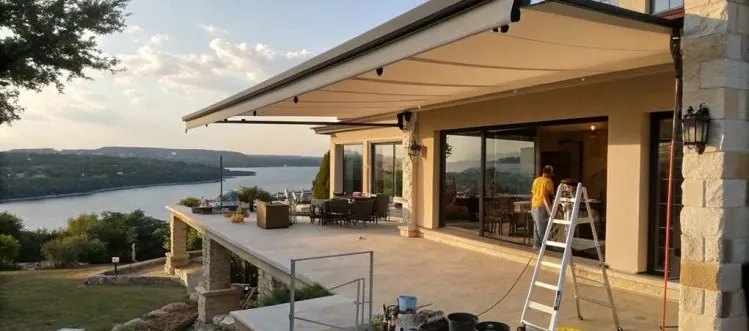
Quick Take: Lakeway homeowners face distinct challenges installing motorized patio shades, including electrical integration, structural mounting, and ensuring weather resistance for lasting performance.
Installing motorized patio shades in Lakeway requires more than basic setup. Homeowners must safely integrate them with existing electrical systems, comply with local codes, and ensure precise mounting to withstand Texas’s variable weather.
Water-resistant installation protects mechanical components, while careful calibration and smart home integration guarantee smooth operation. Understanding these challenges upfront helps avoid costly mistakes and ensures your shades provide lasting comfort and convenience tailored to Lakeway homes.
Key Takeaways
- The high humidity and temperature swings common in Lakeway call for corrosion-resistant hardware and waterproof components to ensure your patio shades stand up over time.
- Integrating motorized shades with 120V AC electrical systems requires careful planning—proper wiring placement and checking circuit capacity help avoid overloads.
- Shades need to meet local wind load standards to withstand Texas storms and seasonal weather changes without damage.
- Getting precise measurements and aligning shades within a quarter-inch is key for smooth, reliable operation, making professional installation highly recommended.
- Connecting motorized shades to smart home platforms like Apple HomeKit or Alexa can be tricky, so compatibility and setup should be carefully considered.
Electrical System Integration and Power Supply Requirements
Key Insight: Integrating motorized patio shades with a home’s electrical system demands precise power planning to ensure seamless operation, safety, and scalability. Understanding voltage compatibility, wiring standards, and circuit capacity is critical for both immediate functionality and future upgrades.
Successful integration hinges on matching the motorized shades’ low-voltage, low-amperage requirements with the home’s existing 120V AC/60Hz electrical infrastructure. Installers must consider wiring gauge, motor cable length, and outlet placement to optimize performance and maintain compliance with local electrical codes. Thoughtful planning reduces risks of circuit overloads and facilitates effortless expansion when adding more units.
Adhering to proper power supply specifications enhances not only operational reliability but also long-term system durability. That’s why understanding the interplay between electrical load, motor wiring configurations, and residential power standards is essential for both homeowners and professional installers aiming for a seamless setup. Additionally, the use of motorized systems can significantly improve the convenience and functionality of outdoor spaces, such as rolling shutters that provide storm protection and UV shielding.
Key considerations to optimize electrical system integration include:
- Voltage and frequency compatibility aligned with standard household supply (120V AC/60Hz), ensuring stable, safe operation
- Appropriate wiring gauge selection (12/2 or 14/2 AWG) compatible with residential wiring best practices
- Motor cable length management (typically 6 feet) for flexible outlet positioning and minimal voltage drop
- Series wiring capability for low-amperage motors enabling multiple shade units on a single circuit
- Circuit capacity assessment to prevent overload and comply with local electrical code requirements
- Manufacturer specifications adherence to guarantee warranty validity and operational safety
Additionally, selecting the right type of interior roller shades can enhance the overall aesthetic of your space while providing the desired functionality. Embracing a comprehensive electrical integration strategy empowers homeowners to maximize the functionality and longevity of motorized patio shades. This approach mitigates safety risks, supports smoother installations, and enables easy future expansions. That’s why pairing expert knowledge with meticulous planning transforms complex electrical challenges into reliable, user-friendly solutions.
Structural Mounting Complexities for Texas Homes
Incorporating structural and environmental considerations means prioritizing key installation factors such as
- Comprehensive evaluation of wall substrates for optimal bracket placement and support
- Use of reinforced mounting points or buildout framing to manage motorized shade weight
- Application of corrosion-resistant fasteners and hardware suited for high humidity and temperature fluctuations
- Compliance with wind load requirements to prevent damage during storms or high winds
- Seamless architectural integration that preserves home aesthetics while accommodating mechanical components
Understanding these mounting complexities empowers homeowners and installers to make informed decisions that enhance both function and form. That’s why partnering with experienced professionals who prioritize structural safety and environmental adaptation is crucial. Additionally, choosing motorized options can provide convenience and ease of use, which is particularly beneficial for larger installations.
By embracing these best practices, you ensure your motorized patio shades deliver lasting comfort and style in Texas’s unique climate. Furthermore, engaging with custom solutions offered by experts can further enhance the efficiency of the installation process. For instance, the use of energy-efficient treatments can help improve insulation and reduce energy costs, making them an excellent choice for homeowners looking to optimize their shading solutions.
Professional Expertise and Technical Specifications
Quick Take: Expert motorized patio shade installation requires precise measurements, adherence to technical standards, and integration of advanced components to ensure durability, performance, and smart home compatibility.
The complexity of installing motorized patio shades goes beyond basic fitting; it demands rigorous verification of field measurements and meticulous alignment within tight tolerances to achieve seamless functionality. As a result, installers must rely heavily on detailed technical drawings and site-specific framing dimensions to ensure perfect pocket integration and structural integrity.
Professional installation integrates sophisticated systems such as dual roller mechanisms that independently calibrate solar and blackout fabrics for optimal light control. Adherence to manufacturer specifications and fabric certifications guarantees long-term performance, durability, and resistance to environmental factors like UV exposure and microbial growth.
Key installation considerations emphasize critical technical and material specifications, including:
- Precise bracket alignment within a quarter-inch tolerance relative to window jambs to maintain operational smoothness
- Independent calibration of dual roller systems for solar and blackout layers, ensuring tailored light filtering and privacy control
- Motor controllers compatible with building voltage standards, featuring smart home integration through platforms like Apple HomeKit and Amazon Alexa
- Verification of fabric certifications such as Phifer® anti-microbial treatment and Twitchell® UV-blocking standards to uphold durability and health compliance
- Use of aluminum extrusions meeting T5 temper and powder-coated finishes to resist corrosion in outdoor environments
- Rigorous validation of fabric openness ratings aligned with technical performance documentation to optimize airflow and shading efficiency
Mastering the interplay of professional expertise and precise technical standards elevates motorized patio shade installations from functional to exceptional. That’s why engaging experienced installers who prioritize accuracy and compliance is crucial for maximizing comfort, aesthetic appeal, and smart integration. Moving forward, investing in certified materials and advanced controls ensures your patio shades deliver consistent, high-performance results tailored to your unique environment.
Weather-Resistant Installation Methods
Quick Take: Effective weather-resistant installation is essential for motorized patio shades, combining waterproof materials and strategic drainage to protect components and ensure lasting performance across diverse climates.
As a result of exposure to rain, wind, and humidity, motorized patio shade systems require meticulous weatherproofing to maintain their durability and functionality. Using water-resistant fabrics and specialized hardware kits creates an initial barrier against moisture infiltration, safeguarding both the fabric and sensitive motor mechanisms. Neglecting these protective measures can lead to corrosion, fabric degradation, and mechanical failure, undermining the investment in outdoor shading solutions.
Employing strategic installation techniques enhances system longevity by promoting efficient water runoff and structural stability. Positioning pole clamps lower than anchoring points facilitates effective drainage, preventing water accumulation around critical components. Additionally, maintaining an appropriate overhang and securing foundations with chemical anchors and threaded rods ensure the entire assembly withstands environmental stressors such as wind loads and freeze-thaw cycles.
Key elements of weather-resistant installation blend specialized materials and engineering best practices, including:
- Use of waterproof, UV-resistant fabrics designed specifically for outdoor motorized shades
- Integration of corrosion-resistant hardware kits featuring stainless steel and powder-coated components
- Strategic placement of pole clamps below house anchors to channel water away from motor assemblies
- Maintaining a minimum 12-inch overhang perimeter to optimize rainwater runoff and minimize splashback
- Employing chemical anchoring agents and heavy-duty threaded rods for foundation stability against shifting soils
- Utilizing tension kits and 3/8-inch eye bolt fasteners to secure assemblies during high winds and storms
Understanding and implementing these weather-resistant installation methods transforms motorized patio shades into reliable, long-lasting outdoor assets. That's why contractors and homeowners alike must prioritize these techniques to protect their investments and ensure consistent shade performance. Moving forward, integrating these best practices into every installation project will maximize both operational efficiency and aesthetic appeal, delivering peace of mind through all weather conditions.
Common Technical Pitfalls and Solutions
Quick Take: Motorized patio shades enhance outdoor living but often face technical hurdles like signal interference and power issues. Proper installation by skilled professionals ensures optimal motor alignment, secure wiring, and seamless home automation integration for dependable, weather-resistant performance.
As a result of complex environmental factors and intricate system components, motorized patio shades require meticulous installation to function reliably over time. Signal disruption from structural obstacles or nearby electronics can degrade remote control responsiveness, while improper motor calibration may lead to mechanical wear and operational failures. These challenges can diminish the lifespan and user experience of automated shading systems.
That’s why professional expertise in electrical wiring, sensor configuration, and mechanical mounting is essential to mitigate these risks. Integrating motorized shades with smart home ecosystems demands precise programming and power management to prevent circuit overloads and ensure consistent communication across devices. This holistic approach significantly elevates performance and durability in diverse weather conditions.
Common technical pitfalls and solutions encompass:
- Electrical challenges stemming from faulty wiring, insufficient power supply, or overloaded circuits requiring prompt troubleshooting
- Signal and communication issues caused by interference, weak remote signals, or initial programming errors affecting control reliability
- Mechanical problems related to misaligned motors, improper mounting, or inadequate structural support compromising shade movement
- Sensor calibration errors that reduce responsiveness to environmental cues such as sunlight or wind, impacting automation accuracy
- Integration complexities involving compatibility with home automation protocols like Z-Wave or Zigbee, necessitating expert system configuration
In Summary
Homeowners in Lakeway often encounter challenges when installing motorized patio shades, including ensuring proper electrical connections and maintaining structural integrity. Weather-resistant mounting solutions are crucial to withstand local environmental conditions and protect the investment. Achieving seamless operation requires professional expertise to integrate complex components effectively. Careful planning and precise installation help maximize the functionality and longevity of these shade systems.
Treaty Oak Shade stands out as the premier provider of custom motorized patio shades in Austin, Texas, and its surrounding areas. Our team specializes in addressing the unique technical and environmental challenges that Lakeway homeowners face. By offering tailored solutions and expert installations, we enhance outdoor living spaces with durable, high-performing shades. Homeowners can rely on Treaty Oak Shade to deliver exceptional quality and service for all motorized shade needs.
Contact Us & Discover How We Can Help You Today!
(512) 939-3446
15218 Nightingale Ln
Austin, TX 78734
Ready For a Quote?
Get your custom shade quote Today.
Free, no-pressure consultation. We measure, photograph, and send a written line-item proposal within a week. Most installs ship in 3–5 weeks.
Call the workshop
(512) 939-3446
Mon–Fri · 8a–5p CT · Austin, TX
Prefer to talk it through? Calls are answered by the same team that builds your quote — no call centers, no gatekeepers.
Custom exterior shades, motorized patio screens, awnings, and interior window treatments for Austin and Central Texas.
How To Contact Us
Austin, TX 78734
Monday - Friday 8 AM - 5 PM
navigate
Copyright © 2026 | Treaty Oak Shade Co. All Rights Reserved. | Privacy Policy