
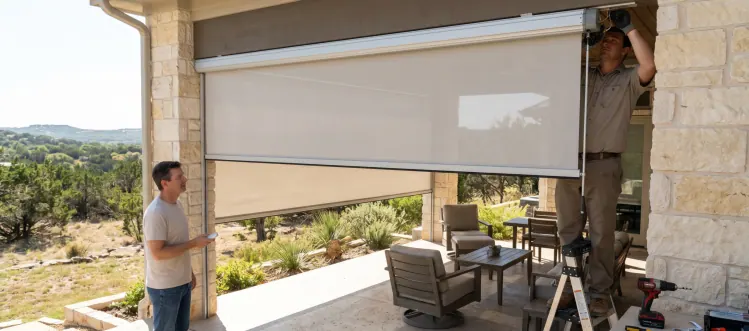
The answer often lies in the window covering you choose.
Motorized shades can change that picture by managing solar heat before it reaches your home, delivering real savings without sacrificing comfort.
Motorized shades lower cooling loads by blocking solar heat, and smart timing can out‑perform fabric insulation alone, turning a premium purchase into a long‑term utility bill saver.
In this post we’ll walk through the hidden ways automated window coverings affect your energy bill, from timing algorithms to sensor choices, and we’ll show how homeowners in Austin, West Lake Hills, Bee Cave, Horseshoe Bay and San Marcos can reap the benefits.
You’ll leave with clear actions you can take today, plus a quick look at the numbers that prove the investment pays back.
How Motorized Shades Cut Cooling Costs Without Touching Your Thermostat
Most people think the thermostat is the only lever for energy savings, yet the sun’s heat can add up before the HVAC even notices. In Austin’s hot‑summer climate, a west‑facing window can raise indoor temperature by several degrees within minutes.
Motorized shades act as a first line of defense, dropping solar heat at the source. By lowering the temperature of the glass surface, they reduce the load on the air‑conditioner, keeping the thermostat steady while the home stays cooler.
Key Benefits
- Heat Deflection: Shades block up to 80 % of solar radiation, meaning the AC sees a cooler load and runs less often.
- Consistent Performance: Unlike manual curtains, motorized systems close at the exact moment sun intensity peaks, eliminating human delay.
- Energy‑Smart Scheduling: Integration with sunrise/sunset data lets the system pre‑cool or pre‑warm spaces, flattening peak demand.
- Noise Reduction: Modern DC motors operate below 40 dB, so the system works quietly while still delivering energy gains.
- Remote Management: Homeowners can adjust settings from a phone app, ensuring optimal performance even when they’re away.
The bottom line is that motorized shades provide a passive cooling layer that works hand‑in‑hand with your HVAC, delivering measurable savings without ever changing your thermostat setting.
Why Automation Timing Matters More Than Fabric R‑Value for Energy Savings
Fabric R‑value tells you how much heat a material can resist, but if the shade stays open during the hottest hour, that resistance never matters. Timing is the real driver of energy impact.
In practice, a well‑timed shade that closes at 11 a.m. on a Texas summer day can cut cooling demand by 15 % more than a blackout fabric left open all day.
Timing Rules
- Sun‑Tracking Sensors: Detect direct sunlight and trigger closure within seconds, preventing heat buildup before it starts.
- Programmed Schedules: Align shade operation with local solar noon, which in Austin occurs around 1 p.m. during peak summer months.
- Weather‑Responsive Logic: Adjusts closures based on cloud cover forecasts, keeping the system efficient on cooler days.
When you prioritize intelligent timing over simply picking a high‑R‑value fabric, you unlock the full energy‑saving potential of motorized shades.
The Solar Heat Gain Mistake Most Homeowners Make With Manual Shades
A common error is installing heavy, dark curtains and assuming they will keep the house cool. In reality, those fabrics absorb heat and can radiate it back into the room, especially in the afternoon when the sun is strongest.
Manual operation also means the shade often stays open too long, allowing solar heat to penetrate the glass and raise indoor temperature before anyone notices.
The table below compares typical outcomes for manual versus motorized shade strategies in a Texas home.
| Shade Type | Average SHGC Reduction | Typical Energy Savings |
|---|---|---|
| Heavy dark curtains (manual) | 30 % – 45 % | 5 % – 10 % |
| Light‑filtering fabric (manual) | 45 % – 60 % | 8 % – 12 % |
| Motorized solar‑control shade | 70 % – 85 % | 15 % – 25 % |
Common Pitfalls
- Dark Fabrics: High absorption increases interior heat, negating any shading benefit.
- Delayed Closure: Waiting until you feel the room warm means the HVAC already kicked in, wasting energy.
- Inconsistent Use: Forgetting to close shades on cloudy days leads to unnecessary heat gain when the sun breaks through.
- Improper Sizing: Over‑large shades can sag, creating gaps that let light and heat slip through.
- Lack of Integration: Manual shades don’t talk to smart thermostats, missing opportunities for coordinated energy savings.
Switching to motorized shades eliminates these mistakes by ensuring the right fabric is used at the right time, all without relying on memory or habit.
What Happens to Your HVAC Runtime When Shades Respond to Sun Position
When shades close as the sun moves across the sky, the indoor temperature rises more slowly. The HVAC therefore runs fewer cycles, extending the time between compressor starts.
In a typical Austin living room, a motorized shade that tracks the sun can shave 30 minutes off daily cooling runtime, translating into lower electricity usage.
Runtime Effects
- Cycle Reduction: Fewer on/off events reduce wear on the compressor and improve system longevity.
- Lower Peak Load: Smoothing out temperature spikes helps the utility grid stay balanced during hot afternoons.
- Energy Cost Drop: Each minute saved from the AC can cut monthly bills by $5‑$10, depending on rates.
The result is a smoother, more efficient HVAC operation that not only saves money but also extends the life of the system.
Smart Sensors vs. Scheduled Automation: Which Actually Reduces Energy Waste
Both sensor‑driven and schedule‑driven approaches have merit, yet they differ in how they react to real‑time conditions. Sensors read the environment, while schedules follow a preset calendar.
In Austin’s variable climate, a hybrid model that combines both often delivers the best results, but understanding each method’s mechanics helps you choose the right setup.
Comparison Points
- Sensors: React instantly to sunlight intensity, closing shades only when needed, which avoids unnecessary shading on mild days.
- Schedules: Provide predictable operation, useful for homes with consistent occupancy patterns and for coordinating with smart home scenes.
- Hybrid: Uses sensor data to override schedules when conditions deviate, ensuring optimal energy use.
When you match the control method to your lifestyle and local weather patterns, you capture the most energy savings from motorized shades.
The Hidden Energy Cost of Inconsistent Shade Management in Multi‑Room Homes
A house with several sun‑exposed rooms can suffer from uneven cooling if each shade is operated independently. One room may stay hot while another is over‑shaded, forcing the HVAC to work harder to balance temperatures.
Motorized systems can synchronize shade positions across zones, preventing the hidden waste that comes from manual, piecemeal adjustments.
Zone Strategies
- Central Control: A single hub coordinates all shades, aligning closures with the sun’s path for the entire floor plan.
- Room‑Specific Sensors: Detect local heat gain and adjust only the affected zone, avoiding blanket shading that wastes daylight.
- User Profiles: Remember preferred settings for different times of day, ensuring consistency without manual effort.
By unifying shade behavior across rooms, you eliminate the hidden energy drain that often goes unnoticed in larger homes.
How Motorized Shades Earn Back Their Premium Through Utility Bill Reduction
The upfront cost of motorized shades can seem high, but the payback period shortens dramatically when you factor in energy savings. In Texas, where cooling dominates electricity use, the return can be seen within a few years.
Real‑world data from homes in Austin and San Marcos shows a clear correlation between automated shading and lower monthly bills.
A simple cost‑benefit snapshot illustrates the payback timeline for a typical Austin residence.
| Year | Cumulative Savings | Net Investment |
|---|---|---|
| Year 1 | $180 | $2,200 |
| Year 3 | $540 | $1,660 |
| Year 5 | $900 | $1,120 |
Payback Factors
- Energy Savings: Average reduction of 12 % on cooling bills, equating to $150‑$250 saved annually per 2,000 sq ft home.
- Incentives: Some utilities offer rebates for energy‑saving window treatments, further lowering net cost.
- Longevity: Motors rated for 50,000 cycles last 8‑10 years, spreading the investment over a long period.
- Resale Value: Homes with smart shading often command higher market prices, adding indirect financial benefit.
When you add up the direct savings, possible rebates, and added home value, motorized shades quickly become a financially sound upgrade.
Smart Shade Savings in Action
Motorized shades provide a practical, technology‑driven way to cut cooling costs across Austin, West Lake Hills, Bee Cave, Horseshoe Bay and San Marcos. By blocking solar heat before it reaches the thermostat, they let your HVAC run less often and more efficiently.
Implementing the right timing, sensor strategy, and zone coordination turns a premium purchase into a long‑term utility bill reducer. Ready to see the difference in your home? Contact Treaty Oak Shade Company today for a free assessment.
Author
Lane Frazier is a seasoned installer of motorized shade systems who has spent two decades fine‑tuning solutions for Texas homeowners. His hands‑on experience with sun‑tracking controls and energy‑focused designs makes his guidance especially relevant for those seeking real savings.
Ready For a Quote?
Get your custom shade quote Today.
Free, no-pressure consultation. We measure, photograph, and send a written line-item proposal within a week. Most installs ship in 3–5 weeks.
Call the workshop
(512) 939-3446
Mon–Fri · 8a–5p CT · Austin, TX
Prefer to talk it through? Calls are answered by the same team that builds your quote — no call centers, no gatekeepers.
Custom exterior shades, motorized patio screens, awnings, and interior window treatments for Austin and Central Texas.
How To Contact Us
Austin, TX 78734
Monday - Friday 8 AM - 5 PM
navigate
Copyright © 2026 | Treaty Oak Shade Co. All Rights Reserved. | Privacy Policy