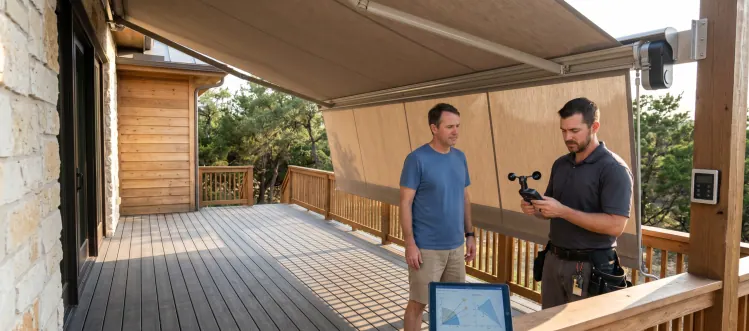
Seasonal design motorized awnings can boost comfort, cut cooling costs, and match your home’s look. Learn color, projection, and wind‑smart strategies for Austin’s climate.
Ever wonder why your awning feels too hot in July but looks dull in winter? The right seasonal design can solve both problems, turning a simple shade into a year‑round asset for homes across Austin, West Lake Hills, and Bee Cave.
In this guide we’ll explore fabric science, sun‑angle math, and smart automation that keep your patio comfortable while preserving curb appeal. You’ll walk away with clear actions you can apply today.
Key Takeaways
Choose UV‑blocking fabrics for summer, adjust projection based on sun path, and use wind sensors to protect your awning during storms. Proper maintenance extends lifespan.
- Fabric Choice: Opt for solution‑dyed acrylic with UPF 50+ to block heat and UV, while still allowing airflow for humid Austin summers.
- Projection Planning: Calculate depth using the sun’s altitude angle for each season; a 12‑foot projection works well for south‑facing decks in July.
- Wind Safety: Install a wind sensor that retracts the awning at 25 mph, preventing damage during sudden Texas in spring and fall.
- Automation Integration: Pair Somfy motors with a smart hub to schedule shade extension at sunrise and retraction at sunset for energy savings.
- Maintenance Routine: Clean the fabric with mild soap and inspect hardware quarterly; replace corroded fasteners to avoid structural failure.
Why Most Homeowners Choose the Wrong Fabric Color for Summer Heat
A bright, saturated hue may look inviting, but in Austin’s scorching summer it can trap heat and raise indoor temperatures. Light‑reflective colors such as soft neutrals or pastel blues reflect more solar radiation, keeping the space beneath cooler.
In practice, homeowners who pick dark fabrics often report higher cooling bills and uncomfortable patio evenings. The physics is simple: darker pigments absorb more infrared energy, which then radiates back onto furniture and occupants.
Here is a quick comparison of popular fabric colors and their performance metrics for Austin summers:
| Color | Heat Gain (°F) | UPF Rating | Typical Lifespan |
|---|---|---|---|
| Light Gray | 10‑15 | 55+ | 8‑10 years |
| Soft Beige | 12‑18 | 50+ | 7‑9 years |
| Deep Navy | 30‑35 | 45+ | 5‑7 years |
| Bright Red | 28‑33 | 40+ | 4‑6 years |
Color Impact Insights
- Heat Absorption: Dark fabrics can increase surface temperature by up to 30 °F compared with light‑colored alternatives, especially on south‑facing installations.
- UV Degradation: Bright reds fade faster under Austin’s intense UV exposure, leading to uneven color and reduced fabric lifespan.
- Energy Effect: Light colors reduce solar heat gain, potentially lowering air‑conditioning usage by 10‑15 percent during peak summer months.
- Aesthetic Balance: Neutral tones blend with natural landscaping, preventing the awning from clashing with desert‑style homes common in West Lake Hills.
- Maintenance Note: Lighter fabrics show dirt more readily, so regular cleaning is essential to keep the look fresh.
When you select a fabric color, think beyond visual appeal and consider how it interacts with the sun’s energy. A well‑chosen hue can become a passive cooling system, saving you money and extending the awning’s life. Remember, the right shade works with the climate, not against it.
How Seasonal Sun Angles in Texas Should Dictate Your Awning Projection Depth
The sun’s path shifts dramatically from the high‑angle blaze of July to the low‑angle glow of December. In Austin, a south‑facing patio receives the most direct sunlight, so projection depth must be calibrated to block the sun when it’s highest.
A simple rule of thumb is to match the awning’s length to the window’s height multiplied by the tangent of the sun’s altitude at solar noon for the target season. This ensures optimal shade without over‑extending the structure.
Projection Guidelines
- Summer Depth: For a 10‑foot high window, a 12‑foot projection blocks the sun at a 75‑degree altitude typical of July afternoons.
- Spring/Fall Depth: Reduce projection to 9‑10 feet when the sun’s altitude drops to 45‑55 degrees, maintaining daylight while providing shade.
- Winter Depth: A shallow 6‑foot projection prevents excessive daylight loss, allowing passive solar heating on cooler days.
- Material Consideration: Longer projections increase torque on the motor; choose a high‑torque Somfy motor to avoid strain.
- Wind Factor: Longer arms catch more wind; ensure the selected projection stays within the awning’s wind‑rating, usually 30 mph for Austin gusts.
By aligning projection with seasonal sun angles, you create a dynamic shade system that adapts to temperature swings. This approach reduces reliance on HVAC, improves outdoor comfort, and showcases thoughtful design. It’s a small calculation that yields big rewards.
The Motorized Awning Design Element That Changes Between Spring and Fall
Spring brings blooming gardens and occasional showers, while fall introduces cooler evenings and shorter daylight. A motorized awning can respond to these shifts by adjusting its valance and fabric tension, keeping the space functional year‑round.
In practice, many homeowners overlook the valance’s role; a well‑designed valance protects against rain ingress during spring storms and adds a decorative edge for autumn evenings.
Valance Strategies
- Adjustable Valance: Use a motorized drop‑valance that lowers in spring to shield against rain and lifts in fall for an open‑air feel.
- Fabric Tension: Slightly loosen tension in humid spring to allow airflow, then retighten in fall to prevent sagging as temperatures drop.
- Color Transition: Choose a neutral valance that complements both vibrant spring foliage and muted autumn tones.
- Sensor Integration: Pair a rain sensor with the valance motor so it automatically lowers when precipitation is detected.
- Maintenance Tip: Inspect the valance hinges quarterly for corrosion, especially after spring thunderstorms.
A flexible valance turns a static awning into a seasonal companion, protecting against rain while enhancing aesthetics. By tweaking tension and position, you keep the fabric in optimal condition and enjoy a comfortable patio through changing weather.
When Retractable Becomes a Liability: Winter Storm Considerations for Awning Design
Austin’s occasional winter storms bring gusty winds and occasional ice, which can stress an extended awning. If the awning remains fully deployed, it acts like a sail, increasing the risk of structural failure.
The key is to treat the awning as a movable shield: retract it before wind speeds exceed the manufacturer’s rating and use a wind sensor that reacts faster than manual intervention.
Winter Safeguards
- Wind Rating Check: Verify the awning’s wind‑resistance rating, typically 30 mph for residential models, and compare it to local storm data.
- Automatic Retraction: Install a Somfy wind sensor set to retract at 20 mph, providing a safety margin before gusts peak.
- Secure Mounting: Use epoxy anchors or stainless‑steel brackets to prevent pull‑out from brick or limestone walls during high‑wind events.
- Cover Fabric: Consider a weather‑proof cover for the fabric when the awning is retracted for extended periods.
- Inspection Routine: After any storm, inspect the arms, motor, and fasteners for signs of fatigue or corrosion.
Treating the awning as a seasonal asset rather than a permanent fixture protects your investment. By planning for winter wind, you avoid costly repairs and keep the system ready for the next sunny day.
Stripe Patterns vs Solids: What Actually Hides Pollen and Seasonal Staining
Pollen and dust settle on flat surfaces, but patterned fabrics can break up visual clutter. In Austin’s spring, heavy pollen loads can make a solid awning look dirty quickly, while subtle stripes mask the speckles.
Beyond aesthetics, some patterns use tighter weaves that deter moisture penetration, reducing mold growth during humid summer evenings.
Pattern Benefits
- Pollen Camouflage: Diagonal or vertical stripes diffuse pollen specks, keeping the awning looking cleaner longer.
- Moisture Management: Tighter weave patterns improve water runoff, lowering the chance of mildew on the fabric.
- Heat Distribution: Striped fabrics can create micro‑shadows, slightly reducing surface temperature compared with solid colors.
- Design Flexibility: Stripes complement modern architectural lines common in Hill Country homes, while solids suit traditional ranch styles.
- Cleaning Ease: Patterns hide minor stains, reducing the frequency of deep cleaning cycles.
Choosing a stripe pattern isn’t just a style decision; it’s a practical way to maintain a fresh appearance throughout pollen‑heavy seasons. Pair the right pattern with a durable acrylic fabric for the best of both worlds.
The Valance Style That Works Year‑Round Without Looking Dated
A timeless valance adds a finished look to any awning while providing protection from rain and wind. In Austin, where architectural styles range from contemporary to rustic, a simple, clean‑line valance blends seamlessly across neighborhoods.
In practice, a low‑profile, flat‑panel valance made from powder‑coated aluminum offers durability and a sleek silhouette that never feels out of fashion.
Valance Options
- Flat‑Panel Valance: Minimalist design, easy to automate, and resistant to rust when powder‑coated.
- Drop‑Valance: Adds depth for summer shade, can be raised in fall to reveal more sky.
- Screen‑Integrated Valance: Incorporates privacy screens, useful for homes near busy streets in Bee Cave.
- Color‑Neutral Finish: Matte white or brushed aluminum complements both bright summer and muted winter palettes.
- Motor Compatibility: Works with Somfy RTS motors for smooth, silent operation throughout the year.
A well‑chosen valance enhances functionality while staying visually current. By selecting a low‑maintenance material and a neutral finish, you ensure the awning remains a stylish, practical feature for every season.
Why Your Awning's Aesthetic Should Follow Function, Not Your Home's Exterior Palette
Many homeowners match awning colors to their house paint, but this can compromise performance. A fabric optimized for solar control may not be available in every paint hue, and forcing a match can lead to sub‑optimal UPF or durability.
Instead, start with the functional requirements, UV protection, wind rating, and projection, then choose a complementary color that enhances the overall look without sacrificing performance.
Comparison of functional priorities versus aesthetic choices for Austin awnings:
| Priority | Typical Choice | Impact |
|---|---|---|
| UV Protection | High‑UPF acrylic | Reduces cooling load by up to 20 % |
| Wind Rating | 30 mph rated frame | Prevents damage during gusts |
| Color Match | Neutral gray | Blends with varied home exteriors |
| Valance Style | Flat‑panel aluminum | Provides sleek, durable finish |
| Automation | Somfy motor with sensors | Enables climate‑responsive operation |
Functional Aesthetic Guide
- Performance First: Select a fabric with UPF 50+ and a wind rating suitable for Austin storms before considering color.
- Complementary Hue: Pair a neutral gray fabric with a bold trim to echo architectural accents without limiting material options.
- Contrast vs. Blend: Use a contrasting valance color to highlight the awning’s lines, creating visual interest regardless of house paint.
- Seasonal Adaptability: Choose a fabric that maintains its color integrity under UV exposure, preventing fading that would clash with the home’s exterior over time.
- Local Context: In Hill Country neighborhoods, earth tones blend with natural stone and landscaping, while urban Austin homes often favor crisp, modern palettes.
When function leads the design, the awning becomes a reliable, energy‑saving feature that also enhances curb appeal. By aligning performance with a thoughtful color strategy, you achieve a cohesive look that stands the test of time.
Season‑Smart Awning Strategies
We’ve covered fabric science, projection math, wind safety, and aesthetic balance, all tailored to Austin’s unique climate and architectural diversity. Applying these insights lets you enjoy a comfortable patio while cutting energy costs and protecting your investment.
Ready to upgrade your outdoor space? Explore our custom motorized awning solutions, schedule a design consultation, and let experienced professionals guide you through every seasonal adjustment.
Author
Lane Frazier is the owner of Treaty Oak Shade Co., specializing in motorized awnings and patio shade systems for Austin and surrounding Hill Country communities. With two decades of hands‑on installations, Lane blends practical design with smart automation to create year‑round comfort.
Ready For a Quote?
Get your custom shade quote Today.
Free, no-pressure consultation. We measure, photograph, and send a written line-item proposal within a week. Most installs ship in 3–5 weeks.
Call the workshop
(512) 939-3446
Mon–Fri · 8a–5p CT · Austin, TX
Prefer to talk it through? Calls are answered by the same team that builds your quote — no call centers, no gatekeepers.
Custom exterior shades, motorized patio screens, awnings, and interior window treatments for Austin and Central Texas.
How To Contact Us
Austin, TX 78734
Monday - Friday 8 AM - 5 PM
navigate
Copyright © 2026 | Treaty Oak Shade Co. All Rights Reserved. | Privacy Policy