
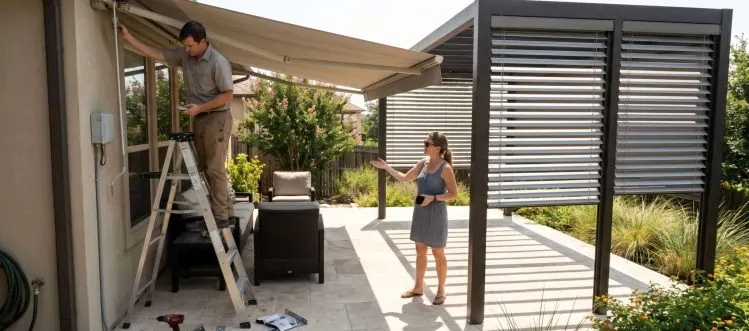
Motorized awnings give you instant shade and wind protection, while outdoor blinds excel at privacy and ventilation. Knowing the trade‑offs helps you choose the right system for Austin's climate.
Ever stared at a sun‑blasted patio and wondered why your shade solution still feels inadequate? In Texas, the heat can be relentless, and a one‑size‑fits‑all approach rarely works. This guide digs into the real differences between motorized awnings and outdoor blinds, focusing on the details most homeowners overlook.
By the end, you’ll understand how wind ratings, fabric choices, hidden costs, and smart sensors affect performance and budget. You’ll also get actionable tips you can apply whether you live in Austin, West Lake Hills, or Bee Cave.
Key Takeaways
A motorized awning can lower indoor temperatures by up to 15 °F, but a wind‑rated blind may survive storms better. Proper installation, fabric selection, and automation are critical for long‑term value in Central Texas.
- Heat Reduction: Motorized awnings block direct sun, cutting cooling loads by up to 20 % in hot Austin afternoons.
- Wind Resilience: Outdoor blinds with high wind ratings stay intact during sudden gusts, reducing repair risk.
- Cost Over Time: Initial price differences shrink when you factor in maintenance, energy savings, and lifespan.
- Smart Sensors: Integrated wind and sun sensors automatically retract awnings, protecting hardware and extending life.
- Local Fit: Choosing UV‑resistant fabrics and corrosion‑proof hardware matters in humid, high‑UV environments like Austin.
Why Motorized Awnings Handle Texas Heat Better Than Fixed Outdoor Blinds
When the sun hits a patio in Austin, the temperature can soar quickly. Motorized awnings create a solid roof that blocks direct radiation, keeping the space below cooler and reducing the load on your HVAC system. Fixed outdoor blinds, even when tightly woven, still let some sunlight through, which can raise indoor temperatures.
The physics is simple: an awning creates shade before the sun reaches the window, while a blind filters light after it has already entered. In practice, that means an awning can lower indoor temperatures by 10‑15 °F, especially on west‑facing walls that receive intense afternoon sun.
Key Heat Benefits
- Direct Blockage: Awnings stop solar rays at the source, preventing heat gain before it reaches glass or walls.
- Ventilation Control: Many motorized models include vented designs that allow airflow while still shading, improving comfort.
- Energy Savings: Studies from the U.S. Department of Energy show up to 20 % reduction in cooling energy when awnings are used on south‑facing windows.
- Fabric Choice: Solution‑dyed acrylic fabrics resist UV fading, maintaining performance for years under harsh Texas sun.
- Seasonal Flexibility: Retractable designs let you store the shade during cooler months, preserving fabric integrity.
So, if your goal is to keep the patio cool and your air‑conditioning bill low, a motorized awning often outperforms a fixed blind in Austin’s scorching climate. The ability to retract also protects the fabric from rain and wind, extending its useful life.
The Wind Rating Mistake That Leads to Expensive Repairs
A common oversight is assuming any awning will survive a Texas thunderstorm. Wind ratings, expressed in miles per hour or Beaufort scale, tell you the maximum gust a system can handle before it risks tearing or detaching. Many homeowners skip this spec, only to face costly repairs after a sudden gust.
In practice, the mistake shows up when a low‑rated awning is left deployed during a storm. The fabric can rip, arms may bend, and the motor can overheat. Choosing a product with a proper wind class for your area, often Class 3 (up to 30 mph) for Austin, prevents those headaches.
A quick comparison of typical wind ratings and recommended applications:
| Rating Class | Max Wind (mph) | Best Use |
|---|---|---|
| Class 1 | 15 | Shade sails in low‑wind suburbs |
| Class 2 | 25 | Standard residential awnings in moderate wind zones |
| Class 3 | 30 | Austin patios, exposed rooftops, and high‑wind corridors |
Wind Rating Essentials
- Class 3 Rating: Handles wind speeds up to 30 mph, suitable for most Austin storms when the awning is properly tensioned.
- Sensor Integration: Motorized units with wind sensors automatically retract at preset thresholds, avoiding damage.
- Installation Angle: A steeper pitch improves wind shedding, reducing pressure on the fabric and arms.
- Material Strength: Aluminum frames with powder‑coat finish resist corrosion, a key factor in humid Texas weather.
- Local Code: The International Residential Code references wind load tables that align with EN 13561 standards.
By matching the wind rating to your local conditions and adding a sensor, you avoid the surprise repair bill that follows a storm. In practice, this simple step saves both money and peace of mind.
When Manual Outdoor Blinds Actually Outperform Motorized Awnings
Not every situation calls for a motor. In tight budget scenarios or where power access is limited, manual outdoor blinds can be the smarter choice. They offer excellent privacy, can be adjusted on the fly, and require no electricity, which matters during power outages common in summer storms.
The key is recognizing the trade‑off: manual blinds lack the convenience of automation but often provide higher wind resistance because they are lighter and can be fully retracted quickly without a motor.
Manual Blind Advantages
- Cost Efficiency: Lower upfront cost and no electrical components reduce long‑term expenses.
- Wind Tolerance: Lightweight fabrics and simple side tracks survive gusts better than heavy motorized arms.
- Power Independence: Operates during outages, keeping shade available when the grid is down.
- Simple Maintenance: Fewer moving parts mean fewer points of failure and easier cleaning.
- DIY Friendly: Homeowners can install many models themselves, saving on labor.
If you prioritize budget, wind durability, and independence from electricity, a well‑chosen manual blind may serve your Austin home better than a motorized awning. The decision hinges on your specific needs and local weather patterns.
How Fabric Selection Changes Between Retractable Awnings and Stationary Blinds
Fabric is the heart of any shading system, but the requirements differ. Retractable awnings need fabrics that can roll and unroll repeatedly without cracking, while stationary blinds benefit from tighter weaves that block heat but still allow airflow.
In Austin’s climate, UV resistance and moisture management are critical. Acrylic fabrics like Sunbrella offer colorfastness and breathability for awnings, whereas PVC‑coated polyester meshes excel for blinds that need to stay dry during summer rains.
Fabric Choice Factors
- Acrylic Durability: Solution‑dyed acrylic resists UV fading, perfect for awnings exposed to intense sun.
- PVC‑Coated Mesh: Provides water resistance and high openness percentages for blinds that need ventilation.
- Mildew Treatment: Fabrics with antimicrobial finishes prevent mold in humid Austin evenings.
- Opacity Levels: Awnings often use solid fabrics for maximum shade; blinds can use 3‑5 % openness for view‑through.
- Warranty Length: Premium fabrics typically carry 10‑year warranties, reflecting their longer lifespan.
Choosing the right fabric means balancing shade, durability, and maintenance. For Austin homeowners, a UV‑stable acrylic awning paired with a low‑openness, mildew‑resistant mesh blind offers the best of both worlds.
The Hidden Cost Difference Between Motorized and Manual Systems Over Five Years
Initial price tags don’t tell the whole story. Over five years, motorized awnings incur electricity costs, sensor upgrades, and occasional motor repairs, while manual blinds have lower upkeep but may need more frequent fabric replacement due to exposure.
A practical way to see the difference is to break down each expense category and compare them side by side. This helps you avoid surprise expenses and plan a realistic budget for your shade project.
Projected five‑year cost comparison (average values for a 12‑ft patio):
| System | Installation* | Energy* | Maintenance* | Total* |
|---|---|---|---|---|
| Motorized Awning | $600 | $50 | $200 | $850 |
| Manual Blind | $200 | $0 | $100 | $300 |
*Illustrative. Actual amounts may vary.
Cost Breakdown Overview
- Installation Fees: Motorized systems require electrical work and professional mounting, adding $300‑$600 to the base price.
- Energy Use: A typical 120 V motor draws about 0.5 A, costing roughly $5‑$10 per year in Austin’s electricity rates.
- Maintenance: Motorized units may need motor replacement after 10,000 cycles, averaging $150‑$250 per repair.
- Fabric Replacement: Both systems need fabric updates every 8‑12 years; manual blinds often use cheaper fabrics, reducing replacement cost.
- Sensor Upgrades: Adding wind and sun sensors can cost $100‑$200 but may save on motor wear and fabric damage.
While motorized awnings have higher upfront and operational costs, the energy savings and convenience often justify the expense for many Austin homeowners. Manual blinds remain a solid budget option, especially when power independence is a priority.
Why Sun Sensors Make Motorized Awnings Worth the Premium in Austin
Sun sensors add a layer of intelligence that turns a simple shade into a climate‑control tool. In a city where the sun can be blinding in the morning and scorching by noon, an automatic system that adjusts based on solar intensity keeps interiors comfortable without manual input.
These sensors work by measuring light levels and triggering the motor to extend or retract at preset thresholds. The result is a consistent indoor temperature, reduced cooling costs, and protection for the fabric during extreme heat.
Sensor Benefits
- Automatic Retraction: Prevents overheating by pulling the awning back when sunlight exceeds a set lux level.
- Energy Efficiency: Reduces HVAC load by maintaining shade only when needed, saving up to 15 % on cooling bills.
- Weather Integration: Many sensors pair with wind detectors, creating a dual‑protective system that reacts to both sun and gusts.
- User Convenience: One‑tap control via smartphone apps lets you adjust settings without leaving the comfort of your home.
- Longevity: By avoiding constant exposure, the fabric and motor experience less wear, extending overall system life.
In Austin’s bright climate, the modest premium for a sun‑sensor‑enabled awning pays off quickly through energy savings and reduced maintenance. Homeowners who value convenience and long‑term protection should consider this upgrade.
What Professional Installers Look for When Recommending Awnings vs Blinds
Experienced installers assess more than just aesthetics. They evaluate structural capacity, local wind data, and the homeowner’s usage patterns. In Austin’s mixed‑terrain neighborhoods, a patio that faces a hill may experience higher wind speeds than one nestled in a shaded courtyard.
The decision also hinges on budget, desired automation level, and maintenance willingness. Installers often recommend awnings for large, sun‑exposed areas and blinds for tighter spaces where privacy and ventilation matter most.
Installer Decision Criteria
- Mounting Surface: Concrete or masonry supports heavier awning frames; wood decks may limit size without reinforcement.
- Wind Exposure: Areas with frequent gusts get higher‑rated awnings or reinforced blinds with side tracks.
- Budget Constraints: Manual blinds reduce labor costs, while motorized awnings require electrical work and higher material spend.
- Automation Preference: Homeowners seeking voice‑control or scheduled shading benefit from motorized options.
- Maintenance Plan: Installers factor in how often the owner will clean or service the system, recommending low‑maintenance fabrics where needed.
By weighing these practical factors, installers help Austin residents choose the shade solution that fits their home, climate, and lifestyle. The right recommendation balances performance, cost, and long‑term satisfaction.
Choosing the Right Shade Strategy
Both motorized awnings and outdoor blinds have distinct strengths that align with different Austin home scenarios. Awnings excel at blocking intense sun and reducing cooling costs, especially when paired with smart sensors, while blinds offer superior wind tolerance and budget‑friendly installation.
Evaluate your patio’s exposure, budget, and desire for automation, then match those needs to the appropriate system. For a hassle‑free experience, consider a professional installer who can assess structural needs and recommend the best wind‑rated, UV‑protected product for your area.
Author
Lane Frazier is a seasoned shade specialist with two decades of experience installing custom motorized solutions for homeowners across Austin and surrounding Hill Country communities. His hands‑on work with a variety of fabrics and motor brands gives him a practical perspective on what truly works in Texas heat and wind.
Ready For a Quote?
Get your custom shade quote Today.
Free, no-pressure consultation. We measure, photograph, and send a written line-item proposal within a week. Most installs ship in 3–5 weeks.
Call the workshop
(512) 939-3446
Mon–Fri · 8a–5p CT · Austin, TX
Prefer to talk it through? Calls are answered by the same team that builds your quote — no call centers, no gatekeepers.
Custom exterior shades, motorized patio screens, awnings, and interior window treatments for Austin and Central Texas.
How To Contact Us
Austin, TX 78734
Monday - Friday 8 AM - 5 PM
navigate
Copyright © 2026 | Treaty Oak Shade Co. All Rights Reserved. | Privacy Policy