
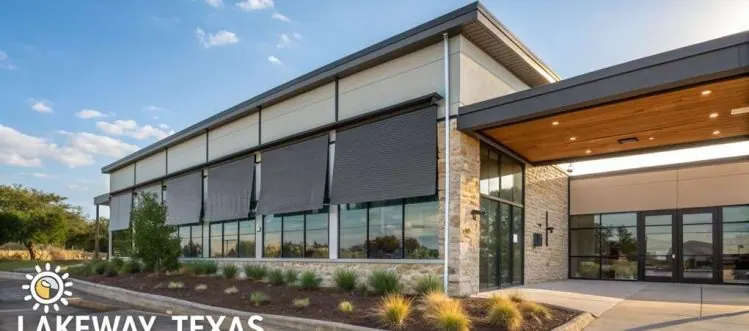
In the heat of Lakeway, commercial building owners face rising energy costs and the challenge of keeping interiors cool. Custom exterior shades can block up to 97% of solar heat before it enters your building, reducing HVAC strain and lowering consumption by 20–25%.
Compared to traditional blinds, they maintain cooler indoor temperatures, block 99% of harmful UV rays, and improve overall comfort. With ROI often realized in just 3–5 years, automated shading systems deliver lasting savings and long-term efficiency.
Key Highlights
- Custom exterior shades effectively block up to 97% of heat before it enters buildings, which can greatly lower HVAC loads in Lakeway's intense summer heat.
- Automated shade systems can adjust to seasonal sun patterns, enhancing energy efficiency and potentially cutting cooling costs by as much as 25%.
- Buildings equipped with these shades can maintain temperatures that are 2-3°F cooler than those using interior blinds, leading to annual energy savings that can exceed $200.
- Strategically placing shades on south and west-facing facades maximizes protection against solar heat gain during the hottest periods in Lakeway.
- When combined with low SHGC glass, exterior shades can allow for smaller HVAC systems, which helps reduce both installation and long-term operating costs.
Understanding Lakeway's Climate Challenges for Commercial Buildings
Navigating the climate challenges in Lakeway, Texas, is essential for the success of commercial building operations. With its subtropical climate, marked by scorching summers and mild winters, businesses face pressing demands for effective climate adaptation strategies. Lakeway's average summer temperatures can soar above 95°F for weeks at a time. This highlights the urgency for building owners to rethink their approach to energy management and operational efficiency.
The unique environmental characteristics of Lakeway, including its elevation of approximately 800 feet and proximity to Lake Travis, create intricate microclimate conditions that significantly influence thermal performance. High humidity levels, paired with extreme temperatures, complicate moisture management, a critical consideration for maintaining building systems. The local clay loam soil and limestone bedrock contribute to ground temperature stability, but the steep terrain can exacerbate heat island effects, further complicating cooling needs. Additionally, energy-efficient treatments can play a vital role in minimizing heat transfer, enhancing the overall performance of commercial spaces. Implementing motorized patio covers can also provide effective sun protection and improve comfort in outdoor areas, further reducing the cooling burden on buildings.
For instance, during the prolonged summer heat, businesses may find themselves grappling with increased cooling requirements and energy consumption patterns. This scenario is common — many property owners face the challenge of balancing comfort for occupants with the rising costs of energy. The latent heat loads driven by humidity necessitate advanced strategies to sustain ideal indoor environments while keeping operational costs in check. To address these challenges effectively, businesses can explore innovative technologies such as high-efficiency HVAC systems, advanced building materials designed for thermal performance, and smart building management systems that optimize energy usage. Furthermore, implementing custom exterior shades can significantly enhance energy efficiency and reduce cooling costs in commercial spaces. By adopting a proactive approach to climate adaptation, commercial buildings in Lakeway can not only enhance occupant comfort but also reduce energy costs, ultimately leading to a more sustainable and profitable operation.
How Exterior Shades Block Solar Heat Gain
Many business owners face the challenge of managing solar heat gain, which can significantly inflate cooling costs and compromise comfort. In fact, studies show that up to 30% of a building's cooling load can be attributed to solar heat gain through windows.
Exterior shades present a powerful solution to this pervasive issue by intercepting and blocking thermal energy before it can infiltrate your building. These systems are adept at reflecting sunlight and absorbing heat, capable of blocking up to 97% of heat and UV radiation right at the source. By doing so, they prevent thermal buildup and create a more comfortable indoor environment. Additionally, the custom solutions offered by Treaty Oak Shade Company ensure that your shading system is tailored to fit the unique needs of your commercial space. This customization can include various installation methods to optimize performance and aesthetics.
The secret to the effectiveness of exterior shades lies in their fabric technology, which is designed to absorb and dissipate heat, directing it away from your building. This means that instead of allowing heat to transfer indoors, exterior shades keep your interiors cooler. Cutting-edge materials with UV stabilization ensure that these shades perform exceptionally well, even in harsh outdoor conditions. Additionally, integrating interior roller shades can further enhance natural light control while providing an elegant touch to your space.
Consider these key advantages of installing exterior shading systems:
- Significant heat reduction by intercepting solar energy before it reaches windows
- Up to 99% UV protection when utilizing low openness fabric configurations
- Effective glare control while preserving your ability to see outside
- Compatibility with automated systems for seasonal adjustments, enhancing convenience and efficiency
When you pair exterior shades with low Solar Heat Gain Coefficient (SHGC) glass, you create a formidable thermal barrier. This combination can lead to substantial reductions in cooling costs, making a meaningful impact on your bottom line.
If you're seeking to enhance energy efficiency, improve occupant comfort, and mitigate the challenges of solar heat gain in your commercial space, investing in exterior shades could be the smart choice your business needs.
Energy Cost Savings and ROI Analysis
Looking for a way to significantly cut your energy costs while enhancing the comfort of your building? Investing in exterior shading systems could be the solution you’ve been searching for. Research indicates that these systems can lead to a remarkable 20-25% reduction in overall building energy consumption. Imagine saving between 1.0 to 3.2 kWh daily on HVAC costs just by switching from traditional interior blinds to properly automated exterior shades.
The return on investment (ROI) for these systems is not just promising; it’s compelling. Most installations can recoup their costs within 3-5 years through lower energy expenditures. In new constructions, you can expect peak electrical demand reductions of approximately 0.3 kW, while existing buildings could see up to 0.9 kW. These energy savings are not a one-time benefit; they accumulate over the years, especially as utility rates continue to rise. With a lifespan of 15-20 years, the shading systems not only deliver sustained savings but also enhance the efficiency of your building.
Moreover, exterior shading systems can lead to additional financial advantages such as downsizing HVAC equipment by about 0.5 tons, which further reduces both initial capital outlay and ongoing maintenance costs. This long-term value proposition extends beyond mere energy savings; it can also uplift property values and boost net operating income.
As a business owner, the question is not whether you can afford to invest in exterior shading solutions but rather whether you can afford not to. With the rising costs of energy and the increasing demand for sustainable building practices, now is the time to explore how these innovative systems can transform your operating expenses into significant savings.
Design Strategies for Maximum Cooling Efficiency
In today's world, where energy costs are a significant concern for businesses, maximizing cooling efficiency through exterior shading is not just a luxury; it's a necessity. 30% of a building's cooling load can be attributed to solar heat gain. This underscores the importance of strategic shading design, as it directly impacts both energy consumption and occupant comfort.
To effectively tackle this issue, a multifaceted approach to exterior shading is essential. By integrating modern shading technologies with a keen understanding of architectural design, businesses can create environments that are both energy-efficient and conducive to productivity. The key lies in the thoughtful placement of shading devices, informed by the building's orientation and the seasonal movement of the sun.
Consider these effective strategies for implementing exterior shading systems:
- For south-facing installations, fixed horizontal overhangs can effectively block the intense summer sun, reducing heat gain and lowering cooling costs.
- West-facing facades benefit from vertical fins or dynamic shading solutions, which are essential for addressing the low afternoon sun that can cause discomfort and increase energy demands.
- Employing photosensor-controlled automation in tandem with HVAC systems can significantly minimize energy waste by adjusting shading in real-time based on sunlight intensity.
- Selecting high-performance materials that not only reject heat but also ensure structural longevity is crucial for the durability of shading solutions.
These targeted strategies, when combined with intelligent building controls and adequate ventilation, form an integrated cooling solution. Such systems can dramatically lower energy consumption while ensuring that indoor environments remain comfortable and productive, particularly in commercial spaces where employee well-being is paramount.
Performance Metrics and Long-term Benefits
When business owners consider the impact of exterior shading solutions, the numbers speak volumes. Exterior shades can cut annual cooling energy costs by more than 52% compared to unshaded windows. This is a game changer for managing operational expenses. Automated shading systems further enhance savings, reducing total building energy consumption by about 25%.
The benefits of temperature regulation are equally noteworthy. Buildings equipped with exterior shades can maintain temperatures 2-3°F cooler than those relying on interior blinds, and they can be up to 9°F cooler than unshaded structures. This remarkable efficiency translates into tangible cost savings—businesses could see reductions of $200 or more on their annual energy bills. The initial investment in these systems typically pays for itself within 3-5 years through lower utility expenses.
Moreover, the strain on HVAC systems is significantly lessened, which extends equipment life and minimizes maintenance needs. This is particularly crucial for buildings with west-facing facades, where exterior shades effectively mitigate cooling loads during peak heat periods. Such reductions not only benefit individual businesses but also ease the burden on local power grids, showcasing the broader impact of these innovative solutions.
In a landscape where operational efficiency is paramount, exterior shading offers a practical and financially sound strategy for business owners looking to enhance their bottom line while improving comfort and sustainability.
In Summary
Custom exterior shades are a vital investment for commercial spaces in Lakeway, significantly enhancing energy efficiency. Although the initial expense may deter some property owners, the potential savings on cooling costs can exceed 30%, leading to substantial long-term benefits. As climate temperatures rise, these shading solutions become essential for businesses aiming to manage operational costs effectively. Treaty Oak Shade, the premier custom motorized patio shade company in Austin, Texas, offers tailored solutions to meet these growing needs.By implementing our innovative shading systems, businesses can ensure a comfortable environment while optimizing energy use. Our team at Treaty Oak Shade specializes in creating custom solutions that blend aesthetics with functionality, helping to reduce reliance on excessive air conditioning. As a result, businesses can achieve significant cost reductions while contributing to a sustainable future. Let us help you transform your commercial space with the perfect shading solution for your needs.
Ready For a Quote?
Get your custom shade quote Today.
Free, no-pressure consultation. We measure, photograph, and send a written line-item proposal within a week. Most installs ship in 3–5 weeks.
Call the workshop
(512) 939-3446
Mon–Fri · 8a–5p CT · Austin, TX
Prefer to talk it through? Calls are answered by the same team that builds your quote — no call centers, no gatekeepers.
Custom exterior shades, motorized patio screens, awnings, and interior window treatments for Austin and Central Texas.
How To Contact Us
Austin, TX 78734
Monday - Friday 8 AM - 5 PM
navigate
Copyright © 2026 | Treaty Oak Shade Co. All Rights Reserved. | Privacy Policy