
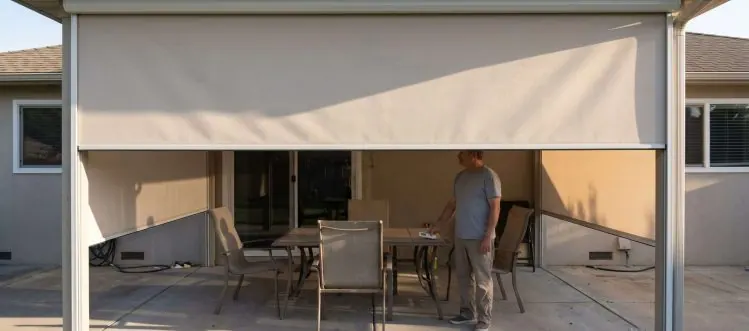
In Austin, Texas, motorized patio shades typically last five to twelve years. The exact lifespan depends heavily on fabric durability and exposure to the brutal Texas sun, wind, and severe weather.
Motorized systems outlast manual ones because smooth automated retraction protects them from sudden wind gusts.
- Mechanics & Motors: High‑quality tubular motors and track systems generally last ten thousand to fifteen thousand cycles, about eight to twelve years of regular use.
- Intense UV Exposure: Austin's west‑facing patios endure severe afternoon sun. High‑quality, UV‑resistant exterior screens like fiberglass or vinyl‑coated mesh prevent fading, fraying, and premature brittleness.
- Severe Weather & Wind: Sudden Central Texas storms can shred deployed shades. Most modern motorized systems incorporate automated wind sensors that will instantly retract the shades if speeds exceed safe thresholds.
- Automation: Motorization extends shade life because it removes the rough, uneven human yanking or cranking associated with manual operation. Automated scheduling also guarantees the shade lowers during peak heat hours without you having to remember.
- Smart Upgrades: Invest in automated wind and sun sensors to protect your investment during unexpected Hill Country weather.
- Regular Maintenance: Austin's pollen, dust, and debris can accumulate in the tracks and on the fabric. Routinely clean your screens with mild soap, water, and a soft brush.
- Motor Inspections: Schedule professional servicing to lubricate the tracks, check limit switches, and test electrical connections every year or two.
Motorized patio shades in Austin usually survive five to twelve years, with fabric, UV exposure, and wind playing major roles. Proper maintenance, smart sensors, and quality motors can push lifespan toward the upper end of that range.
Ever wonder why your motorized patio shades seem to lose their charm after a few years? In Central Texas, the combination of scorching sun, gusty winds, and occasional storms can wear down even the best‑engineered systems faster than you expect.
Understanding the key drivers behind the longevity of motorized patio shades helps you make smarter choices, from selecting UV‑stable fabrics to scheduling routine maintenance. Below, you’ll find the most common pitfalls and actionable steps to keep your shades performing for years to come.
Why Most Motorized Patio Shades Fail in Year Three, Not Year One
Many homeowners assume that a motorized shade will last as long as the motor warranty, yet most failures appear around the third year. The reality is that early wear often stems from fabric fatigue and environmental stress rather than mechanical breakdown.
In practice, the combination of high UV exposure, occasional hail, and dust buildup accelerates material degradation. By the time the third summer rolls around, the fabric may have lost tensile strength, and the motor may be working harder than intended.
Early Failure Triggers
- UV Fatigue: Prolonged sun exposure breaks down polymer fibers, causing brittleness and tearing, especially on lower‑grade fabrics.
- Dust Accumulation: Fine dust and pollen settle in guide tracks, increasing friction and motor load, which can shorten motor life.
- Improper Tension: Over‑tightened fabrics stress the motor and rollers, leading to premature wear on both the fabric and the drive mechanism.
- Temperature Swings: Extreme heat expands metal components, while cooler nights contract them, creating micro‑stress points that grow over time.
- Lack of Sensors: Without wind or sun sensors, shades stay deployed during storms, exposing them to forces beyond design limits.
The takeaway is clear: the third year marks a tipping point when cumulative environmental stress meets material limits. Addressing these factors early, through proper fabric selection, regular cleaning, and smart sensor integration, can push performance well beyond that point, delivering the full value of a motorized system.
The Motor Lifespan Myth: Cycles Matter More Than Warranty Years
When shoppers compare warranties, they often focus on the number of years a motor is covered, overlooking the more telling metric: operational cycles. A motor rated for ten thousand cycles will typically outlast one with a longer warranty but fewer cycles.
In Central Texas, a typical homeowner may open and close their shade twice a day during hot months, quickly adding up to the cycle count. Understanding this helps you choose a motor that aligns with real usage patterns.
The table below compares typical motor cycle ratings with expected lifespan under average daily usage in Central Texas:
| Motor Rating (cycles) | Average Daily Cycles | Projected Lifespan (years) |
|---|---|---|
| 10,000 | 2 | 13.7 |
| 12,500 | 2 | 17.1 |
| 15,000 | 2 | 20.5 |
Cycle‑Focused Insights
- Cycle Rating: Motors rated for ten thousand to fifteen thousand cycles align with an eight‑to‑twelve‑year lifespan under regular use.
- Usage Pattern: Two daily cycles during summer months can reach five thousand cycles in just two years, emphasizing the importance of higher‑rated motors.
- Heat Impact: High ambient temperatures can reduce motor efficiency, effectively shortening the usable cycle count.
- Warranty Limits: Some warranties cover only years, not cycles, so a motor may fail after the warranty expires despite being within the promised time frame.
- Smart Controls: Integrating scheduling reduces unnecessary cycles, extending motor life by avoiding frequent, unneeded movements.
By focusing on cycle ratings rather than just warranty length, homeowners can make informed decisions that translate into longer‑lasting performance, especially in the heat‑intensive climate of Austin and its surrounding communities.
How Texas Heat Degrades Fabric Faster Than UV Exposure Alone
While UV radiation is often blamed for fading, the real hidden threat in Texas is the combination of heat and humidity. High temperatures cause polymer chains in fabrics to break down more quickly, leading to loss of tensile strength before noticeable discoloration appears.
In practice, a shade that looks vibrant after a summer may already be compromised at the molecular level. This hidden degradation explains why many homeowners replace fabrics sooner than expected.
Heat‑Induced Fabric Issues
- Thermal Expansion: Heat causes fibers to expand, creating micro‑tears that propagate under wind load.
- Moisture Retention: High humidity accelerates hydrolysis in PVC‑coated fabrics, making them brittle over time.
- Heat‑Induced Fading: Sunlight combined with heat speeds up pigment breakdown, leading to uneven fading across the shade surface.
- Stiffening: Prolonged exposure to high temperatures can cause fabrics to lose flexibility, making retraction harder on the motor.
- Mold Growth: Warm, moist conditions foster mold on fabric, which can weaken material and cause odor issues.
Understanding that heat plays a larger role than UV alone helps you prioritize shade materials designed for high‑temperature resilience. Selecting fabrics with proven thermal stability can dramatically extend the functional life of your patio shading system.
What Separates a 7‑Year Shade from a 15‑Year Shade
The difference between a shade that lasts seven years and one that reaches fifteen often boils down to material quality, installation precision, and proactive maintenance. High‑grade fabrics, robust motor specs, and proper anchoring all contribute to a longer service life.
In Central Texas, where sun and wind are relentless, these factors become even more critical. Homeowners who invest in premium components and follow a disciplined care schedule see measurable gains in durability.
Comparison of typical shade components and their impact on lifespan:
| Component | Standard Option | Premium Option |
|---|---|---|
| Fabric | Basic polyester | UV‑stabilized fiberglass |
| Motor | Low‑torque AC motor | High‑torque tubular motor |
| Mounting | Standard brackets | Engineered steel brackets with torque specs |
| Sensors | None | Wind and sun sensors |
| Maintenance | Annual | Quarterly cleaning |
Key Longevity Drivers
- Fabric Grade: UV‑stabilized fiberglass or high‑density polyethylene fabrics resist fading and tearing far better than basic polyester.
- Motor Specification: Tubular motors with higher torque and IP44 or higher ratings handle heat and dust without premature wear.
- Installation Integrity: Secure mounting to studs or masonry, with proper torque on fasteners, prevents sagging and structural failure.
- Regular Cleaning: Quarterly removal of dust and pollen keeps tracks smooth and reduces motor strain.
- Smart Sensors: Wind and sun sensors automatically retract shades during extreme conditions, protecting both fabric and motor.
By focusing on these five pillars, premium fabric, robust motor, solid installation, diligent cleaning, and sensor automation, homeowners can reliably achieve the upper end of the lifespan spectrum, even in the demanding climate of Austin and its neighboring towns.
The Maintenance Window Most Homeowners Miss (and Regret Later)
Many shade owners think a quick wipe once a year is enough, but the real maintenance window opens after the first summer season. Neglecting this period leads to accumulated grit, mold, and motor strain that can shorten the system's life.
In practice, a simple quarterly routine, cleaning tracks, checking sensor alignment, and lubricating moving parts, prevents costly repairs and keeps performance smooth.
Overlooked Tasks
- Track Debris: Fine sand and pollen settle in guide channels, increasing friction and motor load.
- Sensor Calibration: Wind sensors drift over time; recalibrating ensures they trigger at the correct speed.
- Motor Lubrication: Periodic oiling of moving parts reduces wear, especially after high‑heat months.
- Fabric Inspection: Look for micro‑tears or fraying edges that can expand under wind pressure.
- Electrical Checks: Verify GFCI protection and inspect wiring for corrosion caused by humidity.
By integrating these often‑missed tasks into a regular schedule, homeowners can avoid the sudden failures that typically appear after the second summer, preserving both aesthetics and functionality for years to come.
Why Cheaper Motors Cost More Over a Decade of Ownership
A low‑priced motor may seem like a bargain, but over ten years the hidden costs can far exceed the initial savings. Cheap motors often lack proper sealing, have lower torque, and fail to meet IP ratings, leading to frequent replacements.
In the Austin heat, a motor without adequate protection can overheat, causing premature wear and higher service expenses.
Hidden Costs of Low‑End Motors
- Heat Sensitivity: Inadequate cooling leads to motor burnout during hot summer days.
- Limited Torque: Lower torque struggles with heavier fabrics, causing motor strain and early failure.
- IP Rating Gaps: Motors without IP44 or higher protection are vulnerable to moisture ingress and dust.
- Warranty Gaps: Cheaper motors often have shorter warranties, increasing out‑of‑pocket repair costs.
- Replacement Frequency: Frequent motor swaps disrupt shade operation and add labor expenses over a decade.
Investing in a higher‑quality motor with robust IP protection and sufficient torque may raise upfront costs, but it dramatically reduces long‑term expenses and downtime, delivering better value for homeowners across Austin and surrounding areas.
How Installation Quality Determines Whether Your Shades Last 10 or 20 Years
The quality of installation is the single most decisive factor in how long a motorized shade will serve you. Even the best materials can fail if mounted incorrectly or if the wiring does not meet local codes.
In practice, a professional installer ensures that mounting hardware is anchored to structural studs, that electrical connections follow NEC guidelines, and that the system is calibrated for optimal performance.
Installation Essentials
- Structural Anchoring: Secure fasteners into studs or masonry prevent sagging and frame failure under wind load.
- Electrical Compliance: NEC‑compliant wiring and GFCI protection safeguard against shocks and fire hazards.
- Motor Calibration: Proper limit switch settings avoid over‑travel, reducing motor wear and fabric stress.
- Weather Sealing: Using UV‑stabilized sealants around mounting points prevents moisture intrusion.
- Professional Alignment: Precise alignment of side channels and guide rails ensures smooth operation and reduces friction.
When installation meets these standards, shades can easily surpass the ten‑year mark, often reaching twenty years with regular maintenance. Homeowners in Austin, West Lake Hills, Lakeway, Bee Cave, Spicewood, Horseshoe Bay, Dripping Springs, and San Marcos benefit from the added peace of mind that comes with a job done right.
Extending Shade Lifespan Effectively
From fabric selection to motor choice, every decision shapes the longevity of motorized patio shades in Central Texas. By understanding the true drivers of wear, UV heat, wind, and proper maintenance, you can avoid common pitfalls and enjoy reliable shade for years.
Take the next step today: evaluate your current system, upgrade to UV‑stable fabrics, add smart sensors, and schedule a professional inspection. For personalized guidance, explore our services and keep your outdoor space comfortable and protected.
Author
Lane Frazier is a seasoned shade specialist with two decades of hands‑on experience installing motorized patio systems across Austin and the Hill Country. His deep familiarity with local climate challenges and product performance makes his insights especially relevant for homeowners seeking lasting shade solutions.
Ready For a Quote?
Get your custom shade quote Today.
Free, no-pressure consultation. We measure, photograph, and send a written line-item proposal within a week. Most installs ship in 3–5 weeks.
Call the workshop
(512) 939-3446
Mon–Fri · 8a–5p CT · Austin, TX
Prefer to talk it through? Calls are answered by the same team that builds your quote — no call centers, no gatekeepers.
Custom exterior shades, motorized patio screens, awnings, and interior window treatments for Austin and Central Texas.
How To Contact Us
Austin, TX 78734
Monday - Friday 8 AM - 5 PM
navigate
Copyright © 2026 | Treaty Oak Shade Co. All Rights Reserved. | Privacy Policy