
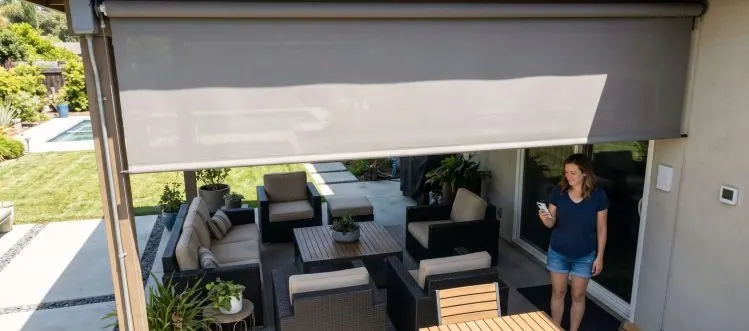
True automation goes far beyond remote control, integrating sensors, scheduling, and smart home systems for effortless shade management. The right setup eliminates daily adjustments while protecting your investment.
You're tired of manually adjusting your patio shades throughout the day, only to forget and come home to a scorching hot outdoor space or fabric whipping in unexpected wind. Most homeowners think motorized shades are just about pushing a button instead of pulling a cord, but that's barely scratching the surface. The real transformation happens when automation systems take over the thinking, responding to weather conditions and your daily routines without any input from you.
Smart automation doesn't just make shades convenient, it fundamentally changes how your outdoor spaces function and how long your investment lasts. When sensors detect rising winds before you even notice them, when shades automatically adjust for optimal comfort during Austin's brutal summer afternoons, and when your system works seamlessly even during Wi-Fi outages, you'll understand why automation represents the biggest leap forward in shade technology since motors themselves.
Key Takeaways
- Hardwired Reliability: 24V hardwired systems eliminate battery maintenance and provide consistent power for daily automated schedules, unlike battery systems that lose charge at the worst moments.
- Smart Hub Integration: Proper hub selection ensures your shades respond instantly to weather changes and integrate smoothly with existing smart home ecosystems without connectivity issues.
- Wind Sensor Protection: Automated wind sensors retract shades at preset speeds (typically 15-25 mph), preventing costly fabric tears and motor damage that manual operation often misses.
- Offline Functionality: Quality automation systems maintain core scheduling and sensor functions even during internet outages, ensuring your shades continue protecting your space regardless of connectivity.
- Scheduling Intelligence: Advanced scheduling software learns your preferences and adjusts automatically for seasonal sun angles, eliminating the daily guesswork of optimal shade positioning.
Why Hardwired Motorized Shades Beat Battery Systems Every Time
The battery versus hardwired debate ends quickly when you consider what automation actually demands from your shade system. Battery-powered shades might seem convenient during installation, but they create a reliability nightmare for automated scheduling. When your system tries to execute a programmed sequence at 6 AM and the battery has quietly died overnight, you're left with shades stuck in the wrong position during the hottest part of the day.
Hardwired 24V systems provide the consistent power flow that automation requires to function reliably year after year. Radio frequency control systems operate continuously, monitoring sensors and executing schedules without the power fluctuations that plague battery systems. The initial installation investment pays for itself within two years when you factor in battery replacement costs and the peace of mind that comes with never wondering if your shades will respond when needed.
Power Advantages
- Consistent Voltage: Hardwired systems deliver steady 24V power that keeps motors operating at optimal torque levels, preventing the gradual performance degradation common with declining battery charge.
- Schedule Reliability: Automated sequences execute precisely on time every day because the power source never fluctuates, unlike battery systems that may skip operations when charge drops below threshold.
- Sensor Integration: Wind and sun sensors require constant power to monitor conditions effectively, something battery systems struggle to provide during extended periods of automation activity.
- Maintenance Elimination: No battery charging schedules, replacement costs, or seasonal performance variations that disrupt your automated routines and require constant attention from homeowners.
- Load Capacity: Hardwired motors handle larger shade sizes and heavier fabrics without power limitations, enabling automation of expansive patio areas that battery systems simply cannot support reliably.
The math becomes clear when you calculate the total cost of ownership over five years. Battery systems require replacement every 12-18 months at $150-300 per shade, while hardwired installations provide decades of reliable automation with minimal maintenance. More importantly, hardwired systems eliminate the frustration of automated schedules failing during critical weather events when you need shade protection most.
The Smart Hub Integration That Actually Works in Texas Heat
Smart home integration becomes critical when Texas temperatures soar above 100°F and you need your shades responding instantly to changing conditions. Most homeowners make the mistake of choosing hubs based on price or brand familiarity, only to discover that their system can't handle the rapid temperature fluctuations and intense UV exposure that define Austin summers. The right hub doesn't just connect your shades to your phone, it processes weather data and environmental sensors to make split-second decisions about shade positioning.
Professional-grade automation hubs maintain local processing capabilities that keep your system functional even when internet connectivity becomes unreliable during storms. Smart home integration platforms that rely entirely on cloud processing fail exactly when you need them most, leaving your expensive outdoor furniture and interior spaces vulnerable to heat damage. The best systems combine local intelligence with cloud connectivity, ensuring your shades protect your investment regardless of external factors.
Here's how different hub types handle the demanding conditions of Texas outdoor automation:
| Hub Type | Local Processing | Heat Tolerance | Storm Reliability |
|---|---|---|---|
| Basic Wi-Fi | Cloud Only | Poor | Fails |
| Z-Wave Pro | Full Local | Excellent | Maintains |
| Zigbee 3.0 | Hybrid | Good | Partial |
| Professional | Advanced Local | Superior | Complete |
Integration Features
- Local Processing: Quality hubs maintain core automation functions locally, so temperature-based adjustments continue working even during internet outages that commonly occur during severe weather events.
- Multi-Protocol Support: Professional systems integrate Z-Wave, Zigbee, and Wi-Fi protocols simultaneously, ensuring compatibility with existing smart home devices without requiring complete ecosystem replacement.
- Weather API Integration: Advanced hubs pull real-time weather data to pre-position shades before temperature spikes or wind events, rather than reacting after conditions have already damaged equipment.
- Scene Coordination: Intelligent scheduling coordinates shade positions with HVAC systems and lighting controls, optimizing energy efficiency during peak cooling demand periods in Texas heat.
- Failsafe Programming: Backup routines automatically engage when primary sensors malfunction, ensuring shades retract safely during unexpected weather events rather than remaining extended and vulnerable.
The difference between basic connectivity and true smart integration becomes apparent during your first Texas heat wave. When your system automatically adjusts shade positions based on real-time solar angle calculations and coordinates with your air conditioning to minimize cooling costs, you'll understand why professional-grade hubs cost more initially but save thousands in energy bills and equipment protection over time.
How Wind Sensors Prevent the Costly Mistake Most Homeowners Make
The most expensive lesson in motorized shade ownership comes from a single windy afternoon when you're not home to retract your shades manually. Austin's unpredictable weather patterns can generate 40+ mph gusts with little warning, and fabric that cost $3,000 to replace can shred in minutes when left extended during high winds. Most homeowners underestimate wind speed by 50% when judging whether conditions are safe for extended shades, leading to preventable damage that insurance rarely covers.
Professional wind sensors eliminate human error by monitoring conditions continuously and retracting shades automatically when preset thresholds are exceeded. These sensors don't just measure current wind speed, they analyze wind patterns and acceleration to predict dangerous conditions before they peak. Advanced motorized systems integrate wind data with other environmental factors to make nuanced decisions about partial versus full retraction based on shade size, fabric type, and mounting configuration.
Protection Mechanisms
- Predictive Monitoring: Advanced sensors detect wind acceleration patterns and retract shades before peak gusts arrive, rather than reacting after damage has already begun occurring.
- Adjustable Thresholds: Professional systems allow different wind speed settings for various shade sizes and fabrics, recognizing that a 12-foot screen requires different protection than a 6-foot roller.
- Gust Differentiation: Quality sensors distinguish between sustained winds and temporary gusts, preventing unnecessary retraction during brief wind spikes that pose no real threat to properly mounted shades.
- Override Protection: Sensors maintain retraction authority even when manual controls are activated, ensuring that human error cannot override critical safety functions during dangerous weather conditions.
- Maintenance Alerts: Smart sensors monitor their own calibration and alert homeowners when cleaning or adjustment is needed, preventing false readings that could leave shades vulnerable.
The cost of wind sensor integration ($200-400 per shade) becomes insignificant compared to a single fabric replacement or motor repair caused by wind damage. More importantly, automated wind protection provides peace of mind during travel or busy periods when you can't monitor weather conditions constantly. Your shades will protect themselves, preserving both your investment and your outdoor comfort for years to come.
What Happens When Your Automation System Goes Offline
The true test of any automation system comes during the inevitable internet outage or smart hub failure that happens at the worst possible moment. Many homeowners discover too late that their 'smart' shades become completely unresponsive when Wi-Fi drops, leaving them with no way to protect their outdoor spaces during critical weather events. The most frustrating scenarios occur during power outages when your shades are stuck in the extended position just as severe weather approaches, creating potential for catastrophic damage.
Professional automation systems incorporate multiple layers of backup functionality that maintain essential operations even when primary systems fail. These systems don't just store basic schedules locally, they include battery backup for critical functions and manual override capabilities that work regardless of power or connectivity status. The difference between consumer-grade and professional-grade automation becomes crystal clear during your first major storm or extended power outage.
Different automation systems handle offline scenarios with varying levels of functionality:
| System Level | Offline Scheduling | Manual Override | Sensor Function |
|---|---|---|---|
| Basic Smart | None | App Only | Disabled |
| Mid-Range | 24 Hours | Limited | Basic |
| Professional | 30+ Days | Full Access | Independent |
| Commercial | Indefinite | Multiple Methods | Redundant |
Backup Systems
- Local Schedule Storage: Professional systems store automation schedules directly in the motor controllers, ensuring daily routines continue operating even during extended internet outages or hub failures.
- Battery Backup Integration: Critical safety functions like wind sensor monitoring maintain power through UPS systems, keeping protective features active even during brief power interruptions.
- Manual Override Access: Physical controls remain functional regardless of automation system status, providing reliable manual operation when electronic systems require service or experience malfunctions.
- Sensor Independence: Wind and sun sensors operate on dedicated power circuits, ensuring protective functions continue working even when main automation systems experience connectivity issues.
- Progressive Degradation: Quality systems maintain essential functions while losing convenience features, prioritizing shade protection over advanced scheduling when operating in backup mode.
Planning for system failures isn't pessimistic, it's essential for protecting your investment and maintaining outdoor comfort year-round. The best automation systems work so seamlessly during normal operation that you forget about them entirely, but their true value becomes apparent during the inevitable technical challenges that every smart home system eventually faces.
The Motor Specification That Determines 10-Year Performance
The difference between a motor that operates smoothly for a decade and one that fails within three years often comes down to a single specification that most homeowners never consider: duty cycle rating. This measurement indicates how frequently a motor can operate without overheating or experiencing premature wear, and it directly impacts how well your automation system performs over time. Motors designed for occasional manual operation struggle with the frequent adjustments that automated scheduling demands, leading to early failures and expensive replacements.
Professional-grade motors designed for automation applications feature duty cycle ratings of 25% or higher, meaning they can operate continuously for 15 minutes out of every hour without damage. Consumer-grade motors typically rate at 10% or less, making them unsuitable for the frequent adjustments that responsive automation requires. When your system needs to make multiple daily adjustments based on sun angle, temperature, and weather conditions, motor durability becomes the foundation of reliable long-term operation.
Performance Specifications
- Duty Cycle Rating: Professional motors handle 25%+ continuous operation, supporting multiple daily adjustments without overheating, while consumer motors fail under automated scheduling demands.
- Torque Consistency: Quality motors maintain consistent lifting power throughout their operational range, ensuring smooth operation even as mechanical components experience normal wear over years of use.
- Thermal Protection: Advanced motors include temperature monitoring that prevents damage during high-frequency operation, automatically pausing operation when thermal limits are approached during intensive use periods.
- Electronic Limits: Precise electronic limit switches eliminate mechanical wear points, providing accurate positioning for thousands of cycles without the drift common in mechanical limit systems.
- Noise Specifications: Professional motors operate below 40 dB, ensuring automated sequences don't disturb outdoor activities or neighbors, particularly important for frequent scheduling adjustments.
Investing in professional-grade motors costs 30-50% more initially but typically lasts three times longer than consumer alternatives when used in automated applications. The total cost of ownership strongly favors quality motors, especially when you factor in the labor costs and disruption associated with premature motor replacement in established automation systems.
Why Scheduling Software Matters More Than Remote Control Features
Most homeowners get excited about controlling their shades from their phone, but the real value of automation lies in never needing to think about shade control at all. Sophisticated scheduling software learns your preferences and environmental patterns, automatically adjusting shade positions throughout the day to maintain optimal comfort and protection. The difference between basic timer functions and intelligent scheduling becomes apparent during seasonal transitions when sun angles change and your comfort needs shift accordingly.
Professional scheduling systems integrate astronomical data, weather forecasts, and learned behavioral patterns to create dynamic schedules that evolve with changing conditions. Rather than following rigid time-based routines, these systems respond to actual environmental conditions and occupancy patterns to optimize both comfort and energy efficiency. The best systems operate so seamlessly that you forget they exist until visitors comment on how perfectly positioned your shades always seem to be.
Scheduling Intelligence
- Astronomical Calculations: Advanced systems track sun position throughout the year, automatically adjusting schedules as daylight hours and solar angles change with the seasons.
- Weather Integration: Intelligent scheduling considers forecast data to pre-position shades for expected conditions, rather than reacting after uncomfortable situations have already developed.
- Learning Algorithms: Sophisticated software observes manual adjustments and gradually refines automatic schedules to match personal preferences without requiring complex programming.
- Occupancy Awareness: Smart systems detect when outdoor spaces are in use and modify automated sequences to avoid disrupting activities while maintaining optimal comfort levels.
- Energy Optimization: Advanced scheduling coordinates with HVAC systems to minimize cooling costs during peak demand periods while maintaining comfortable outdoor temperatures.
The transition from manual control to intelligent automation typically takes 2-3 weeks as the system learns your preferences and environmental patterns. Once established, quality scheduling software reduces manual interventions by 90% while improving both comfort and energy efficiency compared to static timer-based systems or manual operation.
The Installation Detail That Separates Smooth Operation from Constant Repairs
The most critical aspect of motorized shade installation has nothing to do with the motor or fabric, it's the precision of the limit calibration that determines whether your system operates smoothly for years or requires constant adjustments and repairs. Improperly set limits cause motors to strain against mechanical stops, leading to premature wear and inconsistent positioning that undermines automation reliability. Most installation problems that appear months later trace back to rushed or imprecise limit setting during the initial setup process.
Professional installers spend significant time calibrating electronic limits to match the exact travel distance of each shade, accounting for fabric stretch, mounting variations, and environmental factors that affect operation. This process requires specialized tools and experience to achieve the precision necessary for reliable automation, particularly when multiple shades must operate in perfect synchronization. The difference between amateur and professional installation becomes apparent within the first year of operation.
Calibration Essentials
- Electronic Precision: Professional limit setting uses electronic sensors rather than mechanical stops, providing repeatable positioning accuracy within 1/8 inch for thousands of operation cycles.
- Fabric Compensation: Expert calibration accounts for fabric stretch and thermal expansion, ensuring consistent positioning across temperature variations common in outdoor applications.
- Synchronization Programming: Multiple shades require precise coordination to operate simultaneously without binding or uneven positioning that creates operational stress and premature wear.
- Environmental Testing: Professional installation includes operation testing across expected temperature ranges to verify consistent performance before final system commissioning and customer training.
- Documentation Standards: Quality installations include detailed limit settings and calibration data for future service needs, preventing guesswork during maintenance or troubleshooting procedures.
The extra time required for precise calibration during installation prevents 90% of the service calls that plague poorly installed systems. Professional installation typically costs 20-30% more than basic installation, but the long-term reliability and reduced maintenance requirements make this investment essential for automation systems that must operate flawlessly for years without intervention.
Making Automation Work for You
The transformation from manual shade operation to intelligent automation represents more than just convenience, it's a fundamental shift in how you interact with your outdoor spaces. When your shades respond automatically to changing weather conditions, maintain optimal comfort without constant adjustments, and protect themselves from damage during your absence, you'll wonder how you ever managed without this level of sophistication. The key lies in choosing components and installation practices that prioritize reliability over flashy features.
Smart automation succeeds when it becomes invisible, working so seamlessly that you forget it exists until someone asks how your shades always seem perfectly positioned. The investment in quality motors, professional installation, and intelligent scheduling software pays dividends in reduced maintenance, lower energy costs, and enhanced outdoor comfort for years to come. If you're ready to experience truly automated shade control that adapts to your lifestyle and protects your investment, we can help you design a system that delivers on automation's full potential.
Author
Lane Frazier has spent two decades perfecting motorized shade installations and automation systems for homeowners throughout Central Texas. His hands-on experience with everything from basic motorized systems to complex smart home integrations gives him unique insight into what actually works in real-world applications versus what sounds good in marketing materials. Lane's practical approach focuses on reliability and long-term performance rather than cutting-edge features that may not stand the test of time.
Ready For a Quote?
Get your custom shade quote Today.
Free, no-pressure consultation. We measure, photograph, and send a written line-item proposal within a week. Most installs ship in 3–5 weeks.
Call the workshop
(512) 939-3446
Mon–Fri · 8a–5p CT · Austin, TX
Prefer to talk it through? Calls are answered by the same team that builds your quote — no call centers, no gatekeepers.
Custom exterior shades, motorized patio screens, awnings, and interior window treatments for Austin and Central Texas.
How To Contact Us
Austin, TX 78734
Monday - Friday 8 AM - 5 PM
navigate
Copyright © 2026 | Treaty Oak Shade Co. All Rights Reserved. | Privacy Policy