
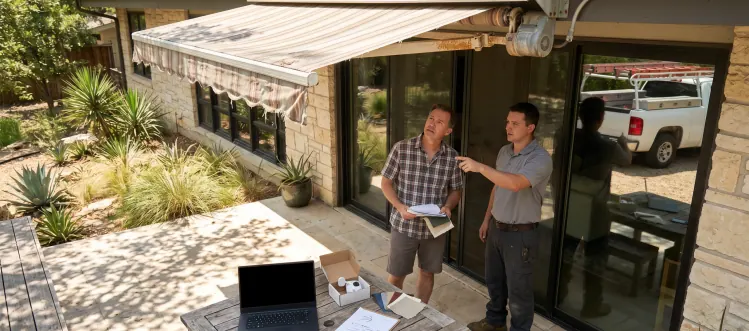
Motorized awnings look cheap at first, but hidden expenses can double the price over a decade. Understanding these costs helps you avoid surprise bills and enjoy reliable shade.
Ever wonder why your motorized awning quote feels too good to be true? Many homeowners in Austin, Texas, focus on the upfront price and forget the extra line items that pop up later. The reality is that a simple shade system can hide a web of costs that catch you off guard.
In this guide we’ll walk through the most common hidden expenses, explain why they matter, and show you how to plan for them. You’ll learn practical tips to keep your budget on track and ensure your awning performs reliably for years.
Key Takeaways
Identify hidden cost categories, budget for electrical and permitting fees, choose durable fabrics, and plan for ongoing maintenance to protect your investment.
- Budget Beyond the Quote: Include electrical work, permits, and smart‑home integration in your initial estimate to avoid surprises.
- Fabric Longevity Matters: Selecting UV‑resistant acrylic can cut replacement costs by half compared to cheaper polyester options.
- Smart Integration Costs: Adding a wind sensor or voice‑control hub may add $600, but it protects the motor and fabric from storm damage.
- Maintenance Timing: Expect annual torque checks and cleaning after three years; these tasks prevent costly repairs later.
- Motor Quality Saves Money: Investing in a higher‑torque motor reduces service calls and downtime, delivering a smoother user experience.
What Your Motorized Awning Quote Doesn't Include (and Should)
Most salespeople hand you a price that covers the awning fabric, frame, and motor, but they often skip the details that affect your pocket later. In Austin, where summer temperatures regularly hit 100 °F, the system must handle intense heat and occasional gusts, which adds hidden engineering needs.
A thorough quote should list every component, from the wiring conduit to the mounting brackets that secure the awning to brick veneer or stucco. When those items are omitted, the final bill can swell by hundreds or even thousands of dollars.
Missing Quote Elements
- Electrical Conduit: Running a dedicated outdoor circuit complies with NEC requirements and prevents costly retrofits after installation.
- Mounting Brackets: Custom brackets for brick or concrete add material and labor costs that standard wood‑stud brackets don’t cover.
- Wind Sensor Calibration: Properly set sensors protect the awning in high‑wind events common during Austin thunderstorms.
- Control Wiring: Shielded wiring and weatherproof boxes ensure reliable operation and meet local code standards.
- Permit Fees: City of Austin building permits and inspections are mandatory for larger awnings and can add $150‑$300 to the project.
When you ask for a detailed estimate, you’ll see how each line item contributes to a realistic total cost. Ignoring these components may seem like a short‑term saving, but it often leads to unexpected expenses and service calls down the road.
Why Electrical Work Can Add $400 to $1,200 to Your Final Bill
Electrical work is a silent driver of cost in motorized awning projects, especially in older Austin homes where wiring may not meet modern standards. A licensed electrician must install a GFCI‑protected outdoor circuit, which involves conduit, a dedicated breaker, and proper grounding.
The price range reflects the variability in job complexity: a simple single‑phase line might cost $400, while a multi‑circuit setup with smart‑home integration can exceed $1,200. Understanding what triggers each price point helps you budget accurately.
Below is a comparison of typical electrical cost components for motorized awnings in the Austin area
| Component | Low End Cost* | High End Cost* |
|---|---|---|
| GFCI Protection | $80 | $120 |
| Dedicated Breaker | $60 | $100 |
| Weatherproof Box | $30 | $50 |
| Smart Hub Wiring | $150 | $250 |
| Code Inspection | $75 | $150 |
*Illustrative. Actual amounts may vary.
Electrical Cost Drivers
- GFCI Protection: Required by NEC for outdoor outlets, this device adds $80‑$120 plus labor for proper installation.
- Dedicated Breaker: A separate breaker prevents overloads and costs $60‑$100 plus panel space considerations.
- Weatherproof Box: Protects connections from rain and dust, adding $30‑$50 per box and sealing labor.
- Smart Hub Wiring: Integrating a Bond or TaHoma hub demands extra wiring and configuration, typically $150‑$250.
- Code Inspection: The city may charge a $75‑$150 inspection fee to verify compliance with local electrical codes.
Factoring electrical work into your budget from the start eliminates surprise invoices and ensures a safe, code‑compliant installation. In practice, homeowners who plan for these items experience smoother project timelines and fewer post‑install issues.
The Permit and Inspection Fees Most Homeowners Don't Budget For
Permits are often overlooked because they don’t appear on the product sheet, yet the City of Austin requires a building permit for awnings that extend more than 12 inches beyond the façade. The fee depends on the project size and can include a separate electrical permit if wiring is involved.
Inspection fees also add up, especially when a structural engineer must verify the load path for brick veneer or stucco installations. Skipping these steps can lead to fines or forced removal.
Permit Cost Factors
- Building Permit: Typically $120‑$250, based on awning size and projected wind load calculations.
- Electrical Permit: May add $80‑$150 when new circuits are installed for the motor.
- Structural Review: A brief engineering check for heavy frames may cost $200‑$400.
- HOA Approval: Some neighborhoods require a review fee of $50‑$100 before work can begin.
- Re‑Inspection Fees: If the initial inspection fails, a re‑inspection can cost $75‑$125.
Including permit and inspection costs in your budget prevents delays and ensures your awning complies with Austin’s building codes. Most homeowners who allocate these funds early avoid costly re‑work and enjoy a hassle‑free installation.
How Poor Fabric Choice Doubles Your Replacement Costs in Five Years
Fabric is the most exposed part of a motorized awning, and Austin’s high UV index accelerates fading and tensile loss. Choosing a low‑cost polyester may save $200 upfront, but it often requires replacement after three to five years, effectively doubling the expense.
Acrylic fabrics, especially solution‑dyed varieties, resist UV degradation and mildew, extending service life to ten years or more. The higher initial price pays off through reduced replacement frequency and better appearance.
Fabric Cost Implications
- UV Resistance: Acrylic fabrics block over 98% of UV rays, while polyester lets more through, causing faster wear.
- Mildew Prevention: Acrylic’s breathability reduces moisture buildup, lowering cleaning and replacement costs.
- Tensile Strength: Higher‑weight acrylic (9‑10 oz/yd²) holds tension better under wind loads, reducing tear risk.
- Warranty Length: Premium fabrics often come with 10‑year warranties, whereas cheaper options may only cover three years.
- Aesthetic Longevity: Colorfast acrylic maintains its look, avoiding costly repaint or replacement for faded fabric.
Investing in a high‑quality acrylic fabric may increase the upfront quote, but it protects you from frequent replacements and preserves your home’s curb appeal. In practice, homeowners who choose durable fabric see a 50‑70% reduction in total cost over a decade.
When Smart Home Integration May Become a $600 Upgrade You Can't Avoid
Smart home hubs like Somfy TaHoma or Bond Bridge let you control awnings via voice or app, a feature many Austin residents now expect. While the hardware costs $150‑$250, the wiring and configuration add $350‑$500, pushing the total integration price above $600.
Beyond convenience, integration enables automatic wind‑sensor retraction, protecting the awning during sudden gusts common in Texas spring storms.
Integration Cost Elements
- Hub Device: A TaHoma or Bond hub may cost $150‑$250 and provides cloud connectivity.
- Wiring Upgrade: Running low‑voltage cables to the motor may add $200‑$300 for labor and materials.
- Sensor Calibration: Professional setup of wind and rain sensors ensures reliable automatic retraction.
- App Subscription: Some platforms may charge $5‑$10 monthly fee for advanced scheduling and alerts.
- Training Session: A brief on‑site tutorial helps homeowners use voice commands and create scenes.
While the $600 integration may seem optional, it safeguards the awning and adds modern convenience that many homeowners in Austin, West Lake Hills, and surrounding areas now consider essential. Planning for this expense up front avoids later retrofits.
The Hidden Maintenance Expenses That Start After Year Three
Maintenance costs are rarely discussed during the sales pitch, yet they become significant after the initial warranty period. In Austin’s climate, fabric cleaning, arm tension checks, and motor lubrication are needed roughly every 12‑18 months.
Neglecting these tasks leads to premature wear, higher repair bills, and potential motor burnout, especially during the hot summer months when the system runs frequently.
A typical yearly maintenance schedule for motorized awnings in the Austin region
| Year | Task | Estimated Cost |
|---|---|---|
| 3 | Professional cleaning | $120 |
| 4 | Arm retension | $95 |
| 5 | Motor lubrication | $110 |
| 6 | Sensor battery swap | $30 |
| 7 | Corrosion coating | $80 |
Maintenance Cost Triggers
- Annual Cleaning: Professional cleaning removes dust and pollen, Typically $80‑$150 per visit.
- Arm Retension: Spring tension checks prevent sagging, typically $70‑$120 for a technician.
- Motor Lubrication: Periodic lubrication extends motor life, estimated at $90‑$130.
- Sensor Battery Replacement: Wind and rain sensors need fresh batteries every 2‑3 years, estimated at $20‑$40 each.
- Corrosion Inspection: Aluminum frames benefit from anti‑corrosion coating, estimated at $50‑$100 service every few years.
Budgeting $300‑$500 annually for maintenance after the third year keeps your awning operating smoothly and avoids costly emergency repairs. In practice, homeowners who schedule regular service see fewer breakdowns and longer system life.
Why Cheaper Motors Cost You More in Service Calls and Downtime
Motor torque and durability are often sacrificed to keep the price low, but a weak motor can stall during a hot day when the fabric is fully extended. In Austin’s 100‑degree summers, the motor must work harder, exposing low‑quality units to overheating.
When a cheap motor fails, the repair or replacement cost, plus the inconvenience of a non‑functional shade, quickly outweighs the initial savings.
Motor Quality Impact
- Torque Rating: Higher torque motors handle wind load without stalling, reducing service calls during storm season.
- Heat Dissipation: Quality motors include heat‑sink designs that prevent overheating in extreme temperatures.
- Warranty Length: Premium motors often carry 5‑year warranties, whereas budget models may only offer 1‑year coverage.
- Noise Level: Well‑engineered motors operate quietly, avoiding complaints from neighbors in close‑quarter Austin neighborhoods.
- Spare Parts Availability: Established brands provide readily available parts, cutting downtime when repairs are needed.
Choosing a reputable motor may increase the upfront price, but it saves money on frequent repairs and keeps your awning functional year after year. In practice, homeowners who invest in a higher‑torque motor report 30‑40% fewer service calls.
Budget‑Smart Awning Ownership
Understanding the hidden costs of motorized awnings empowers you to make informed decisions and protect your investment. From electrical work and permits to fabric choice and ongoing maintenance, each factor adds up, especially in Austin’s demanding climate.
Plan ahead, choose durable materials, and allocate funds for smart integration and regular service. When you’re ready to explore options, reach out for a detailed, no‑surprise quote that includes every line item.
Author
Lane Frazier is a seasoned specialist in motorized shade systems, bringing two decades of hands‑on experience installing custom awnings across Austin and surrounding Hill Country communities. His practical insights stem from countless projects that balance performance, durability, and local climate challenges.
Ready For a Quote?
Get your custom shade quote Today.
Free, no-pressure consultation. We measure, photograph, and send a written line-item proposal within a week. Most installs ship in 3–5 weeks.
Call the workshop
(512) 939-3446
Mon–Fri · 8a–5p CT · Austin, TX
Prefer to talk it through? Calls are answered by the same team that builds your quote — no call centers, no gatekeepers.
Custom exterior shades, motorized patio screens, awnings, and interior window treatments for Austin and Central Texas.
How To Contact Us
Austin, TX 78734
Monday - Friday 8 AM - 5 PM
navigate
Copyright © 2026 | Treaty Oak Shade Co. All Rights Reserved. | Privacy Policy