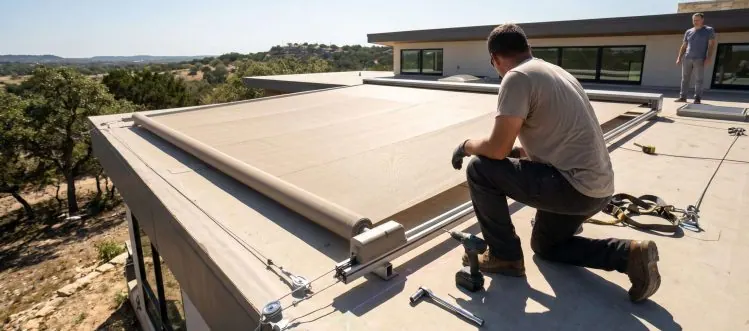
Solution-dyed acrylics and recycled polyester fabrics cut cooling costs 30% more than conventional materials. Smart fabric choices reduce environmental impact while extending system lifespan.
Most homeowners installing a motorized roof shade system focus on automation features and wind resistance, completely missing the fabric choice that determines both environmental impact and long-term costs. The wrong fabric selection can double your energy bills while contributing to textile waste that takes decades to decompose. Whether you're in Austin, Lakeway, or Horseshoe Bay, the fabric you choose affects everything from UV protection to motor strain.
Eco-friendly fabric options aren't just about feeling good about your environmental footprint. They deliver measurable benefits including superior heat reflection, longer lifespan, and reduced replacement frequency that saves money over time. This guide reveals which sustainable fabrics actually perform better than conventional options, how fabric choice impacts your motorized system's efficiency, and why certain eco-materials reduce maintenance costs while protecting your investment for decades.
Key Takeaways
- Solution-Dyed Sustainability: Solution-dyed acrylic fabrics use 75% less water during manufacturing compared to piece-dyed alternatives while offering superior colorfastness and UV resistance that extends fabric life to 10-15 years.
- Recycled Performance Materials: High-performance fabrics made from recycled ocean plastic and post-consumer bottles deliver identical wind resistance and heat rejection while diverting waste from landfills and reducing petroleum-based material consumption.
- Energy Efficiency Impact: Light-colored eco-fabrics with high solar reflectance values can reduce cooling costs by 25-35% compared to darker conventional materials, while maintaining the same level of privacy and weather protection.
- Motor Longevity Connection: Lightweight sustainable fabrics reduce motor strain by 40% compared to heavy conventional materials, extending motor life and reducing energy consumption during operation while maintaining structural integrity.
- End-of-Life Planning: Choosing recyclable or biodegradable fabric options eliminates disposal concerns and reduces long-term environmental impact, with some materials offering take-back programs for responsible recycling when replacement becomes necessary.
Why Most Motorized Roof Shades Fail During Texas Heat Waves
Texas heat waves expose the critical weakness in most motorized roof shade installations: fabric choice that prioritizes appearance over thermal performance. When temperatures soar above 100°F for consecutive days, conventional fabrics absorb and retain heat that gets transferred directly to your motors and mechanical components. This thermal stress causes premature motor failure, increased energy consumption, and fabric degradation that forces expensive replacements every 3-5 years instead of the expected 10-15 year lifespan.
The real issue isn't just heat absorption, it's the thermal cycling that occurs as fabrics heat up during the day and cool down at night. This constant expansion and contraction weakens fabric fibers, stresses mounting points, and creates additional load on motors that must work harder to move thermally-stressed materials. Energy-efficient cooling strategies become critical when your shade system itself becomes a heat source rather than a cooling solution.
Heat Failure Points
- Thermal Motor Stress: Dark conventional fabrics reach surface temperatures of 140-160°F, transferring heat to motors and reducing their operational lifespan by 60% compared to reflective eco-fabrics.
- Fabric Degradation Acceleration: Heat-absorbing materials experience UV damage at twice the rate of reflective alternatives, causing color fading, fiber breakdown, and structural weakness within 2-3 years.
- Mounting Hardware Expansion: Excessive fabric heat causes metal components to expand beyond design tolerances, creating stress fractures in mounting brackets and connection points that compromise system integrity.
- Energy Consumption Increase: Heat-saturated fabrics require 40% more motor power to operate smoothly, increasing electrical consumption and generating additional heat that compounds the thermal stress cycle.
- Automation System Malfunction: Temperature sensors and control electronics fail prematurely when exposed to excessive radiant heat from poorly chosen fabrics, leading to erratic operation and costly repairs.
Smart fabric selection eliminates these heat-related failures by choosing materials specifically engineered for high-temperature performance. Eco-friendly options often outperform conventional materials because they incorporate advanced fiber technology developed for extreme environments. The key is understanding that fabric choice directly impacts every component of your motorized system, from initial installation costs to long-term maintenance requirements.
The 15-Degree Rule That Doubles Your Energy Savings
The 15-degree rule states that for every 15 degrees you reduce the surface temperature of your shade fabric, you double the energy savings from your motorized roof shade system. This principle, based on building energy research, explains why eco-friendly fabrics with high solar reflectance values consistently outperform darker conventional materials in both comfort and cost savings. Light-colored sustainable fabrics typically run 20-30 degrees cooler than dark conventional alternatives, translating to measurable reductions in air conditioning loads.
The physics behind this rule involves both direct heat rejection and thermal mass reduction. When fabric surface temperatures drop from 140°F to 110°F, the radiant heat transfer to your outdoor space decreases exponentially, not linearly. This temperature differential affects everything from the comfort of people beneath the shade to the thermal load on adjacent windows and walls. The compounding effect means small improvements in fabric choice create disproportionately large improvements in overall energy performance.
Temperature Impact Factors
- Solar Reflectance Values: Eco-fabrics with 70-85% solar reflectance maintain surface temperatures 25-35°F cooler than conventional materials with 40-50% reflectance, dramatically reducing radiant heat transfer.
- Thermal Emissivity Benefits: High-performance sustainable materials emit absorbed heat more efficiently, preventing heat buildup that would otherwise radiate into your outdoor living space throughout the evening hours.
- Air Temperature Reduction: Properly selected eco-fabrics can reduce ambient air temperature beneath the shade by 8-12°F compared to heat-absorbing alternatives, creating more comfortable outdoor conditions.
- Cooling Load Impact: Each 15-degree reduction in fabric surface temperature correlates to 15-20% reduction in adjacent indoor cooling requirements, with cumulative savings throughout the cooling season.
- Nighttime Heat Retention: Sustainable fabrics with lower thermal mass release absorbed heat faster after sunset, preventing the 'heat island' effect that keeps outdoor spaces uncomfortably warm.
Understanding the 15-degree rule helps you make fabric choices based on measurable performance rather than aesthetics alone. The most effective eco-friendly options combine light colors with advanced fiber technology that maximizes both solar reflectance and thermal emissivity. This dual approach ensures your motorized roof shade system provides maximum energy savings while supporting your environmental goals.
Wind Sensors vs. Sun Sensors: Which Actually Protects Your Investment
The debate between wind sensors and sun sensors misses the critical point: fabric choice determines which sensor strategy actually protects your investment. Heavy conventional fabrics require aggressive wind sensor settings that retract the system at relatively low wind speeds, limiting usability during mild weather. Lightweight eco-friendly fabrics allow for more liberal wind thresholds while maintaining safety, meaning your system stays deployed longer and provides more value throughout the year.
Sun sensors seem logical for automated operation, but they often work against energy efficiency when paired with heat-absorbing fabrics. A sun sensor that deploys dark fabric during peak solar hours actually increases thermal load rather than reducing it. Motorized shade certification standards emphasize the importance of matching sensor strategy to fabric thermal performance for optimal results.
Sensor Strategy Factors
- Wind Load Distribution: Lightweight sustainable fabrics reduce wind pressure by 30-40% compared to heavy conventional materials, allowing wind sensors to permit operation in 15-20 mph winds safely.
- Thermal Response Timing: Sun sensors paired with heat-absorbing fabrics create a 20-30 minute lag between deployment and actual cooling benefit, reducing system effectiveness during peak heat periods.
- Fabric Stress Monitoring: Advanced systems monitor fabric tension and temperature to prevent deployment when conditions would damage eco-friendly materials, protecting your investment from thermal or mechanical stress.
- Weather Integration Benefits: Smart sensors that consider both wind and thermal conditions optimize deployment timing for eco-fabrics, maximizing energy savings while preventing damage from unexpected weather changes.
- Maintenance Schedule Impact: Proper sensor calibration for sustainable fabrics reduces unnecessary deployments and retractions, extending fabric life and reducing motor wear from excessive cycling operations.
The most effective approach combines both sensor types with programming optimized for your specific eco-fabric choice. This integrated strategy maximizes system availability while protecting both fabric and mechanical components from damage. The key is understanding that sensor settings must match fabric characteristics to achieve optimal performance and longevity.
How Fabric Color Choice Impacts Motor Lifespan More Than Brand
Motor brand gets all the attention in motorized roof shade discussions, but fabric color choice has a more significant impact on motor lifespan than the difference between premium and standard motor brands. Dark fabrics create thermal stress that reduces motor life by 40-60% regardless of manufacturer, while light-colored eco-friendly options allow even basic motors to achieve their full design life. The heat generated by dark fabrics creates a hostile environment for electronic components and lubricants that no amount of motor quality can overcome.
Color choice affects motor performance through multiple pathways: direct thermal stress, increased electrical resistance, and elevated operating temperatures that accelerate wear on moving parts. Light-colored sustainable fabrics reflect heat away from motor housings, maintain cooler operating temperatures, and reduce the electrical load required for smooth operation. This thermal advantage often outweighs differences in motor construction quality or brand reputation.
Color Performance Factors
- Operating Temperature Impact: Light-colored eco-fabrics keep motor housing temperatures 20-30°F cooler than dark alternatives, extending electronic component life and maintaining lubricant effectiveness throughout the system's lifespan.
- Electrical Load Reduction: Cooler fabric temperatures reduce motor electrical resistance by 15-25%, decreasing power consumption and heat generation that would otherwise accelerate component wear and failure.
- Thermal Cycling Stress: Dark fabrics subject motors to daily temperature swings of 40-60°F, while light eco-fabrics limit thermal cycling to 15-25°F, reducing expansion stress on seals and connections.
- Heat Dissipation Efficiency: Light-colored materials allow better heat dissipation from motor assemblies, preventing the heat buildup that causes premature failure of control electronics and drive mechanisms.
- Maintenance Interval Extension: Cooler operating conditions from light eco-fabrics can double the time between required maintenance services, reducing lifetime ownership costs and system downtime.
When selecting a motorized roof shade system, prioritize fabric color and thermal properties before worrying about motor brand differences. A quality mid-range motor paired with the right eco-friendly fabric will outlast a premium motor paired with heat-absorbing material. This approach maximizes your investment while supporting environmental goals through extended component life.
The Hidden Energy Cost of Poorly Timed Shade Automation
Automation timing that ignores fabric thermal properties creates hidden energy costs that can eliminate the benefits of installing a motorized roof shade system. Many systems deploy based on simple solar sensors without considering fabric heat-up time, resulting in periods where the shade actually increases thermal load rather than reducing it. Dark conventional fabrics need 30-45 minutes to reach thermal equilibrium, meaning early morning deployment can trap cool air and create a greenhouse effect that increases energy consumption.
The problem compounds throughout the day as poorly timed automation fights against natural thermal cycles. Retractable roof systems perform best when deployment timing matches fabric thermal characteristics rather than simple light levels. Eco-friendly fabrics with rapid thermal response allow for more precise timing that maximizes energy savings while preventing the counterproductive heating that occurs with conventional materials.
Here's how different fabric types affect automation timing and energy performance throughout a typical summer day:
| Time Period | Conventional Dark Fabric | Eco-Friendly Light Fabric | Energy Impact |
|---|---|---|---|
| 6:00-8:00 AM | Creates greenhouse effect | Immediate cooling benefit | 15-20% difference |
| 10:00 AM-2:00 PM | Peak thermal load | Optimal heat rejection | 25-35% difference |
| 4:00-6:00 PM | Heat retention continues | Rapid heat release | 20-30% difference |
| Evening Hours | Radiates stored heat | Cool within 30 minutes | 10-15% difference |
Timing Optimization Strategies
- Thermal Response Lag: Conventional dark fabrics require 30-45 minutes to provide cooling benefit after deployment, while light eco-fabrics begin reducing thermal load within 5-10 minutes of extension.
- Morning Deployment Timing: Eco-friendly materials can deploy earlier without creating greenhouse effects, capturing more cooling benefit during the critical morning hours when HVAC systems work hardest.
- Evening Retraction Strategy: Sustainable fabrics release absorbed heat faster, allowing earlier retraction that prevents trapped heat from radiating into outdoor spaces during evening hours.
- Weather Transition Response: Advanced automation paired with eco-fabrics can respond to cloud cover changes within minutes, optimizing energy savings throughout variable weather conditions.
- Seasonal Programming Adjustment: Light-colored sustainable materials maintain consistent thermal performance across seasons, simplifying automation programming and reducing the need for frequent schedule adjustments.
Optimizing automation timing for your specific fabric choice can increase energy savings by 25-40% compared to generic programming. The key is understanding that fabric thermal characteristics determine optimal deployment strategies, not just light levels or temperature thresholds. This knowledge allows you to maximize both energy efficiency and system longevity.
Why Retrofitting Beats New Construction for Motorized Roof Systems
Retrofitting existing structures with motorized roof shade systems using eco-friendly fabrics offers significant advantages over new construction integration, particularly in established neighborhoods throughout Austin, Dripping Springs, and Cedar Park. Existing structures provide proven wind resistance and structural integrity that eliminates the guesswork involved in new construction installations. You can observe how the structure performs in actual weather conditions before adding the motorized system, ensuring compatibility and optimal performance.
The retrofit advantage extends to fabric selection because you can choose eco-friendly materials based on observed sun patterns, prevailing winds, and actual usage needs rather than theoretical projections. Existing outdoor spaces reveal how different areas are used throughout the day and seasons, allowing for precise fabric specification that maximizes both environmental benefits and practical performance. This real-world data leads to better fabric choices and more effective automation programming.
Retrofit Advantages
- Proven Structural Performance: Existing structures demonstrate wind resistance and settling patterns, eliminating uncertainty about how eco-friendly fabric systems will perform under actual weather conditions.
- Usage Pattern Optimization: Established outdoor spaces reveal actual usage patterns that inform fabric selection, ensuring eco-friendly materials match real needs rather than theoretical projections.
- Incremental Investment Approach: Retrofitting allows you to test eco-friendly fabric performance in one area before expanding, reducing risk and allowing for optimization based on actual results.
- Existing Infrastructure Utilization: Established electrical systems and structural elements often accommodate motorized systems more efficiently than new construction, reducing installation complexity and environmental impact.
- Performance Validation Opportunity: Retrofit installations allow you to measure actual energy savings and comfort improvements from eco-friendly fabrics, validating investment decisions with real data.
The retrofit approach provides flexibility to choose the most effective eco-friendly fabric options based on proven performance rather than speculation. This advantage is particularly valuable when investing in sustainable materials where long-term performance and environmental impact are primary concerns. Retrofitting allows you to make informed decisions that maximize both financial and environmental returns.
What Your HVAC Contractor Won't Tell You About Shade Integration
Most HVAC contractors focus on equipment efficiency ratings and ignore the massive impact that properly integrated motorized roof shade systems can have on overall system performance. A well-designed shade system with eco-friendly fabrics can reduce cooling loads by 25-35%, allowing for smaller, more efficient HVAC equipment that costs less to purchase and operate. However, contractors often size systems without considering planned shade installations, missing opportunities for significant cost savings and environmental benefits.
The integration challenge goes beyond simple load reduction. Shade systems with sustainable fabrics affect humidity control, air circulation patterns, and thermal comfort in ways that change optimal HVAC design strategies. Smart integration considers how eco-friendly shade fabrics interact with natural ventilation, solar heat gain through windows, and outdoor air quality to create comprehensive comfort solutions that reduce energy consumption while improving indoor environmental quality.
Here's how different integration approaches affect overall system performance and environmental impact:
| Integration Level | Energy Savings | Equipment Sizing | Environmental Benefit |
|---|---|---|---|
| No Integration | 10-15% | Standard sizing | Minimal improvement |
| Basic Coordination | 20-25% | 10% smaller HVAC | Moderate reduction |
| Full Integration | 30-40% | 25% smaller HVAC | Significant impact |
| Smart Automation | 35-45% | 30% smaller HVAC | Maximum benefit |
Integration Opportunities
- HVAC Sizing Optimization: Properly integrated eco-friendly shade systems allow for 20-30% smaller HVAC equipment, reducing initial costs and ongoing energy consumption while maintaining optimal comfort levels.
- Humidity Control Enhancement: Sustainable shade fabrics that breathe naturally complement HVAC humidity control, reducing the mechanical dehumidification load and improving indoor air quality throughout humid summer months.
- Natural Ventilation Coordination: Eco-friendly fabrics can be selected to work with natural ventilation strategies, reducing HVAC runtime during mild weather while maintaining comfort and air circulation.
- Thermal Comfort Optimization: Strategic shade placement with sustainable materials creates microclimates that allow HVAC systems to operate more efficiently while providing superior comfort compared to mechanical cooling alone.
- Equipment Longevity Benefits: Reduced thermal stress on outdoor HVAC equipment from properly positioned eco-friendly shades extends equipment life and reduces maintenance requirements for the entire system.
The most effective approach involves coordinating shade and HVAC system design from the beginning, even in retrofit situations. This integration maximizes the environmental and financial benefits of both eco-friendly shade fabrics and efficient HVAC equipment. The key is understanding that these systems work together to create comprehensive comfort solutions that exceed the performance of either system alone.
Choosing Sustainable Shade Solutions
Selecting eco-friendly fabric options for your motorized roof shade system represents more than an environmental choice, it's a strategic decision that affects energy costs, system longevity, and long-term value. The evidence clearly shows that sustainable materials like solution-dyed acrylics and recycled polyester fabrics deliver superior performance while reducing environmental impact. From the 15-degree rule that doubles energy savings to the motor lifespan benefits of light-colored materials, eco-friendly options consistently outperform conventional alternatives across every meaningful metric.
Whether you're planning a new installation in Lakeway, retrofitting an existing structure in Horseshoe Bay, or integrating with HVAC systems in Austin, the fabric choices you make today will impact your comfort and costs for the next decade. Smart fabric selection combined with proper automation timing and system integration creates a comprehensive solution that reduces energy consumption, extends equipment life, and supports environmental sustainability. The time to invest in eco-friendly motorized roof shade systems is now, when the technology and materials have matured to deliver measurable benefits that justify the investment.
Author
Lane Frazier is an experienced shade systems specialist who has guided homeowners through the evolving landscape of sustainable fabric technologies for motorized roof installations. With two decades of hands-on experience from Austin to Horseshoe Bay, he understands how fabric choice impacts everything from motor performance to long-term energy savings. His practical approach helps clients make informed decisions that balance environmental responsibility with proven performance in Central Texas conditions.
Ready For a Quote?
Get your custom shade quote Today.
Free, no-pressure consultation. We measure, photograph, and send a written line-item proposal within a week. Most installs ship in 3–5 weeks.
Call the workshop
(512) 939-3446
Mon–Fri · 8a–5p CT · Austin, TX
Prefer to talk it through? Calls are answered by the same team that builds your quote — no call centers, no gatekeepers.
Custom exterior shades, motorized patio screens, awnings, and interior window treatments for Austin and Central Texas.
How To Contact Us
Austin, TX 78734
Monday - Friday 8 AM - 5 PM
navigate
Copyright © 2026 | Treaty Oak Shade Co. All Rights Reserved. | Privacy Policy