
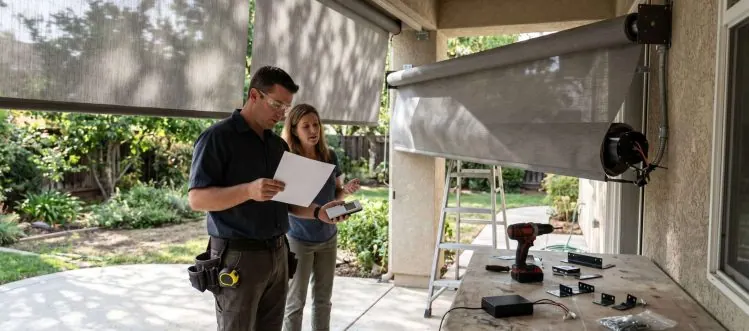
Most motorized shade failures stem from motor mismatching and poor fabric weight calculations. Understanding these factors prevents costly replacements and ensures long-term performance.
You've spent weeks researching motorized patio shades, but every website seems to dance around the real questions homeowners need answered. What actually breaks first, and why do some systems last fifteen years while others fail after three? The marketing materials promise convenience and durability, but they skip the technical details that determine whether your investment pays off or becomes a maintenance headache.
The reality is that motorized patio shade performance depends on factors most installers never explain upfront. From motor torque calculations to fabric weight limits, smart home compatibility to wind sensor calibration, the decisions you make during selection and installation determine everything. This guide addresses the specific questions that matter most, backed by real-world performance data and field experience from thousands of installations across different climates and conditions.
Key Takeaways
- Motor Longevity: Quality tubular motors like Somfy typically last 10-15 years with proper sizing, while undersized motors fail within 3-5 years due to overwork and overheating.
- Wind Protection: Look for systems rated at 35-50 mph sustained winds with automatic retraction sensors, as Texas storms regularly produce gusts that can destroy improperly rated shades.
- Smart Integration: Zigbee protocols outperform WiFi for motorized shades due to mesh networking and lower power consumption, though setup complexity varies significantly between platforms.
- Cost Breakdown: Budget systems around $3,000 use basic AC motors and manual controls, while $8,000+ systems feature DC motors, smart sensors, and commercial-grade fabrics with longer warranties.
- Professional Value: DIY installations often fail at electrical integration and fabric tensioning, leading to motor strain and premature failure that negates initial cost savings.
Why Most Motorized Shade Motors Fail After Three Years (And Which Don't)
The harsh truth about motorized shade failures is that most stem from motor undersizing during the initial specification process. When installers calculate motor requirements, they often focus solely on fabric weight while ignoring wind load factors, fabric stretch over time, and the motor's duty cycle limitations. A 20 Newton-meter motor might lift your 15-pound shade perfectly on installation day, but after six months of Texas wind stress and fabric stretching, that same motor starts working overtime and generating excessive heat.
What separates reliable systems from early failures is the motor technology and sizing approach. Somfy's RTS motors use thermal protection and precise limit switches that prevent overwork, while budget motors from unknown manufacturers often lack these safeguards. The difference becomes obvious during the first major storm season, when properly sized motors continue operating smoothly while undersized units either burn out from overheating or develop gear wear from constant strain against wind resistance.
Here's how different motor types and brands compare in real-world longevity and failure patterns:
| Motor Type | Average Lifespan | Common Failure Mode | Replacement Cost |
|---|---|---|---|
| Somfy RTS/IO | 12-15 years | Limit switch wear | $400-600 |
| Budget AC Motor | 3-5 years | Thermal burnout | $200-400 |
| Commercial DC | 10-12 years | Gear wear | $500-800 |
| Generic Tubular | 2-4 years | Complete failure | $150-300 |
Failure Indicators
- Heat Buildup: Motors running warm to the touch indicate undersizing or duty cycle violations, leading to thermal shutdown and eventual component failure within 2-3 years.
- Grinding Sounds: Gear wear from overwork creates audible grinding during operation, signaling imminent motor failure that typically occurs within 6-12 months of first symptoms.
- Inconsistent Limits: When shades stop at different positions each cycle, internal limit switches are failing due to vibration stress from an overworked motor system.
- Slow Operation: Noticeably slower extension or retraction indicates motor fatigue, usually caused by fabric stretch increasing load beyond the motor's optimal operating range.
- Intermittent Function: Random operational failures suggest thermal protection activation, where the motor shuts down to prevent damage from overheating during normal use cycles.
The motors that consistently reach their 15-year design life share common characteristics: proper torque sizing with 25-30% safety margin, quality thermal protection systems, and installation by technicians who understand load calculations. Cheap motors might save $200 upfront, but replacement costs including fabric removal, electrical work, and system recalibration often exceed $1,500. Smart buyers invest in proven motor brands with established service networks and comprehensive warranties that cover both parts and labor.
The Wind Speed Rating That Actually Matters for Texas Patios
Marketing materials love to tout wind resistance ratings, but the numbers they advertise rarely match real-world conditions. A shade rated for '40 mph winds' might refer to steady winds in laboratory conditions, not the gusty, turbulent winds that characterize Texas thunderstorms. The difference matters because sustained winds create steady pressure, while gusts create shock loads that can tear fabric or bend hardware even when average wind speeds stay within the rated range.
What actually protects your investment is understanding the difference between sustained wind ratings and gust resistance. Quality systems like those using zip-track technology can handle 35-40 mph sustained winds, but they rely on automatic retraction sensors set to trigger at 15-20 mph to avoid gust damage. The sensor placement and calibration determine whether your shades survive storm season or become expensive patio debris after the first severe weather event.
Wind Considerations
- Gust vs Sustained: Texas storms produce 60+ mph gusts even when sustained winds measure 25-30 mph, making gust protection more critical than steady-state ratings.
- Sensor Placement: Wind sensors must mount in representative locations, not sheltered areas, to trigger retraction before destructive gusts reach the shade fabric.
- Fabric Dynamics: Mesh fabrics create less wind load than solid materials, but their open weave can flutter and stress mounting points during moderate winds.
- Mounting Strength: Hardware rated for wind loads means nothing if mounting surfaces can't transfer those forces, making structural assessment crucial for exposed installations.
- Retraction Speed: Shades must retract completely within 30-45 seconds of sensor activation to avoid damage from rapidly changing wind conditions during storm fronts.
The most reliable approach combines conservative wind ratings with smart automation. Set retraction sensors to trigger at 15 mph rather than pushing limits, and choose systems with rapid retraction capabilities. Professional installation guides emphasize that surviving one major storm is worth more than maximizing usage during marginal weather conditions. The cost of replacing damaged shades far exceeds the inconvenience of conservative sensor settings.
Smart Home Integration: Zigbee vs WiFi Performance in Real-World Conditions
The choice between Zigbee and WiFi connectivity for motorized shades often gets oversimplified in marketing materials. WiFi sounds appealing because it uses your existing network, but motorized shades present unique challenges that expose WiFi's weaknesses. Outdoor installations face signal interference from metal roofing, stone walls, and distance from routers, while WiFi's higher power consumption can drain battery backup systems faster during outages.
Zigbee's mesh networking architecture proves more reliable for shade control because each device can relay signals, creating multiple communication paths. When your router is inside and your patio shades are 50 feet away around a corner, Zigbee devices create a communication bridge that WiFi can't match. The trade-off is setup complexity, as Zigbee requires a dedicated hub and more technical knowledge to configure properly.
Protocol Comparison
- Signal Range: Zigbee mesh networks extend effective range through device hopping, while WiFi relies on single-point router connection that weakens with distance and obstacles.
- Power Consumption: Zigbee protocols use 60-80% less power than WiFi, extending battery backup runtime and reducing heat generation in motor housings.
- Network Congestion: WiFi shares bandwidth with streaming, gaming, and work devices, while Zigbee operates on dedicated frequencies with minimal interference from household electronics.
- Setup Complexity: WiFi connects directly but offers limited automation options, while Zigbee requires hub configuration but enables sophisticated scene control and sensor integration.
- Reliability Factors: Zigbee maintains connection during internet outages since it operates locally, while WiFi-dependent systems may lose functionality when broadband service fails.
For most installations, Zigbee proves worth the initial setup complexity. The mesh networking prevents dead zones that plague WiFi systems, and the lower power consumption becomes crucial for battery-powered sensors. Smart home integration specialists consistently recommend Zigbee for outdoor automation projects where reliability matters more than simplicity. The investment in a quality hub pays dividends through years of consistent performance.
What $3,000 Buys You vs $8,000 in Motorized Shade Systems
The price gap between budget and premium motorized shade systems reflects fundamental differences in components, warranties, and long-term reliability. A $3,000 system typically features basic AC motors, manual switches, and standard mesh fabric with minimal wind protection. These systems work fine for covered patios with light usage, but they lack the durability and automation features that justify the motorization investment for most homeowners.
Premium systems in the $8,000 range include commercial-grade DC motors, smart sensors for wind and sun, and solution-dyed acrylic fabrics designed for decade-plus outdoor exposure. The motor alone represents a $400-600 upgrade, while smart sensors add another $200-300, and premium fabrics cost 40-60% more than basic mesh. The question isn't whether premium components cost more, but whether the performance difference justifies the investment for your specific situation.
Value Tiers
- Motor Quality: Budget systems use generic AC motors with 3-5 year lifespans, while premium systems feature branded DC motors engineered for 15+ years of reliable operation.
- Fabric Durability: Basic mesh fabrics fade and weaken within 5-7 years, while solution-dyed acrylics maintain color and strength for 10-12 years in harsh sun exposure.
- Control Sophistication: Entry systems offer manual switches and basic remotes, while premium installations include sensors, scheduling, and integration with home automation platforms.
- Wind Protection: Budget installations rely on manual retraction during storms, while premium systems include calibrated wind sensors that automatically protect the investment.
- Warranty Coverage: Basic systems typically include 1-2 year limited warranties, while premium installations offer 5-10 year comprehensive coverage including parts and labor.
The sweet spot for most homeowners falls around $5,000-6,000, combining quality motors with smart sensors while using mid-grade fabrics that balance durability and cost. This approach provides the reliability benefits of premium components while avoiding luxury features that add cost without proportional value. Detailed cost breakdowns show that the middle tier delivers 80% of premium performance at 60% of premium pricing, making it the most sensible choice for typical residential applications.
The Fabric Weight Mistake That Burns Out Motors Prematurely
The most expensive motorized shade failures trace back to a simple calculation error: underestimating total fabric load. Installers often calculate motor requirements based on dry fabric weight, ignoring how water absorption, wind resistance, and fabric stretch over time increase the actual load. A 12-pound shade can become an 18-pound load after rain absorption, while fabric stretch from UV exposure and wind stress can add another 10-15% to operating resistance within the first year.
Fabric weight specifications on manufacturer datasheets represent ideal conditions that rarely match field reality. Mesh fabrics seem lighter than solid materials, but their open weave creates turbulence that increases wind resistance during operation. Solution-dyed acrylics maintain their weight better over time but start heavier than basic polyester alternatives. The motor sizing decision made during installation determines whether your system operates smoothly for years or struggles from day one.
Load Factors
- Water Absorption: Fabric can absorb 20-30% of its dry weight in moisture, temporarily doubling motor load during rain events and humid conditions.
- Wind Resistance: Operating shades in 10-15 mph winds increases motor load by 40-60% compared to calm conditions, stressing undersized motors beyond design limits.
- Stretch Effects: UV exposure and repeated cycling cause fabric stretch that increases operating resistance by 10-15% within the first year of installation.
- Hardware Friction: Worn tracks, dirty guides, and settling mounting points add resistance that compounds fabric load increases over the system's lifetime.
- Temperature Impact: Cold weather stiffens fabrics and increases motor load, while heat can cause thermal expansion that affects track alignment and operation smoothness.
Smart installers size motors with 25-30% safety margin above calculated fabric weight, accounting for real-world load increases over time. This approach prevents the gradual performance degradation that plagues marginally sized systems. The extra motor cost, typically $100-200, proves insignificant compared to premature replacement expenses. Professional sizing guides emphasize that oversized motors run cooler, last longer, and maintain consistent performance throughout their service life.
Why Battery Backup Systems Are Oversold for Most Austin Homes
Battery backup systems for motorized shades get pushed hard by sales teams, but the reality is that most Austin homeowners rarely benefit from this expensive upgrade. The typical residential power outage lasts 2-4 hours and occurs during storms when you wouldn't want shades extended anyway. Battery systems add $300-500 to installation costs while requiring annual maintenance and eventual replacement, making them a questionable investment for most applications.
The situations where battery backup proves valuable are specific and limited: homes with frequent extended outages, commercial installations requiring security during power loss, or systems protecting valuable outdoor furniture that needs immediate coverage during sudden storms. For typical residential patios, the combination of storm sensors and manual override capabilities provides adequate protection without the complexity and cost of battery systems.
Here's how battery backup costs compare to alternative investments in system quality:
| Investment Option | Upfront Cost | Annual Maintenance | Practical Benefit |
|---|---|---|---|
| Battery Backup | $400-600 | $50-75 | Rare outage operation |
| Motor Upgrade | $300-500 | $0 | Daily reliability improvement |
| Premium Fabric | $200-400 | $0 | Longer lifespan, better performance |
| Smart Sensors | $250-400 | $25 | Automated protection, convenience |
Backup Reality
- Outage Duration: Austin's average residential outage lasts 3.2 hours, insufficient time to justify battery backup costs for most shade applications.
- Storm Timing: Power outages typically occur during severe weather when shades should be retracted anyway, eliminating the primary use case for backup power.
- Maintenance Costs: Battery systems require annual testing and replacement every 3-5 years, adding $150-250 in ongoing costs that often exceed the system's value.
- Manual Override: Quality motorized systems include hand-crank backup that provides emergency operation without electrical power or battery complexity.
- False Security: Battery backup creates a false sense of security since most failures stem from mechanical issues, not power loss, making backup power irrelevant.
The money spent on battery backup typically delivers better value when invested in higher-quality motors, better fabrics, or more sophisticated sensors. For the rare homeowner who experiences frequent extended outages, a small generator provides more versatile backup power for multiple systems. Installation specialists report that less than 15% of residential customers actually use their battery backup systems in meaningful ways, making this upgrade a poor investment for most applications.
Professional Installation vs DIY: Where the Hidden Costs Really Hit
DIY motorized shade installation looks appealing until you encounter the hidden complexity that separates successful projects from expensive mistakes. The mechanical mounting seems straightforward, but electrical integration, fabric tensioning, and limit switch calibration require specialized knowledge and tools. Most DIY failures occur during the setup phase, when improper motor programming or fabric alignment creates problems that don't appear until weeks later.
The real cost comparison isn't just professional labor versus your time, but the risk of system damage from installation errors. Incorrectly tensioned fabric can tear during the first wind event, while improper electrical connections can damage motors or create safety hazards. Professional installers carry insurance and warranties that cover these risks, while DIY mistakes leave you responsible for replacement costs that often exceed the original installation savings.
Hidden Challenges
- Electrical Integration: Motorized shades require proper circuit sizing, GFCI protection, and code-compliant wiring that most homeowners can't safely install without permits and inspections.
- Fabric Tensioning: Improper tension causes premature wear, tracking problems, and wind damage that may not appear until months after installation when warranty claims become difficult.
- Limit Calibration: Motor limit switches require precise adjustment that affects long-term reliability, with errors leading to fabric damage and motor strain over time.
- Structural Assessment: Professional installers evaluate mounting surface integrity and load transfer, preventing failures that can damage both shades and building structure.
- Warranty Implications: Manufacturer warranties often require professional installation, making DIY projects ineligible for coverage when expensive components fail.
The break-even point for DIY installation typically requires mechanical aptitude, electrical experience, and access to specialized tools that most homeowners lack. Professional installation costs $200-400 more than DIY but includes proper permits, insurance coverage, and warranties that protect your investment. Industry data shows that professionally installed systems have 60% fewer failures in the first three years, making the labor cost a wise investment for most homeowners seeking long-term reliability.
Making Smart Shade Decisions
The key to successful motorized patio shade ownership lies in understanding the technical factors that determine long-term performance. Quality motors sized with adequate safety margins, proper wind protection systems, and professional installation create reliable systems that justify their cost through years of trouble-free operation. The upfront investment in proven components and expert installation prevents the frustration and expense of premature failures that plague budget systems.
When evaluating motorized shade options, focus on motor quality, fabric durability, and installation expertise rather than flashy features that add cost without proportional value. The questions answered in this guide help you make informed decisions that balance performance, cost, and reliability for your specific situation. If you're ready to explore motorized patio shade options that prioritize long-term value over short-term savings, we can help you select and install systems designed to perform reliably for years to come.
Author
Lane Frazier brings two decades of hands-on experience installing motorized shade systems across Central Texas, from lakefront properties in Horseshoe Bay to urban patios in downtown Austin. His practical understanding of how different motor technologies, fabric choices, and installation techniques perform in Texas heat and storms provides the real-world perspective that helps homeowners avoid costly mistakes and achieve reliable long-term performance.
Ready For a Quote?
Get your custom shade quote Today.
Free, no-pressure consultation. We measure, photograph, and send a written line-item proposal within a week. Most installs ship in 3–5 weeks.
Call the workshop
(512) 939-3446
Mon–Fri · 8a–5p CT · Austin, TX
Prefer to talk it through? Calls are answered by the same team that builds your quote — no call centers, no gatekeepers.
Custom exterior shades, motorized patio screens, awnings, and interior window treatments for Austin and Central Texas.
How To Contact Us
Austin, TX 78734
Monday - Friday 8 AM - 5 PM
navigate
Copyright © 2026 | Treaty Oak Shade Co. All Rights Reserved. | Privacy Policy