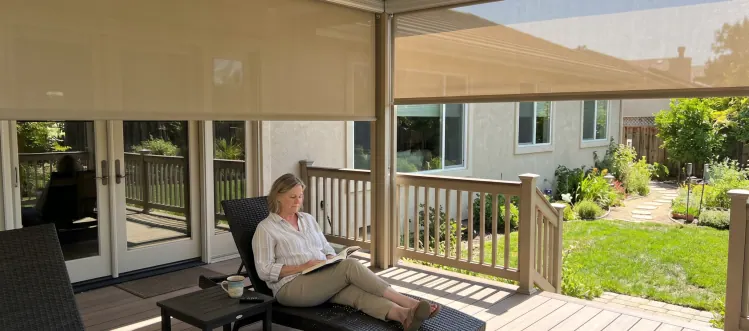
Motorized patio shades in Austin typically last ten to fifteen years for the fabric and seven to ten years for the motor components. They must survive summer temperatures above one hundred degrees and wind gusts that can reach one hundred five miles per hour, so leading brands rely on vinyl‑coated fiberglass meshes and robust tension tracks to keep fabrics from fraying and blowing out.
Key durability and performance factors for the Central Texas climate include fabric technology, wind resistance systems, hardware and motor quality, warranty support, budget considerations, patio dimensions, and exposure level.
- Fabric Technology: Solar screens should feature a tightly woven fiberglass core with a vinyl coating to resist UV fading and cracking.
- Wind Resistance: Look for zipper or track‑guided systems. Companies like Shading Texas engineer single‑sheet shades up to thirty feet wide without broken seams, and brands like Shade Doctors offer blowout guarantees of up to one hundred five miles per hour.
- Hardware & Motors: Opt for stainless steel components, powder‑coated aluminum housing, and motors by reputable brands such as Somfy.
- Warranty Support: Top local installers often provide five to ten year warranties on both the fabric and the motor.
- Your Approximate Budget:
- The Dimensions of Your Patio:
- Whether Your Patio Is Enclosed or Fully Exposed to the Wind:
Motorized patio shades durability hinges on fabric choice, wind‑rated tracks, and quality motors. In Central Texas, proper material and installation can push lifespan well beyond ten years.
Ever wonder why some motorized patio shades seem to survive the Austin sun while others fail after a few seasons? The answer lies in the hidden details that most homeowners overlook.
In this guide we’ll break down the most common durability pitfalls, explain why certain components matter, and give you a clear plan to choose a system that stands up to Texas heat, humidity, and gusty winds.
Why Most Motorized Patio Shades Fail Within Three Years (And How to Avoid It)
A common frustration for homeowners in Austin and surrounding Hill Country towns is watching a brand‑new shade system lose its smooth operation after just a couple of summers. The problem usually isn’t the motor itself but a cascade of small oversights that add up under extreme heat and wind.
Understanding the chain reaction, starting with fabric stress, moving through hardware fatigue, and ending with motor overload, helps you spot warning signs early and choose a system built for the local climate.
Key Failure Triggers
- Improper Fabric Tension: Loose tension lets the fabric flap in the wind, causing edge wear and motor strain before the warranty expires.
- Undersized Hardware: Using standard fasteners on a thirty‑foot span fails to meet the pull‑out strength required for one hundred five mile gusts.
- Low‑Torque Motors: Motors rated below six new‑Nm cannot handle the weight of heavy‑duty fabrics on large spans, leading to overheating.
- Missing Weather Seals: Without IP44‑rated enclosures, moisture seeeds into the motor housing, accelerating corrosion.
- Skipping Code Checks: Ignoring NEC requirements for dedicated circuits can cause voltage drops that shorten motor life.
By addressing these hidden issues, selecting the right tension system, upgrading to stainless hardware, and ensuring code‑compliant wiring, you can dramatically extend the lifespan of your patio shades and avoid costly early replacements.
The Fabric‑to‑Motor Compatibility Issue No One Talks About
When you pair a lightweight fabric with a high‑torque motor, the system may feel over‑engineered, yet the mismatch can cause the motor to stall during windy days. Conversely, a heavy, densely woven fabric on a low‑torque motor can overheat the motor within weeks of use.
In Central Texas, where temperature swings are sharp, the fabric‑motor pairing becomes a decisive factor for durability. The right combination ensures smooth operation and protects both components from premature wear.
Compatibility Checklist
- Fabric Weight vs. Motor Torque: Match fabric weight (oz/yd²) to motor torque; a twelve‑oz fabric typically needs at least six Nm, while heavier fabrics demand ten Nm or more.
- Openness Factor: Lower openness (1‑3 %) fabrics add resistance, requiring stronger motors to maintain speed.
- Thermal Expansion: High‑temperature periods cause fabric to expand; a motor with a built‑in thermal sensor can adjust speed to prevent binding.
- Control System Load: Smart home integrations add a small power draw; ensure the motor’s rating includes this overhead.
- Warranty Alignment: Choose a motor warranty that covers the expected fabric lifespan to avoid gaps in coverage.
When you align fabric specifications with motor capabilities, you eliminate a hidden source of failure and create a system that runs reliably through Austin’s scorching summers and occasional windstorms.
How Texas Heat Cycles Expose Weak Points in Budget Shade Systems
Many budget‑friendly shade kits look attractive on paper, but they often use lower‑grade plastics and thin aluminum that warp under repeated heating cycles. In Austin, where daily highs can exceed one hundred degrees, those materials expand and contract, creating gaps that let wind and moisture in.
These thermal stresses accelerate wear on gears, loosen fasteners, and cause fabric sagging, turning a cheap purchase into a costly repair within a few years.
Comparison of typical budget versus premium material specifications
| Component | Budget Spec | Premium Spec |
|---|---|---|
| Motor Housing | ABS plastic, IP44 | Powder‑coated aluminum, IP55 |
| Fabric Core | Standard polyester, no UV coating | Vinyl‑coated fiberglass, UV‑stabilized |
| Fasteners | Plain steel, no coating | Stainless steel 316, corrosion‑resistant |
| Aluminum Tube | Thin gauge, 1.5 mm | 6063‑T5 alloy, 2.5 mm |
Thermal Weakness Indicators
- Plastic Motor Housings: Low‑impact ABS can soften at ninety degrees, leading to gear misalignment and noise.
- Thin Aluminum Tubes: Sub‑inch diameters flex under wind pressure when heated, causing fabric binding.
- Uncoated Fasteners: Standard steel fasteners rust in humid conditions, reducing pull‑out strength over time.
- Minimal UV Stabilizers: Fabrics without UV inhibitors fade and lose tensile strength after a few hundred sun hours.
- Lack of IP Rating: Motors without at least IP44 protection allow moisture ingress, shortening motor life.
Investing in higher‑grade components, such as powder‑coated aluminum, stainless hardware, and UV‑stabilized fabrics, may raise upfront costs but dramatically reduces the risk of heat‑induced failures.
What 10,000 Cycles Actually Means for Your Daily Use Pattern
Manufacturers often quote a motor life of ten thousand cycles, but what does that translate to for a typical Austin homeowner? If you close and open your shades twice a day, once in the morning and once at sunset, you’ll reach that limit in roughly thirteen years.
Understanding this metric helps you plan maintenance, warranty extensions, and eventual replacement without surprise interruptions.
Cycle Impact Factors
- Daily Frequency: Two cycles per day equals 730 cycles per year; higher usage in commercial settings can halve motor life.
- Load Weight: Heavier fabrics increase motor load, causing extra wear per cycle.
- Temperature Extremes: Operating near motor temperature limits can reduce cycle count by up to fifteen percent.
- Wind Interference: Sudden gusts that force the motor to stall add stress, consuming extra cycles.
- Smart Integration: Automated schedules that trigger shade movement during low‑sun periods can spread cycles more evenly.
By matching your usage pattern to the motor’s rated cycle life, you can schedule timely inspections and keep the system performing smoothly for years to come.
The Wind Rating That Matters More Than Your Shade's Motor Warranty
A motor warranty may promise ten years, but if the shade’s wind rating is insufficient, the fabric can tear or the hardware can fail long before the motor does. In the Hill Country, wind gusts regularly top one hundred miles per hour during thunderstorms, making wind rating a critical durability metric.
Choosing a system rated for at least one hundred five miles per hour ensures the entire assembly, fabric, tracks, and motor, remains intact during the most severe events.
Wind‑Rating Essentials
- Rated Gust Speed: Look for certifications that specify maximum wind speed; 105 mph is a safe benchmark for Central Texas.
- Side‑Channel Design: Zip‑track or magnetic sidetracks lock the fabric edges, reducing uplift pressure.
- Guide‑Wire Tension: Stainless steel guide wires keep the bottom bar stable, preventing flutter.
- Automatic Retraction Sensors: Systems that sense wind speed and retract automatically protect the shade from overload.
- Hardware Reinforcement: Use heavier gauge aluminum and stainless brackets to resist wind‑induced bending.
When wind rating aligns with local storm patterns, the shade’s structural integrity stays intact, and the motor warranty becomes a true safety net rather than a false promise.
Why UV‑Rated Components Cost More Upfront But Last Three Times Longer
UV‑rated fabrics and motor housings carry a premium price tag, yet they contain stabilizers that block harmful radiation and prevent material breakdown. In Austin’s relentless sunshine, those stabilizers can extend fabric life from five years to fifteen years, while motor housings with UV‑resistant coatings avoid cracking and discoloration.
The long‑term savings from reduced replacements and fewer service calls often outweigh the initial cost difference.
UV‑Rating Benefits
- Fabric Longevity: UV‑stabilized acrylic retains color and tensile strength for up to fifteen years.
- Motor Protection: UV‑coated ABS or polycarbonate housings resist yellowing and brittleness.
- Energy Efficiency: Stable fabrics maintain solar control performance, reducing cooling loads.
- Maintenance Reduction: Fewer fading and cracking issues mean less frequent cleaning and repairs.
- Warranty Alignment: Premium UV‑rated components often come with longer warranties, reflecting confidence in durability.
Investing in UV‑rated materials is a strategic choice that safeguards both aesthetics and function, delivering a shade system that endures Austin’s intense sun without frequent replacements.
When Manual Override Features Save Your Shade Investment During Power Outages
Power outages are common during summer storms in West Lake Hills and surrounding areas. A motorized shade without a manual override can become a permanent barrier, forcing costly emergency repairs or replacement.
Manual override mechanisms, whether a crank handle or a battery‑backed controller, provide a reliable fallback, keeping your shade functional even when the grid is down.
Manual override methods and their typical use cases
| Method | Typical Use | Pros |
|---|---|---|
| Crank Handle | All weather, no power | Simple, low cost, always available |
| Battery Backup | Short outages, smart homes | Automatic, retains motor control |
| Smart Hub Integration | Connected homes | Seamless resume after power restores |
| Emergency Release Lever | Emergency situations | Quick disengage, prevents motor strain |
Override Options
- Crank Handle: Simple mechanical crank attached to the roller tube lets you raise or lower the shade manually.
- Battery Backup: A small rechargeable battery powers the motor for a limited number of cycles during outages.
- Smart Hub Integration: Some smart controllers store the last position and can resume operation once power returns.
- Emergency Release Lever: A quick‑release lever disengages the motor, allowing free movement of the fabric.
- Safety Lock: Prevents accidental deployment when the override is engaged, protecting children and pets.
Including a manual override not only protects your investment but also offers peace of mind during unpredictable weather events, ensuring your patio remains comfortable and secure.
Ensuring Long‑Lasting Outdoor Comfort
Across Austin, West Lake Hills, Lakeway, Bee Cave, Spicewood, Horseshoe Bay, Dripping Springs, and San Marcos, the right combination of UV‑rated fabrics, wind‑rated hardware, and quality motors determines whether your motorized patio shades survive the harsh Texas climate. By following the material, installation, and maintenance guidelines outlined above, you can expect a system that delivers shade, energy savings, and peace of mind for a decade or more.
Ready to choose a shade system built for Central Texas extremes? Explore our motorized custom porch screens, learn more about our exterior shade options, and see how our retrievable pergola covers can transform your outdoor living space.
Author
Lane Frazier is a seasoned installer with two decades of experience designing and fitting motorized patio shade systems for homes throughout the Austin area. His hands‑on work with vinyl‑coated fiberglass fabrics and high‑torque Somfy motors gives him a practical view of durability challenges. Lane’s focus on real‑world performance helps homeowners make choices that stand up to Texas heat and wind.
Ready For a Quote?
Get your custom shade quote Today.
Free, no-pressure consultation. We measure, photograph, and send a written line-item proposal within a week. Most installs ship in 3–5 weeks.
Call the workshop
(512) 939-3446
Mon–Fri · 8a–5p CT · Austin, TX
Prefer to talk it through? Calls are answered by the same team that builds your quote — no call centers, no gatekeepers.
Custom exterior shades, motorized patio screens, awnings, and interior window treatments for Austin and Central Texas.
How To Contact Us
Austin, TX 78734
Monday - Friday 8 AM - 5 PM
navigate
Copyright © 2026 | Treaty Oak Shade Co. All Rights Reserved. | Privacy Policy