
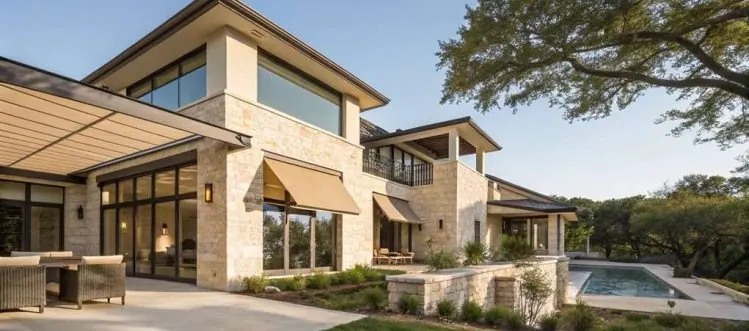
In Lakeway, where sunshine reigns for over 230 days a year, finding effective exterior shade isn’t just about comfort—it’s about survival. The region’s wide temperature swings can make outdoor areas unbearable, impacting customer satisfaction and even your business performance. From patios to storefronts, the right shade solution can turn a sweltering space into a welcoming retreat.
To achieve this, business owners should invest in HDPE fabrics with up to 98% UV protection and designs that withstand Lakeway’s average winds of 6–11 mph. Deep-set footings, precise bracket spacing, and data-driven systems like thermocouple sensors ensure both durability and performance. For optimal results, installations should be scheduled between March and May to deliver lasting comfort and energy efficiency year-round.
Key Highlights
- Install HDPE shade fabrics that offer 98% UV protection, positioning them at optimal angles to accommodate Lakeway's daily temperature fluctuations of 24°F.
- Implement deep-set footings with 24-inch bracket spacing and aerodynamic designs to ensure stability against local wind speeds ranging from 6 to 11 mph.
- Utilize real-time monitoring systems equipped with thermocouples and meteorological stations to track shade performance during peak summer temperatures of 95-98°F.
- Position shade structures with a minimum clearance of 8 feet from seating areas, taking into account seasonal sun angle variations of 15 degrees.
- Incorporate motorized adjustable features with contact closure systems to adapt to Lakeway's 230 sunny days each year and the varying weather conditions.
Critical Climate Factors Influencing Shade Design
When it comes to designing exterior shade structures, the interplay of climate factors can make or break your project. Picture a scenario where you’re trying to create a comfortable outdoor space in Lakeway, Texas, renowned for its 230 sunny days each year and wild temperature swings. If you're not mindful of these climatic nuances, your investment could quickly turn into a costly oversight.
The daily temperature variations can reach an impressive 24°F, which means any materials you choose need to endure significant thermal expansion and contraction. This is crucial when the summer sun peaks at a scorching 95-98°F, coinciding with long daylight hours. As you design, think critically about orientation—how will your structure shield users from the sun’s intense rays during peak hours? Incorporating interior roller shades can provide additional versatility for privacy or shade within your outdoor spaces. Additionally, using motorized custom shades can enhance convenience, allowing for easy adjustments based on the sun's position throughout the day.
Moreover, with an annual precipitation average of 34 inches, it’s essential to incorporate effective drainage systems into your designs. Consistent wind speeds of 6-11 mph add another layer of complexity, influencing both material selection and structural integrity.
Humidity levels hovering between 58-67% can also affect the longevity of materials, making it imperative to consider durability in your design choices. Fortunately, the absence of snowfall allows you to focus on managing rain and optimizing UV protection without the added burden of snow loads. Incorporating motorized patio covers can enhance the adaptability of your outdoor spaces, allowing for easy adjustments based on changing weather conditions.
For business owners seeking to enhance outdoor spaces, these climate factors are not just technical details; they are the foundation upon which successful shade design is built. By addressing these challenges head-on with practical solutions, you can create inviting, functional outdoor areas that stand the test of time.
Material Selection for Maximum Durability
Choosing the right materials for exterior shade design is crucial to ensuring durability in the face of harsh climate conditions. Property owners often grapple with the need for effective performance while also considering the long-term implications of their material choices. Improper material selection can lead to increased maintenance costs and reduced lifespan of your investments.
When assessing material durability and fabric options, it’s essential to look beyond immediate needs. For instance, high-density polyethylene (HDPE) fabrics stand out for their ability to provide UV protection up to 98%. Their knitted or woven structures not only offer this protection but also maintain breathability, which is vital in preventing heat buildup. Additionally, custom solutions offered by professionals can further enhance the effectiveness of these materials. Motorized options, in particular, provide convenience and ease of use that can significantly improve the user experience.
Metal frameworks, particularly those made from aluminum and galvanized steel, are another excellent choice. They boast superior strength-to-weight ratios, meaning they can withstand strong winds and adverse weather while requiring minimal maintenance. This combination is particularly beneficial for business owners looking to protect outdoor spaces with minimal ongoing costs.
Advanced vinyl and PVC solutions, while initially pricier, offer exceptional longevity that can match the lifespan of the building itself. This investment can pay off over time, especially in climates that are prone to extreme weather fluctuations.
On the other hand, wood options like mahogany present a natural aesthetic and inherent durability advantages over pressure-treated pine. However, they necessitate regular maintenance to preserve their appearance and structural integrity, which can be a consideration for those with tight maintenance budgets.
Understanding these material characteristics is key to making informed decisions that balance essential performance factors like UV resistance, tear strength, and weather resilience. Additionally, incorporating customized exterior shade solutions can enhance both the functionality and aesthetic appeal of your outdoor spaces. It’s crucial to tailor your selection based on specific climate challenges and long-term value propositions. By doing so, you can safeguard your investment while enhancing the functionality and aesthetic appeal of your outdoor spaces.
Engineering Considerations for Wind Management
When it comes to designing exterior shade structures, managing wind effectively can make the difference between a successful installation and a costly failure. Wind loads can exert pressures exceeding 50 pounds per square foot on structures in certain conditions. This highlights the importance of engineering considerations for wind management.
Sophisticated Computational Fluid Dynamics (CFD) modeling is a game-changer in this arena. It allows engineers to accurately predict the effects of wind loads, visualizing pressure distribution across the structure. This insight is crucial for identifying areas that may require reinforcement, ensuring that the design maintains its structural integrity even in harsh conditions.
To combat wind resistance, key engineering strategies focus on aerodynamic design features. For instance, arched or dome-shaped structures can effectively redirect wind flow, while tensioned canopy designs are crafted to remain stable against strong gusts. Additionally, the integration of breathable HDPE fabrics can significantly reduce wind drag by allowing controlled airflow to pass through the material, enhancing overall stability.
Foundation systems cannot be overlooked in wind management. Deep-set footings and robust anchoring mechanisms are essential for ensuring stability. Site-specific calculations take into account local terrain conditions and regional wind patterns, which vary widely across different areas. The use of galvanized steel frames offers the necessary strength to withstand sustained wind loads over time, ensuring long-lasting performance.
For business owners considering the installation of exterior shade structures, understanding these engineering principles is vital. A well-designed structure not only enhances the aesthetic appeal of a space but also provides a reliable solution to protect against unpredictable weather, ultimately safeguarding your investment.
Strategic Installation Timing and Placement
When it comes to maximizing the performance and lifespan of exterior shade installations, timing and placement are not just details—they are game-changers. Have you ever considered how a well-timed installation can significantly enhance your outdoor experience? Research shows that proper planning can reduce emergency service calls related to shade issues by up to 60%. This isn’t just about aesthetics; it’s about ensuring your investment works effectively when you need it most.
To ensure optimal shade performance, consider these key strategies:
- Timing is Everything: Installing your shades in spring, ideally from March to May, allows ample opportunity to test their effectiveness before the summer heat hits. It's crucial that mounting hardware cures properly, requiring temperatures between 50-80°F for best results.
- Smart Positioning: Ensure a minimum clearance of 8 feet from seating areas to allow for comfortable use, factoring in seasonal shifts and the sun's 15-degree angle variations throughout the year.
- Stability Through Design: Implement strategic bracket spacing at 24-inch intervals to enhance stability, while maintaining a 6-inch ground clearance to promote adequate air circulation.
- Pre-Season Planning: Scheduling installations ahead of the busy summer months can mitigate potential service issues. Aim to complete installations at least 30 days before severe weather patterns typically arise.
Additionally, understanding microclimate effects—like wind patterns and heat island impacts—can greatly improve the long-term performance and durability of your shades. By addressing these elements, you can create outdoor spaces that not only look good but also function optimally, enhancing your overall business environment.
Performance Monitoring and Maintenance Protocols
Are you struggling to maximize energy efficiency and comfort in your building? The performance of exterior shade systems can significantly influence indoor climate control and energy consumption, yet many businesses overlook the importance of effective monitoring and maintenance. Research shows that proper shading can reduce cooling costs by up to 30% during peak summer months, making it critical to implement sophisticated monitoring strategies.
To ensure your shade systems are performing at their best, leveraging advanced sensor technology is key. Strategically placed thermocouples measure window surface temperatures with both interior and exterior sensors, providing precise data on shade effectiveness. Complementing these measurements are packaged meteorological stations that monitor outdoor conditions and solar irradiance, giving you a comprehensive view of how external factors affect your shade performance.
Data accuracy is essential, and extensive monitoring systems can track multiple parameters simultaneously. For instance, contact closure systems mounted on shade tracks enable real-time position tracking, while time-lapse photography, combined with image recognition algorithms, allows for non-invasive analysis of usage patterns. These insights can help you understand how and when shades are used, ensuring optimal performance.
Moreover, data acquisition platforms consolidate information on outdoor conditions, indoor temperatures, and HVAC performance, integrating seamlessly into energy simulation models. By collecting this data at regular intervals throughout peak summer months, you generate robust datasets that inform performance assessments. High-resolution aerial imagery tools take your monitoring to the next level, offering detailed shade estimations with thousands of data points systematically gathered.
Incorporating these monitoring protocols not only enhances the effectiveness of your shade systems but also addresses common concerns about energy waste and occupant comfort. By investing in these advanced technologies, you position your business to thrive in an increasingly energy-conscious world, ultimately leading to significant cost savings and improved environmental impact.
In Summary
In Lakeway's unique climate, the successful implementation of exterior shades requires an integration of high-quality materials, precise engineering, and thoughtful timing. Property owners must consider environmental factors that could impact shade durability and effectiveness, much like the strategic planning of a castle's defenses. With consistent monitoring and maintenance, these shade solutions can provide optimal performance and comfort for many years. Treaty Oak Shade stands out as the premier custom motorized patio shade company in Austin, Texas, dedicated to helping clients navigate these specific challenges.
By leveraging our expertise, we ensure that your exterior shade investments are not only effective but also tailored to meet the distinct needs of the Lakeway climate. Our commitment to quality and innovation allows us to deliver customized solutions that enhance your outdoor living experience. With Treaty Oak Shade, you can trust that your shade installations will adapt seamlessly to the atmospheric demands of the region. Contact us today to explore how we can enhance your outdoor spaces with our exceptional shade solutions.
Ready For a Quote?
Get your custom shade quote Today.
Free, no-pressure consultation. We measure, photograph, and send a written line-item proposal within a week. Most installs ship in 3–5 weeks.
Call the workshop
(512) 939-3446
Mon–Fri · 8a–5p CT · Austin, TX
Prefer to talk it through? Calls are answered by the same team that builds your quote — no call centers, no gatekeepers.
Custom exterior shades, motorized patio screens, awnings, and interior window treatments for Austin and Central Texas.
How To Contact Us
Austin, TX 78734
Monday - Friday 8 AM - 5 PM
navigate
Copyright © 2026 | Treaty Oak Shade Co. All Rights Reserved. | Privacy Policy