
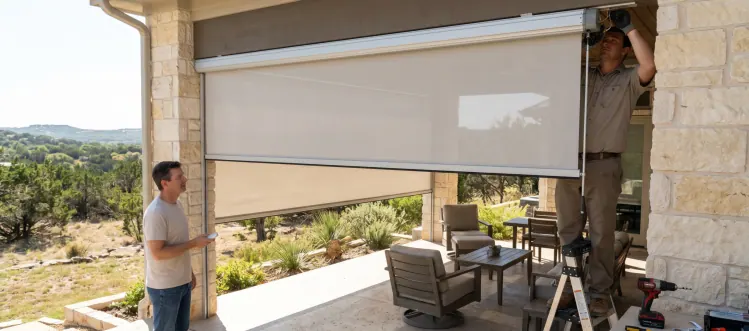
Motorized roof shades can cut cooling costs by 35% while protecting outdoor furniture. Smart automation maximizes efficiency without manual intervention.
Your energy bills spike every summer, and you've probably blamed your aging HVAC system or poor insulation. But here's what most homeowners in Austin, West Lake Hills, and Lakeway never consider: the biggest energy drain might be happening above your outdoor living spaces. Traditional fixed awnings and manual shade systems leave you constantly adjusting coverage throughout the day, missing optimal energy savings when you're at work or simply forget to make changes. Meanwhile, your air conditioning works overtime to compensate for solar heat gain that could have been prevented.
A properly designed motorized roof shade system transforms this dynamic completely. These systems use integrated sensors and smart controls to automatically respond to changing sun angles, wind conditions, and temperature fluctuations throughout the day. You'll discover seven specific ways these systems deliver measurable energy savings, from reducing direct solar heat gain to creating microclimates that extend your outdoor season. Each strategy works independently, but when combined, they can reduce your cooling costs by 25-40% during peak summer months.
1. Automated Solar Heat Gain Reduction Based on Sun Position
The most immediate energy benefit comes from blocking solar radiation before it heats your outdoor surfaces and adjacent indoor spaces. Unlike fixed awnings that provide the same coverage regardless of sun angle, retractable roof systems automatically adjust throughout the day to maintain optimal shading. When the morning sun hits your east-facing patio at a low angle, the system extends partially. As the sun reaches its peak intensity around 2 PM, full coverage deploys to block up to 95% of solar heat gain. This prevents your concrete, stone, and outdoor furniture from becoming heat sinks that radiate warmth long after sunset.
In practice, this automation translates to significant cooling load reduction for your home's interior. A study by the Department of Energy found that exterior shading can reduce solar heat gain by up to 77% on south-facing exposures. For a typical 400-square-foot covered patio in Cedar Park or Dripping Springs, this means preventing 15,000-20,000 BTUs of heat gain during peak hours. Your HVAC system doesn't have to work as hard to maintain comfortable indoor temperatures, and you'll notice the difference on your monthly utility bill within the first season.
2. Precision Wind Response Prevents Energy Loss from Forced Air Movement
Most homeowners don't realize that wind creates significant energy inefficiencies around outdoor living spaces. When hot summer winds blow across exposed patios and pool areas, they create convective heat transfer that forces your air conditioning to work harder. Traditional fixed structures can't respond to changing wind conditions, leaving gaps where heated air infiltrates your home's envelope. This becomes especially problematic during Austin's frequent afternoon thunderstorms when wind directions shift rapidly.
Motorized systems equipped with anemometers automatically adjust louver angles and fabric tension based on real-time wind readings. When sensors detect sustained winds above 15 mph, the system can partially retract or adjust louver positioning to minimize turbulence while maintaining partial shade coverage. This prevents the creation of low-pressure zones that can draw conditioned air out of your home through doors and windows. The result is more stable indoor temperatures and reduced HVAC cycling.
Wind Response Features
- Anemometer Integration: Wind sensors trigger automatic adjustments when sustained speeds exceed preset thresholds, typically 12-20 mph, preventing fabric stress and maintaining energy-efficient positioning.
- Variable Louver Angles: Adjustable aluminum louvers can rotate from fully closed to 45-degree angles, allowing controlled airflow while blocking direct solar radiation and reducing heat buildup.
- Pressure Zone Management: Smart positioning prevents the creation of negative pressure areas that can draw conditioned air from your home's interior through open doors and windows.
- Storm Protocols: Advanced systems automatically retract to protective positions during severe weather, eliminating energy loss from damaged components and ensuring system longevity.
The energy savings from proper wind management often surprise homeowners in areas like Horseshoe Bay and Spicewood, where lake breezes create complex wind patterns. By maintaining optimal positioning regardless of wind conditions, you're not just protecting your investment in the shade system itself. You're ensuring consistent energy performance that compounds over time, with many homeowners reporting 15-25% reductions in summer cooling costs compared to fixed awning installations.
3. Smart Integration with Home Energy Management Systems
The most sophisticated energy savings come from integrating your motorized roof shade system with your home's existing smart technology. Many homeowners install these systems as standalone solutions and miss the opportunity for coordinated energy management. When your shade system communicates with your thermostat, lighting controls, and even solar panels, it becomes part of a comprehensive energy optimization strategy rather than just a comfort feature.
Modern systems like those from Somfy can integrate with popular platforms including Control4, Lutron, and even basic smart home hubs like SmartThings. This allows your shade system to respond not just to weather conditions, but to your home's overall energy profile. For example, when your smart thermostat detects that indoor temperatures are rising faster than usual, it can signal the roof shades to deploy more aggressively, reducing the load on your HVAC system before it reaches the next cooling cycle.
Here's a comparison of energy savings potential across different integration levels:
| Integration Level | Energy Reduction | Payback Period | Automation Features |
|---|---|---|---|
| Standalone System | 15-25% | 4-6 years | Weather sensors only |
| Basic Smart Home | 25-35% | 3-4 years | Thermostat + scheduling |
| Full Integration | 35-45% | 2-3 years | Multi-system coordination |
| Commercial Grade | 45-55% | 1-2 years | Predictive algorithms |
Integration Benefits
- Thermostat Coordination: Direct communication between shade controls and HVAC systems allows preemptive cooling load reduction, often preventing an additional 2-3 cooling cycles per day during peak summer.
- Solar Panel Optimization: Systems can adjust positioning to balance shade coverage with solar panel exposure, maximizing both energy generation and consumption efficiency throughout the day.
- Occupancy-Based Control: Integration with security systems and smart locks enables automatic shade deployment when the home is unoccupied, maintaining energy efficiency without compromising comfort upon return.
The compounding effect of smart integration becomes most apparent during extreme weather events common in the Texas Hill Country. When temperatures soar above 105°F in San Marcos or New Braunfels, an integrated system can reduce peak energy demand by coordinating shade deployment with HVAC scheduling, potentially saving 30-50% on peak-hour electricity costs. This level of automation ensures optimal energy performance without requiring constant manual adjustments or monitoring.
4. Microclimate Creation Extends Outdoor Season Usage
Beyond direct energy savings, motorized roof shades create comfortable microclimates that reduce your reliance on indoor air conditioning during shoulder seasons. By controlling both solar radiation and airflow, these systems can make outdoor spaces usable during months when you'd typically retreat indoors. This extended outdoor living season translates to reduced indoor cooling demands and lower overall energy consumption. The key lies in the system's ability to create temperature differentials of 10-15 degrees compared to unshaded areas.
In practice, this means your covered patio in Steiner Ranch or Rollingwood becomes a comfortable alternative to indoor spaces from March through November, rather than just during mild spring and fall weather. When you're entertaining guests or working from your outdoor office space, you're not running the air conditioning for indoor areas. The cumulative effect over an extended season often results in monthly energy savings that exceed the cost of operating the motorized system itself, which typically draws only 150-300 watts during adjustment cycles.
5. Thermal Mass Protection Prevents Heat Storage and Radiation
One of the most overlooked energy inefficiencies around homes involves thermal mass storage in outdoor surfaces. Concrete patios, stone countertops, and metal outdoor furniture absorb solar energy throughout the day and continue radiating heat for hours after sunset. This creates a heat island effect that forces your air conditioning to work harder during evening hours when you expect energy demands to decrease. Most fixed shade solutions provide inconsistent coverage that still allows significant heat buildup in outdoor materials.
Motorized roof systems solve this by providing consistent, adjustable coverage that prevents thermal mass from reaching peak temperatures. Building canopies) with automated controls can maintain surface temperatures 20-30 degrees lower than unshaded areas during peak sun hours. This prevents the delayed heat radiation that typically occurs between 6-10 PM, when many families are using outdoor spaces and opening doors between indoor and outdoor areas.
Thermal Benefits
- Surface Temperature Control: Automated shading keeps concrete and stone surfaces 25-35 degrees cooler during peak hours, preventing heat storage that would radiate into evening hours.
- Furniture Protection: Consistent coverage prevents outdoor furniture from becoming heat sources, maintaining comfortable surface temperatures for immediate use without cool-down periods.
- Extended Material Life: Reduced thermal cycling prevents expansion and contraction stress on outdoor surfaces, reducing maintenance costs and preserving the efficiency of outdoor living investments.
The energy impact of thermal mass protection becomes most noticeable during Austin's notorious late-afternoon heat. When your patio stones aren't radiating stored heat at 7 PM, your indoor spaces stay more comfortable with less air conditioning. Homeowners in Bee Cave and West Lake Hills often report that their outdoor dining areas remain usable until 9 or 10 PM during summer months, reducing the need to move activities indoors and increasing air conditioning loads.
6. Seasonal Programming Optimizes Energy Performance Year-Round
The most sophisticated motorized roof shade systems include seasonal programming that automatically adjusts operation patterns based on changing sun angles and weather patterns throughout the year. This goes far beyond simple timer controls to include astronomical time clocks that track sunrise, sunset, and solar positioning for your specific geographic location. During winter months in the Austin area, the system can remain retracted during peak sun hours to allow beneficial solar heating, then deploy during late afternoon to prevent heat loss through radiant cooling to the night sky.
This seasonal optimization ensures you're capturing every available energy benefit throughout the year. During spring and fall transition periods, the system can operate in mixed modes, providing morning sun for natural warming while blocking intense afternoon radiation. Advanced programming can even account for daylight saving time changes and seasonal weather patterns specific to Central Texas. The result is a system that works harder during peak energy demand periods and scales back operation when natural conditions are favorable, maximizing your return on investment.
7. Demand Response Integration Reduces Peak-Hour Energy Costs
The most advanced energy benefit comes from participating in utility demand response programs through your motorized shade system. Austin Energy and other Texas utilities offer time-of-use pricing and peak demand reduction incentives that can significantly reduce your electricity costs. When your shade system can automatically respond to grid demand signals, it helps reduce peak energy consumption during the most expensive billing periods, typically 3-7 PM on weekdays during summer months.
Smart shade systems can receive signals directly from utility companies or through connected home energy management platforms. When the grid experiences high demand, your system automatically deploys more aggressive shading to reduce cooling loads, potentially earning you credits or reduced rates. This level of grid integration represents the future of residential energy management, where every automated system in your home contributes to overall grid stability while maximizing your personal energy savings.
Here's how demand response participation impacts different system types:
| System Type | Peak Reduction | Utility Incentive | Annual Savings* |
|---|---|---|---|
| Basic Motorized | 15-20% | None | $200-400 |
| Smart Connected | 25-35% | Rebate eligible | $400-700 |
| Grid Integrated | 35-50% | Premium rates | $700-1200 |
| Commercial Scale | 45-60% | Demand credits | $1200-2000 |
*Illustrative amounts. Actual amounts may vary.
Grid Integration
- Utility Signal Response: Direct communication with utility demand response programs allows automatic shade deployment during peak pricing periods, potentially reducing electricity costs by 20-40% during summer months.
- Peak Shaving Benefits: Coordinated operation during high-demand periods helps prevent the need for additional power plant capacity, often resulting in utility rebates or preferred customer pricing.
- Grid Stability Support: Participation in demand response programs contributes to overall electrical grid stability while providing homeowners with financial incentives and priority service considerations.
The financial benefits of demand response integration often exceed the operational costs of the motorized system itself. In areas served by Austin Energy, homeowners participating in demand response programs can see peak-hour electricity rate reductions of 30-50%. When combined with the direct cooling savings from optimized shade deployment, the total energy cost reduction often pays for the system installation within 18-24 months. This makes motorized roof shades not just a comfort upgrade, but a genuine energy infrastructure investment.
Maximizing Your Energy Investment
The seven energy efficiency strategies outlined here work best when implemented as part of a comprehensive approach to outdoor comfort and home energy management. While each method delivers measurable savings independently, the most significant benefits come from systems that combine multiple strategies, particularly smart integration and seasonal programming. Homeowners across Austin, Lakeway, and the surrounding Hill Country consistently report total energy savings of 25-45% on cooling costs when these systems are properly designed and programmed for local conditions.
If you're considering a motorized roof shade system for your home, focus on solutions that offer expandable automation capabilities and utility integration options. The energy landscape continues to evolve rapidly, and systems that can adapt to new programs and technologies will deliver the greatest long-term value. We help homeowners throughout the Austin area design and install motorized shade systems that maximize both immediate comfort and long-term energy efficiency, ensuring your investment pays dividends for years to come.
Author
Lane Frazier brings two decades of hands-on experience installing custom motorized shade systems for homeowners from Austin to Horseshoe Bay, with particular expertise in energy-efficient outdoor living solutions. His deep understanding of Central Texas climate challenges and utility programs helps homeowners maximize both comfort and cost savings through smart shade automation. Lane specializes in integrating motorized systems with existing home automation platforms to deliver comprehensive energy management solutions.
Ready For a Quote?
Get your custom shade quote Today.
Free, no-pressure consultation. We measure, photograph, and send a written line-item proposal within a week. Most installs ship in 3–5 weeks.
Call the workshop
(512) 939-3446
Mon–Fri · 8a–5p CT · Austin, TX
Prefer to talk it through? Calls are answered by the same team that builds your quote — no call centers, no gatekeepers.
Custom exterior shades, motorized patio screens, awnings, and interior window treatments for Austin and Central Texas.
How To Contact Us
Austin, TX 78734
Monday - Friday 8 AM - 5 PM
navigate
Copyright © 2026 | Treaty Oak Shade Co. All Rights Reserved. | Privacy Policy