
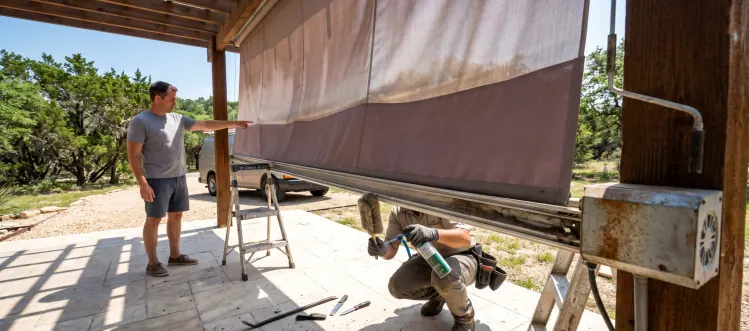
Most motorized roof shade failures stem from preventable maintenance oversights. Simple seasonal care routines can double your system's lifespan.
Your motorized roof shade system represents a significant investment in outdoor comfort, but without proper care, even premium systems from Somfy or Becker can fail prematurely. Most homeowners across Austin, Lakeway, and Bee Cave discover too late that simple maintenance oversights lead to costly motor replacements, fabric deterioration, and control system malfunctions. The reality is that Austin's intense UV exposure, sudden temperature swings, and seasonal storms create a perfect storm of stressors that can cut your system's lifespan in half if you're not proactive. What's particularly frustrating is that most of these failures are completely preventable with the right approach.
The key to maximizing your investment lies in understanding that motorized shade systems aren't just 'install and forget' solutions. They're precision mechanical systems with motors, sensors, and fabrics that need specific care routines tailored to Central Texas conditions. This guide breaks down seven essential maintenance strategies that can extend your system's life from the typical 8-10 years to 15-20 years, while maintaining smooth operation and protecting your warranty coverage. Each tip addresses a specific failure point that we see repeatedly in systems throughout the Hill Country region.
1. Clean Fabric Monthly Using the Two-Step Method
Regular fabric cleaning is the single most overlooked factor in shade system longevity, yet it's also the most critical for systems in dusty areas like Cedar Park and Dripping Springs. Accumulated dirt, pollen, and organic debris don't just look unsightly; they create abrasive surfaces that wear down fabric fibers during retraction and extension cycles. The mechanism behind fabric degradation is straightforward: particles embed in the weave and act like sandpaper every time the fabric moves, eventually causing tears, fraying, and premature UV breakdown. Most homeowners wait until their shade looks visibly dirty, but by then, microscopic damage has already begun.
The two-step cleaning method involves first using a soft brush to remove loose debris, followed by gentle washing with mild soap and water applied with a microfiber cloth. For solution-dyed acrylic fabrics like Sunbrella, this process removes embedded particles while preserving the fabric's UV-resistant properties. Schedule cleaning during cooler morning hours to prevent soap from drying too quickly, and always rinse thoroughly to prevent residue buildup. In Austin's oak-heavy neighborhoods, increase cleaning frequency during spring pollen season and fall leaf drop to prevent organic staining and mildew growth.
Here's a comparison of cleaning frequencies based on your environment and fabric type:
| Environment Type | Acrylic Fabrics | PVC-Coated Fabrics | Special Considerations |
|---|---|---|---|
| Urban/Low Trees | Monthly | Bi-monthly | Focus on pollution residue |
| Oak/Cedar Areas | Bi-weekly in spring/fall | Monthly | Extra rinse for pollen |
| Lakefront Properties | Weekly | Bi-weekly | Salt spray protection |
| Construction Zones | Weekly | Weekly | Dust accumulation risk |
2. Calibrate Wind Sensors Every Six Months
Wind sensor calibration is where most homeowners unknowingly shorten their system's life, often by years. These sensors are designed to automatically retract your shade when wind speeds reach dangerous levels (typically 15-25 mph), but environmental factors like dust accumulation, temperature cycling, and vibration gradually shift their sensitivity. A sensor stuck in the 'high wind' position will prevent normal operation, while one that's become insensitive will allow the fabric to flap violently during storms, causing stress tears and motor strain. The frustrating part is that sensor drift happens so gradually that most people don't notice until damage occurs.
Professional installers in Horseshoe Bay and Spicewood see this pattern repeatedly: systems that worked perfectly for the first year suddenly start retracting unexpectedly or fail to retract during actual wind events. The calibration process involves checking sensor readings against actual wind conditions using a handheld anemometer, then adjusting the trigger threshold through your control system. Modern Somfy RTS systems make this process straightforward through their programming interface, but it requires understanding your local wind patterns and seasonal variations.
Calibration Steps
- Baseline Testing: Use a handheld anemometer to verify actual wind speeds when your sensor triggers, comparing readings over several weather events to establish accuracy patterns.
- Threshold Adjustment: Increase sensitivity if the sensor isn't triggering during 20+ mph gusts, or decrease it if the shade retracts during normal 10-15 mph breezes that shouldn't cause concern.
- Seasonal Rechecking: Test calibration after extreme weather events or temperature swings, as thermal expansion and storm vibration can shift sensor mounting and sensitivity over time.
The key insight most people miss is that wind sensors aren't just safety devices; they're precision instruments that need regular attention like any other measurement tool. A properly calibrated sensor prevents both under-protection (fabric damage from high winds) and over-protection (unnecessary retractions that reduce your enjoyment). Keep a simple log of when your sensor triggers versus actual weather conditions, and you'll quickly identify when recalibration is needed. This small investment of time every six months can prevent thousands in fabric replacement and motor repair costs.
3. Lubricate Moving Parts During Seasonal Transitions
Lubrication timing is critical for motorized systems, yet most homeowners either skip it entirely or do it at random intervals that don't align with when components actually need attention. The key insight is that Austin's dramatic seasonal transitions create the highest stress periods for mechanical components: spring's temperature swings cause expansion and contraction cycles, while summer heat breaks down lubricants faster than manufacturers anticipate. During these transition periods, pivot points, roller bearings, and guide tracks experience maximum friction as materials expand and contract at different rates. Skipping lubrication during these crucial windows leads to premature wear, increased motor load, and eventually, complete component failure.
The optimal approach is to lubricate all moving parts twice yearly: once in early spring before heavy usage season, and again in late fall before winter storage or reduced operation. Use marine-grade lithium grease for pivot points and bearing assemblies, as it resists both high temperatures and moisture better than standard automotive lubricants. For retractable roof systems with guide tracks, apply a thin coat of silicone spray to prevent fabric binding during extension. Focus extra attention on any components that showed resistance during your last operating season, as these are early indicators of increased friction that proper lubrication can address before permanent damage occurs.
4. Inspect and Tighten Hardware Before Storm Season
Hardware inspection is where the difference between a 10-year system and a 20-year system becomes most apparent, yet it's the maintenance task homeowners in Steiner Ranch and Rollingwood most commonly defer until problems become obvious. The physics of thermal expansion and contraction in Central Texas creates a constant loosening effect on bolts, brackets, and mounting hardware throughout the year. What starts as barely perceptible movement gradually compounds until structural connections fail during the first significant storm. The insidious nature of this process means that hardware can appear secure during casual inspection but fail catastrophically under load.
Pre-storm inspection is particularly critical because Austin's weather patterns often go from calm to severe with little warning, giving hardware no time to 'settle' under gradually increasing loads. Professional-grade installations use stainless steel hardware with thread-locking compounds, but even these connections require annual verification. The inspection process should focus on mounting points that bear the highest loads: primary attachment brackets, motor housing connections, and any joints where the shade frame connects to permanent structures. A loose bolt that might seem minor during calm weather becomes a failure point when 40+ mph gusts create dynamic loading on the entire system.
Critical Points
- Mounting Brackets: Check all bolts connecting the shade system to your roof structure, looking for any looseness, corrosion, or gap development that indicates movement over time.
- Motor Housing: Verify that tubular motor connections remain tight and properly aligned, as vibration from normal operation gradually loosens these precision-fitted components over months of use.
- Frame Joints: Inspect corner connections and any telescoping sections for proper tightness, paying special attention to joints that showed stress marks or minor movement during previous inspections.
The pattern we see consistently is that homeowners who perform thorough hardware inspections twice yearly (spring and fall) experience virtually no storm-related failures, while those who skip this step often face major repairs after the first significant weather event. Use a torque wrench to verify manufacturer specifications rather than guessing at proper tightness, and replace any hardware showing corrosion or thread damage immediately. This systematic approach prevents the cascade effect where one loose component stresses others, eventually leading to system-wide failure that could have been prevented with a few minutes of attention.
5. Test Emergency Manual Override Quarterly
Manual override testing is the maintenance step that seems unnecessary until you desperately need it, and by then it's often too late to discover that corrosion, debris, or mechanical binding has rendered the system inoperable. Every quality motorized roof shade system includes manual override capability for power outages, motor failures, or emergency situations, but these mechanisms sit unused for months or years at a time. The problem is that Austin's humidity and temperature cycling create perfect conditions for corrosion and debris accumulation in override mechanisms, while lack of use allows lubricants to thicken and seals to stick. When an actual emergency occurs, what should be a simple manual operation becomes impossible, leaving you with a shade stuck in the worst possible position.
Quarterly testing involves more than just checking if the override works; it requires exercising the full range of manual operation to ensure smooth function and identify developing problems before they become critical. Start by locating your manual override tool (usually an Allen key or crank handle) and verifying it's easily accessible and in good condition. Practice the full retraction and extension process, noting any resistance, unusual sounds, or binding that indicates maintenance needs. For systems with emergency release mechanisms, test these as well to ensure they'll function when needed. Document each test with the date and any observations, creating a maintenance record that helps identify patterns or developing issues over time.
Here's a quarterly testing schedule based on seasonal conditions that affect override mechanisms:
| Season | Primary Focus | Common Issues | Testing Notes |
|---|---|---|---|
| Spring | Post-winter function | Corrosion, stuck mechanisms | Extra lubrication if needed |
| Summer | Heat effects | Thermal expansion binding | Test during cooler hours |
| Fall | Pre-storm readiness | Debris accumulation | Clean before testing |
| Winter | Cold weather operation | Lubricant thickening | Warm operation if possible |
6. Monitor Motor Temperature During Peak Usage
Motor temperature monitoring reveals one of the most common yet preventable causes of premature system failure in Central Texas installations. Tubular motors are designed to handle normal duty cycles, but Austin's intense summer heat combined with frequent daily operation can push motors beyond their thermal limits without obvious warning signs. The critical insight is that motor overheating damage accumulates gradually over weeks or months, degrading windings and internal components long before complete failure occurs. By the time you notice sluggish operation or unusual sounds, significant damage has already occurred, often requiring complete motor replacement rather than simple repair.
Effective temperature monitoring doesn't require expensive equipment; it involves understanding your motor's normal operating temperature and recognizing when conditions push it beyond safe limits. Touch the motor housing after normal operation cycles during hot weather (95°F+ days) to establish a baseline feel for normal warmth. If the housing becomes too hot to touch comfortably, or if you notice the motor running longer than usual to complete extension or retraction cycles, these are early warning signs of thermal stress. During peak summer usage in areas like Lakeway and West Lake Hills, consider limiting operation to morning and evening hours, or installing additional ventilation around motor housings to improve heat dissipation.
7. Document All Maintenance Activities and System Performance
Documentation transforms random maintenance tasks into a systematic approach that can literally double your system's lifespan, yet it's the step most homeowners skip because the benefits aren't immediately obvious. The power of proper documentation lies in pattern recognition: tracking when problems occur, what conditions trigger them, and how different maintenance approaches affect system performance over time. Without this information, you're essentially starting from scratch with each issue, missing opportunities to prevent recurring problems and optimize your maintenance schedule. Professional service companies keep detailed records for exactly this reason, allowing them to predict failures and prevent them rather than simply reacting to breakdowns.
A well-maintained log reveals insights that casual observation misses entirely. For example, you might discover that fabric cleaning frequency needs to increase during specific months, or that certain weather patterns consistently trigger sensor issues that can be prevented with targeted maintenance. This historical perspective becomes invaluable when dealing with warranty claims, insurance issues, or troubleshooting complex problems that develop over time. The documentation process also helps you recognize when professional service is needed versus when you can handle maintenance yourself, potentially saving thousands in unnecessary service calls.
Essential Records
- Maintenance Log: Record dates and details of all cleaning, lubrication, and inspection activities, including any issues discovered and actions taken to address them systematically.
- Performance Tracking: Note operation speed changes, unusual sounds, or resistance during extension/retraction cycles, as these early indicators help predict component failures before they occur.
- Weather Correlation: Track how your system responds to different weather conditions, including wind sensor triggers, temperature effects, and storm-related issues that inform future maintenance timing.
- Component History: Document any parts replaced, warranty service performed, or modifications made, creating a complete service history that supports warranty claims and resale value.
- Seasonal Patterns: Identify recurring issues tied to specific times of year, allowing you to schedule preventive maintenance before problems develop rather than reacting after damage occurs.
The homeowners who get 15-20 years from their motorized shade systems versus the typical 8-10 years all share one characteristic: they treat their system like the precision mechanical investment it is, with systematic care and detailed record-keeping. Your documentation becomes a valuable asset that helps optimize maintenance schedules, supports warranty coverage, and even increases resale value when properly maintained systems command premium prices. Start your maintenance log today, even if your system is already several years old, and you'll be amazed at how quickly patterns emerge that help you prevent problems rather than just react to them.
Protecting Your Outdoor Investment
These seven maintenance strategies work together to create a comprehensive care system that addresses every major failure point in motorized roof shade systems. The key insight is that preventive maintenance costs a fraction of reactive repairs, while extending your system's useful life well beyond manufacturer expectations. Homeowners who implement these practices consistently report 15-20 year lifespans from systems that typically last 8-10 years without proper care, representing thousands in avoided replacement costs.
Start with the maintenance tasks that match your current season, then build a regular schedule that becomes second nature over time. Your shade system represents a significant investment in outdoor comfort and property value, and these simple practices ensure you get maximum return on that investment. Lane Frazier has been installing and maintaining custom motorized shade systems throughout the Austin to Horseshoe Bay corridor for over 20 years, helping homeowners maximize their outdoor investments through proper care and maintenance. His experience with hundreds of installations has revealed the specific maintenance patterns that separate long-lasting systems from those that fail prematurely. Lane's approach emphasizes preventive care tailored to Central Texas conditions, ensuring homeowners get decades of reliable performance from their shade investments.
Author
Lane Frazier has been installing and maintaining custom motorized shade systems throughout the Austin to Horseshoe Bay corridor for over 20 years, helping homeowners maximize their outdoor investments through proper care and maintenance. His experience with hundreds of installations has revealed the specific maintenance patterns that separate long-lasting systems from those that fail prematurely. Lane's approach emphasizes preventive care tailored to Central Texas conditions, ensuring homeowners get decades of reliable performance from their shade investments.
Ready For a Quote?
Get your custom shade quote Today.
Free, no-pressure consultation. We measure, photograph, and send a written line-item proposal within a week. Most installs ship in 3–5 weeks.
Call the workshop
(512) 939-3446
Mon–Fri · 8a–5p CT · Austin, TX
Prefer to talk it through? Calls are answered by the same team that builds your quote — no call centers, no gatekeepers.
Custom exterior shades, motorized patio screens, awnings, and interior window treatments for Austin and Central Texas.
How To Contact Us
Austin, TX 78734
Monday - Friday 8 AM - 5 PM
navigate
Copyright © 2026 | Treaty Oak Shade Co. All Rights Reserved. | Privacy Policy