
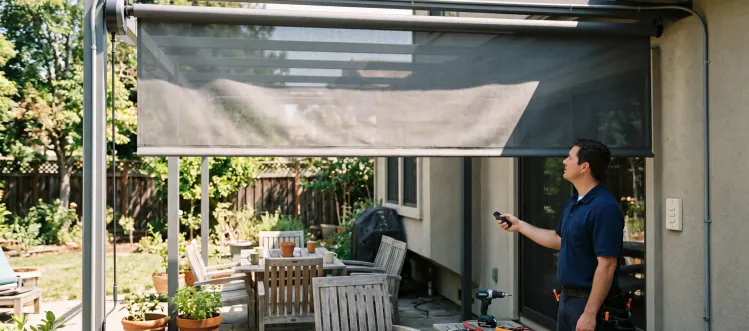
Most motorized patio shade myths stem from outdated information about early systems. Modern technology has solved reliability, noise, and durability concerns completely.
You've probably heard the horror stories: motorized patio shades that break in the first windstorm, motors so loud they wake the neighbors, or systems that cost more than a small car. These motorized patio shades myths keep homeowners stuck with manual solutions that require constant adjustment and offer zero convenience during sudden weather changes. The reality is that most of these concerns trace back to first-generation systems from the early 2000s, and modern technology has completely transformed what's possible with automated outdoor shade solutions.
What you'll find in this guide are five persistent misconceptions that prevent homeowners from enjoying the comfort and convenience of properly engineered motorized systems. Each myth gets broken down with real-world performance data, current technology standards, and practical insights that help you separate outdated assumptions from today's capabilities. Whether you're considering your first motorized installation or questioning what you've heard about these systems, you'll walk away with the facts needed to make an informed decision.
1. Motorized Patio Shades Can't Handle Wind and Weather
This myth probably causes more hesitation than any other concern about motorized outdoor systems. The assumption is that adding a motor somehow makes the shade more fragile or vulnerable to wind damage compared to manual versions. What's actually happening is that modern motorized systems are engineered with wind resistance as a primary design consideration, not an afterthought. Somfy motors paired with zip-track retention systems routinely handle sustained winds of 45-60 mph when fully deployed, which exceeds the wind speeds that would make any patio unusable anyway.
The key difference lies in the engineering approach: quality systems include wind sensors that automatically retract shades when gusts exceed safe thresholds, protecting both the fabric and the motor from damage. A PVC-coated polyester screen with 5% openness factor in a zip-track system actually performs better in moderate wind than a solid manual awning because the fabric allows controlled airflow while maintaining structural integrity. The wind resistance rating depends on proper installation to structural members and using appropriate fasteners for your specific substrate, whether that's masonry, steel, or engineered lumber.
Here's how modern motorized shade systems compare to manual alternatives in wind resistance:
| System Type | Max Wind (Deployed) | Wind Protection | Failure Mode |
|---|---|---|---|
| Manual Awning | 25-35 mph | Manual retraction | Fabric tear, frame damage |
| Basic Motorized | 35-45 mph | Manual override | Motor strain, misalignment |
| Zip-Track + Sensor | 45-60 mph | Auto-retract | Graceful shutdown |
| Commercial Grade | 60-75 mph | Multi-sensor | Engineered redundancy |
2. The Motors Are Too Loud for Outdoor Living Spaces
The noise concern stems from early tubular motors that operated at 65-70 dBA, which is genuinely disruptive during quiet morning coffee or evening conversations. Modern tubular motors from manufacturers like Somfy and Rollease Acmeda operate at 45-54 dBA, which is quieter than most air conditioning units and barely noticeable beyond 10 feet. The sound profile has also improved: instead of the grinding mechanical noise of older systems, today's motors produce a smooth, brief whir that lasts only 15-30 seconds for a full deployment cycle.
The reality is that motor technology advances have made noise a non-issue for quality installations. DC motors run even quieter than AC versions, and the sound is often masked by ambient outdoor noise like wind through trees or distant traffic. The brief operational period means that even if you notice the motor, it's not a sustained disruption like a constantly running pool pump or HVAC unit. Most homeowners report that guests don't even realize the shades are motorized until they see them in operation.
3. Motorized Systems Are Prohibitively Expensive Compared to Manual Options
The sticker shock comparison happens when people compare a basic manual awning to a fully automated motorized system without accounting for the feature differences. A manual retractable awning might cost $2,000-4,000, while a motorized zip-track system ranges from $4,000-8,000 for similar coverage. However, this comparison ignores the operational reality: manual systems require someone to be present and physically able to extend or retract the shade, which means they often stay in the wrong position for hours at a time.
The true cost analysis includes convenience value, energy savings from proper solar management, and the extended fabric life that comes from automated weather response. Smart home integration adds another layer of value by allowing shades to respond to sun sensors, weather forecasts, and time-based schedules without any human intervention. When you factor in the labor cost of manually adjusting shades multiple times daily and the energy savings from reducing solar heat gain by 60-80%, the payback period often falls within 3-5 years depending on your local energy costs.
Here's a realistic cost comparison over a 10-year period:
| System Type | Initial Cost | Annual Maintenance | 10-Year Total |
|---|---|---|---|
| Manual Awning | $3,000 | $150 | $4,500 |
| Basic Motorized | $5,500 | $100 | $6,500 |
| Smart Motorized | $7,000 | $75 | $7,750 |
| Commercial Grade | $9,000 | $50 | $9,500 |
Cost Factors
- Motor and Controls: Premium tubular motors with RF remotes add $800-1,200 per shade, but this includes limit setting, obstacle detection, and integration capabilities that manual systems can't match.
- Installation Complexity: Motorized systems require electrical connections and precise alignment, typically adding $300-500 in labor costs, but this one-time expense eliminates ongoing maintenance hassles.
- Long-term Value: Automated weather response prevents fabric damage and extends system life by 40-60% compared to manual systems that get left deployed during storms or high winds.
The misconception about costs often disappears once homeowners experience the daily convenience and realize they're using their outdoor spaces more consistently. The automation ensures optimal positioning throughout the day, maximizing comfort during peak sun hours and protecting the investment during weather events. Most people find that the time savings alone justifies the premium, especially when managing multiple shades across large patio areas.
4. The Technology Is Too Complex and Unreliable for Daily Use
This concern usually comes from people who've experienced early smart home devices that required constant troubleshooting or had connectivity issues. Modern motorized shade systems operate on proven RF protocols like Somfy RTS or io-homecontrol that don't depend on Wi-Fi networks or internet connectivity for basic operation. The motor, limit switches, and RF remote form a closed system that works independently of your home's technology infrastructure, making it as reliable as a garage door opener. Even when integrated with smart home platforms, the shades retain full manual control through dedicated remotes.
The reliability factor has improved dramatically because manufacturers now focus on robust mechanical components rather than complex electronics. Modern outdoor systems feature IP54-rated motors that handle moisture and temperature fluctuations without degradation, and the control systems use time-tested radio frequencies that penetrate walls and operate reliably at distances up to 65 feet. The learning curve is minimal: most homeowners master the basic controls within a day, and the automated features like wind sensors work transparently in the background without requiring any user intervention.
5. Motorized Shades Don't Last as Long as Manual Systems
The durability myth assumes that adding electrical components automatically reduces the lifespan compared to purely mechanical manual systems. In practice, the opposite often proves true because motorized systems eliminate the human error factor that causes most shade failures. Manual cranks get over-tightened, fabric gets deployed in dangerous wind conditions, and mechanical stress from inconsistent operation leads to premature wear on tracks and mounting hardware. Quality tubular motors are rated for 50,000+ cycles, which translates to 15-20 years of typical residential use even with daily operation.
The automated features actually extend system life by preventing damage scenarios that manual operation can't avoid. Wind sensors retract shades before dangerous gusts arrive, sun sensors prevent fabric from staying deployed during intense UV periods that cause accelerated fading, and programmable limits ensure consistent, gentle operation that reduces mechanical stress. The fabric life extends significantly because the shade deploys and retracts at optimal times rather than staying in potentially damaging positions for hours. Most manufacturers offer 5-7 year warranties on motorized components, with many systems performing well beyond the warranty period when properly maintained.
Making Smart Shade Decisions
These five myths persist because they're based on outdated experiences with first-generation technology or incomplete comparisons between manual and motorized systems. The current reality is that quality motorized patio shades offer superior weather resistance, whisper-quiet operation, reasonable long-term costs, proven reliability, and extended lifespan compared to manual alternatives. The key is understanding that not all motorized systems are created equal, and choosing components from established manufacturers with proven track records makes all the difference.
If you're ready to move beyond the myths and explore what modern motorized shade technology can do for your outdoor living space, focus on systems with proper wind ratings, quality motors, and professional installation. The convenience and performance benefits become obvious once you experience automated shades that respond intelligently to weather conditions while providing effortless daily control. We help homeowners throughout the Austin area separate fact from fiction and select motorized shade solutions that deliver lasting value and reliable performance.
Author
Lane Frazier is the owner of Treaty Oak Shade Company with over 20 years of hands-on experience installing custom motorized shade systems throughout Central Texas. His expertise in debunking common misconceptions comes from helping hundreds of homeowners transition from manual to automated solutions and witnessing firsthand how modern technology has solved the reliability and performance issues that created these persistent myths.
Ready For a Quote?
Get your custom shade quote Today.
Free, no-pressure consultation. We measure, photograph, and send a written line-item proposal within a week. Most installs ship in 3–5 weeks.
Call the workshop
(512) 939-3446
Mon–Fri · 8a–5p CT · Austin, TX
Prefer to talk it through? Calls are answered by the same team that builds your quote — no call centers, no gatekeepers.
Custom exterior shades, motorized patio screens, awnings, and interior window treatments for Austin and Central Texas.
How To Contact Us
Austin, TX 78734
Monday - Friday 8 AM - 5 PM
navigate
Copyright © 2026 | Treaty Oak Shade Co. All Rights Reserved. | Privacy Policy