
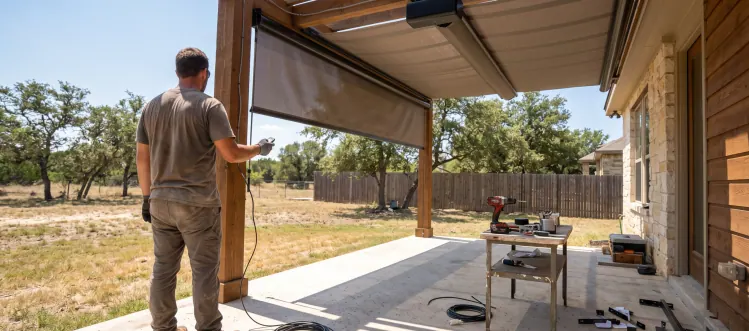
Strategic placement and smart control integration matter more than motor power for outdoor shade success. Most installations fail because they prioritize coverage over wind resistance and automation logic.
You've invested in a motorized roof shade system to transform your outdoor space, but poor design choices can turn this smart upgrade into a frustrating maintenance headache. The difference between a system that enhances your Austin patio for years and one that constantly needs repairs often comes down to five critical design decisions that most homeowners overlook. What looks impressive in showrooms doesn't always translate to reliable performance under Texas heat, sudden storms, and daily use patterns.
These design tips focus on the practical realities of outdoor shade systems across Central Texas, from Lakeway's lakefront properties to Cedar Park's suburban patios. You'll learn how to position your system for optimal wind resistance, integrate controls that actually make sense for your lifestyle, and choose materials that won't become maintenance burdens. The goal isn't just shade coverage, it's creating an outdoor environment that works seamlessly year-round without constant adjustments or repairs.
1. Position Your System to Work With Prevailing Winds, Not Against Them
Wind direction determines whether your retractable roof system becomes a reliable outdoor asset or a constant source of stress and damage. Austin's prevailing southeasterly winds, combined with sudden thunderstorm downdrafts, create specific challenges that affect how and where you should position your motorized shade system. Most installations fail because they prioritize maximum coverage over wind dynamics, leading to systems that flap violently, tear prematurely, or require constant retracting during moderate weather events. Understanding your property's specific wind patterns, including how your home and landscaping create wind tunnels or shelter zones, allows you to design a system that works with natural forces rather than fighting them.
For properties in Spicewood or Horseshoe Bay, where lake effects create variable wind patterns, position your system so the primary fabric edge faces away from the most common strong wind direction. This typically means mounting east-west oriented systems with the motor end toward the north, allowing southerly winds to flow over rather than catch under the fabric. Include wind sensors set to retract at 20-25 mph rather than the standard 30 mph threshold, because outdoor fabrics experience much higher stress than indoor applications. The slight reduction in usable time during breezy conditions prevents the major repairs and replacements that come from fabric failure during unexpected gusts.
Here's how wind direction affects optimal system positioning for Central Texas properties:
| Wind Pattern | Recommended Orientation | Sensor Setting | Risk Level |
|---|---|---|---|
| Southerly prevailing | East-west, motor north | 20-25 mph | Low |
| Lake effect variable | Diagonal 45°, sheltered side | 20 mph | Medium |
| Open exposure | North-south, end walls | 15-20 mph | High |
| Wooded/sheltered | Any orientation | 25-30 mph | Low |
| Hill country gusts | Follow terrain contours | 15 mph | Very High |
2. Design Your Control Zones Based on Actual Sun Patterns, Not Property Lines
The biggest mistake in motorized roof shade design is creating control zones that match your patio layout rather than how sunlight actually moves across your space throughout the day. Sun angles change dramatically between winter and summer in Central Texas, and a system designed only for peak summer coverage will leave you with awkward partial shade or wasted energy during shoulder seasons. Effective motorized shade systems use multiple zones that can respond independently to changing light conditions, allowing you to maintain comfort in active areas while keeping other sections open for natural light and air circulation.
Map your space's sun exposure at different times and seasons before finalizing zone boundaries, paying special attention to how morning and late afternoon angles affect usability. A west-facing patio in Bee Cave might need three distinct zones: one for morning coffee areas that stays open until 10 AM, a dining zone that activates during lunch hours, and an evening entertainment area that deploys for late afternoon sun protection. Program preset scenes that automatically adjust these zones based on time of day and season, so your system anticipates your needs rather than requiring constant manual adjustments throughout the day.
3. Choose Fabric Openness Based on Your Primary Use Case, Not Aesthetics
Fabric openness factor, the percentage of open weave in your shade material, dramatically affects both comfort and system performance, yet most homeowners choose based on appearance rather than function. A 1% openness fabric blocks nearly all UV and creates dramatic shade but can become a sail in moderate winds, while 10% openness provides excellent airflow and wind resistance but offers minimal glare reduction for activities like reading or screen viewing. The key insight most miss is that different areas of your outdoor space likely need different openness factors to function optimally, and trying to use one fabric type across your entire system often results in compromises that satisfy no use case well.
For dining and conversation areas in Dripping Springs or New Braunfels, where comfort and temperature control matter most, choose 3-5% openness fabrics that block heat while allowing some airflow. Entertainment zones with TVs or projection systems need 1-3% openness for glare control, while transitional areas like walkways or pool surrounds work better with 7-10% openness that maintains visibility and natural ventilation. Consider the energy efficiency benefits of matching fabric choice to your HVAC zones, as properly selected shade fabrics can reduce cooling loads on adjacent indoor spaces by 15-25% during peak summer months.
Here's how to match fabric openness to specific outdoor activities and conditions:
| Activity Type | Ideal Openness | UV Block | Wind Resistance |
|---|---|---|---|
| Dining/cooking | 3-5% | 95-97% | Good |
| TV/projection viewing | 1-3% | 97-99% | Moderate |
| Reading/work areas | 1-5% | 95-99% | Moderate |
| Pool/water features | 7-10% | 90-93% | Excellent |
| Walkways/transitions | 8-12% | 88-92% | Excellent |
| Plant protection | 15-20% | 80-85% | Excellent |
4. Integrate Smart Controls That Actually Match Your Lifestyle Patterns
Smart control integration fails when it's designed around theoretical convenience rather than how you actually use your outdoor spaces throughout the week and seasons. Many homeowners install sophisticated automation that triggers based on sun sensors and weather data, only to find themselves constantly overriding the system because it doesn't account for their specific activity patterns, privacy needs, or the way their family actually flows through outdoor areas. The most successful installations use a hybrid approach that combines intelligent automation with intuitive manual control, allowing the system to handle routine adjustments while keeping you in control during special events or unexpected weather.
Start by tracking your outdoor space usage for a typical week, noting when you need shade versus open sky, and how weather conditions affect your plans. In Steiner Ranch or Rollingwood, where outdoor entertaining is year-round, program weekday scenes that automatically provide work-from-home comfort during business hours, then switch to evening entertainment settings that prioritize ambiance and conversation areas. Weekend scenes should account for longer outdoor periods and family activities that might need different coverage patterns. Include manual override capabilities that don't fight the automation, such as 'party mode' that keeps selected zones open regardless of sun sensors, or 'storm prep' that retracts everything and disables automatic deployment until manually reset.
5. Plan for Maintenance Access and Component Replacement From Day One
The most beautifully designed motorized roof shade system becomes a liability if you can't safely access components for routine maintenance or emergency repairs. Austin's climate puts significant stress on outdoor mechanical systems, with UV exposure, temperature swings, and occasional severe weather creating predictable wear patterns that require regular attention. Systems designed without maintenance access in mind often force homeowners to choose between expensive professional service calls for simple tasks or risky improvised solutions that can damage both the system and property.
Effective maintenance planning considers not just the motor and fabric, but also the electrical connections, sensors, and mounting hardware that keep your system operating reliably. A retractable roof system that requires a lift truck to change a limit switch setting or clean debris from tracks will cost far more to maintain than one designed with accessible service points. The goal is creating a system where seasonal maintenance tasks can be completed safely from a standard ladder, while still protecting critical components from weather and tampering.
Access Essentials
- Motor Housing: Position tubular motors so they're accessible from permanent structures or stable ladder placement, avoiding locations that require reaching over railings or working from unstable surfaces that increase fall risk during routine maintenance.
- Electrical Connections: Install junction boxes and control panels in weatherproof enclosures that can be opened without tools, positioned at shoulder height for easy inspection of connections and troubleshooting without requiring overhead work or crawling.
- Fabric Cleaning: Design track systems and guide cables so fabric sections can be accessed for cleaning and inspection from multiple points, preventing the need to fully retract large systems just to address localized wear or debris accumulation.
- Emergency Manual Override: Include manual override capabilities accessible from ground level, allowing you to retract the system during power outages or motor failures without requiring immediate professional service calls or leaving fabric exposed to storm damage.
The best maintenance strategy anticipates the most common service needs and makes them manageable for homeowners while ensuring professional work can be completed efficiently when needed. Position your system so annual tasks like fabric cleaning, track lubrication, and sensor calibration can be completed during normal seasonal maintenance routines. This approach significantly extends system life and reduces the total cost of ownership while maintaining the reliability and convenience that made you choose a motorized system in the first place.
Creating Your Perfect Outdoor Shade Strategy
These five design principles work together to create motorized roof shade systems that enhance your outdoor living experience rather than creating ongoing challenges and expenses. The key insight connecting all these tips is that successful outdoor automation requires designing for real-world conditions and usage patterns, not just maximum coverage or impressive technology features. When you position systems to work with wind patterns, create control zones that match actual sun movement, choose fabrics based on function, integrate smart controls that align with your lifestyle, and plan for maintenance access, you end up with a system that truly improves your outdoor comfort and property value.
Ready to design a motorized roof shade system that works perfectly for your Central Texas property? At Treaty Oak Shade Company, we help homeowners across Austin, Lakeway, Cedar Park, and surrounding areas create outdoor shade solutions that combine smart technology with practical design for years of reliable comfort and convenience.
Lane Frazier is the owner of Treaty Oak Shade Company, specializing in custom motorized shade installations throughout Central Texas. With 20 years of hands-on experience designing and installing shade systems from Austin to Horseshoe Bay, he understands how local climate conditions and lifestyle patterns affect outdoor automation performance. Lane's approach focuses on creating systems that work reliably in real-world conditions rather than just impressive showroom demonstrations.
Author
This article was written by the Treaty Oak Shade Company Editorial Team, experienced professionals serving Austin, West Lake Hills, Lakeway. Our team focuses on educating clients and providing valuable insights to help them make informed decisions.
Ready For a Quote?
Get your custom shade quote Today.
Free, no-pressure consultation. We measure, photograph, and send a written line-item proposal within a week. Most installs ship in 3–5 weeks.
Call the workshop
(512) 939-3446
Mon–Fri · 8a–5p CT · Austin, TX
Prefer to talk it through? Calls are answered by the same team that builds your quote — no call centers, no gatekeepers.
Custom exterior shades, motorized patio screens, awnings, and interior window treatments for Austin and Central Texas.
How To Contact Us
Austin, TX 78734
Monday - Friday 8 AM - 5 PM
navigate
Copyright © 2026 | Treaty Oak Shade Co. All Rights Reserved. | Privacy Policy