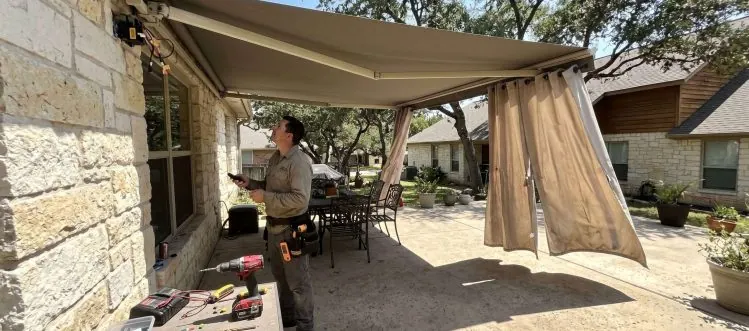
Motorized awnings cut energy use and boost comfort, while outdoor curtains often fall short on durability and automation.
If you’ve wrestled with tangled curtains or a sun‑baked patio, you’re not alone; many Austin homeowners struggle to find a shade solution that truly works year‑round. The heat of a Texas summer can push indoor temperatures past 100°F, and a flimsy curtain won’t hold up against gusty afternoons. Ignoring the right system means higher cooling bills and a backyard that feels more like a sauna than a retreat.
This list walks you through five concrete reasons why motorized awnings outshine outdoor curtains, especially in the humid subtropical climate of Austin and its surrounding Hill Country towns. You’ll see how engineering standards, smart controls, and material science translate into everyday comfort. Use each point as a checklist when you compare products or talk to a local installer.
1. Automatic Wind Retraction Protects Your Investment
Austin’s spring storms can unleash winds over 50 mph, a force that often tears outdoor curtains or leaves them flapping uselessly. Motorized awnings equipped with wind sensors automatically retract before the gusts reach a critical threshold, preserving both fabric and hardware. Imagine a sudden thunderstorm and your awning folds away on its own, while a curtain stays limp and eventually rips.
When you choose a system with a certified wind sensor, you simply set the retraction speed and let the controller handle the rest. A typical setup uses a Somfy tubular motor paired with a wind sensor that triggers at 30 mph, a setting that meets ASCE 7‑16 wind load recommendations for residential structures. This hands‑off protection means you won’t need to scramble for a ladder or worry about damage after every storm.
2. Superior UV Blocking Keeps Interiors Cool
The Texas sun delivers intense UV radiation that can raise indoor temperatures by up to 15 °F, forcing your AC to work harder. Motorized awnings made from solution‑dye acrylic fabrics such as Sunbrella achieve a UPF of 50+ and block over 95 % of UV rays, a performance level most outdoor curtains can’t match. The reality is that a well‑designed awning reduces solar heat gain, a benefit highlighted by the U.S. Department of Energy’s energy‑saver guide.
In practice, a homeowner with a west‑facing patio installs a 12‑foot motorized awning and watches the interior temperature stay comfortably lower on a July afternoon. The difference is measurable: a shaded room can stay 5‑7 °F cooler, translating into lower energy bills and a longer lifespan for furniture. That’s why many Austin families prioritize UV‑blocking awnings over fabric curtains.
Key Performance Numbers
- UPF Rating: High‑quality acrylic awnings deliver UPF 50+, blocking 98 % of harmful UV rays and protecting skin and furnishings.
- Solar Heat Gain: A typical awning reduces solar heat gain by 30‑40 %, a figure supported by ASHRAE research on shading devices.
- Fabric Longevity: Solution‑dye fabrics retain color and strength for 10‑12 years, far outlasting most PVC‑coated curtain materials.
Choosing a motorized awning with proven UV performance means you invest in comfort and energy efficiency at the same time. The numbers speak for themselves, and the day‑to‑day experience is a noticeably cooler indoor environment. Pair the awning with a smart controller, and you’ll have a system that reacts to the sun without you lifting a finger.
3. Seamless Smart‑Home Integration Simplifies Daily Life
Modern homeowners expect their shade devices to talk to Alexa, Google Home, or a dedicated hub, yet many outdoor curtains lack any electronic interface. Motorized awnings, on the other hand, often come with RTS or IO radios that can be linked to voice assistants, allowing you to say “close the patio shade” and watch it obey instantly. The convenience factor is especially valuable when you’re juggling a pool party and a sudden rain shower.
A typical installation in West Lake Hills wires the awning’s motor to a dedicated 120 V circuit, adds a wind sensor, and connects the system to a smart home app. From there, you can set schedules, create scenes, or let the sensor dictate operation, all from your phone. The result is a hands‑free experience that feels like a natural extension of your home automation.
Smart Features
- Voice Control: Somfy motors respond to Alexa or Google Assistant commands, letting you adjust shade position without a remote.
- Automation Rules: Set a sunset schedule or a wind‑speed trigger, and the system handles retraction and extension automatically.
- App Monitoring: Real‑time status alerts on your smartphone keep you informed of battery health and sensor activity.
When your shade system becomes part of your smart home ecosystem, you gain both comfort and peace of mind. The ability to automate based on weather or time of day removes a daily chore from your routine. This level of integration is simply not possible with a manually operated outdoor curtain.
4. Robust Structural Design Meets Local Building Codes
Austin’s building codes, derived from the International Residential Code, require exterior structures to withstand specific wind loads and fire safety standards. Motorized awnings are engineered to meet ASTM E330 for static pressure and NFPA 701 for flame resistance, ensuring they pass inspections without hassle. Outdoor curtains often lack such formal testing, leaving homeowners vulnerable to code violations.
During a recent install in Bee Cave, the contractor performed a load‑path analysis, selected 6063‑T5 extruded aluminum brackets, and used through‑bolts with backing plates to secure the awning to a masonry wall. The system achieved a wind‑class rating of EN 13561 Class 2, comfortably exceeding the local 30‑mph design wind speed. This meticulous approach guarantees safety and durability for years to come.
Compliance Highlights
- ASTM E330: Guarantees structural performance under uniform static air pressure, a key metric for wind resistance.
- NFPA 701: Ensures fabric meets flame‑propagation limits, a requirement for many commercial and residential projects.
- IBC/IRC Adoption: Aligns awning design with International Building Code wind‑load tables, simplifying permit approval.
By selecting a motorized awning that adheres to recognized standards, you avoid costly retrofits and enjoy a legally compliant shade solution. The engineering behind the frame and fasteners translates into long‑term reliability, especially during Austin’s occasional high‑wind events. This peace of mind is a decisive advantage over a simple curtain that may not meet any code.
5. Lower Maintenance and Longer Lifespan Reduce Ownership Costs
Outdoor curtains often require frequent cleaning, re‑tensioning, and occasional replacement due to fading or tears. Motorized awnings, built with powder‑coated aluminum frames and UV‑stabilized acrylic fabrics, need only an occasional wipe‑down and a yearly inspection of the motor and sensors. The reduced upkeep saves both time and money, a benefit that adds up over the typical 10‑year lifespan of a quality awning.
A homeowner in Spicewood who installed a motorized awning reported a 20 % reduction in annual cleaning costs after the first year, thanks to the fabric’s water‑repellent finish and the motor’s sealed housing. The system’s IP44 rating protects it from dust and moisture, meaning the motor stays dry even during a summer rain. Over a decade, the awning’s durability outpaces the average curtain, delivering a clear financial advantage.
Putting Comfort First in Austin
Across the Hill Country, the five advantages outlined here show why motorized awnings are a smarter, safer, and more energy‑efficient choice than outdoor curtains. From automatic wind protection to seamless smart‑home control, each benefit tackles a real pain point for homeowners battling Texas heat and weather. When you add code‑compliant construction and low‑maintenance materials, the value proposition becomes unmistakable.
Ready to upgrade your patio or porch? Explore our range of motorized solutions, from Somfy‑powered awnings to custom‑fit retractable screens, and let a local expert guide you through design, permitting, and installation. A quick consultation can reveal the best configuration for your home’s orientation, budget, and lifestyle.
Author
Lane Frazier is a seasoned owner who has spent two decades installing motorized shades across Austin and its neighboring communities. His hands‑on experience with Somfy motors and high‑performance fabrics informs every recommendation in this guide. Lane’s practical insight helps homeowners choose reliable, energy‑saving shade solutions that stand up to Texas weather.
Ready For a Quote?
Get your custom shade quote Today.
Free, no-pressure consultation. We measure, photograph, and send a written line-item proposal within a week. Most installs ship in 3–5 weeks.
Call the workshop
(512) 939-3446
Mon–Fri · 8a–5p CT · Austin, TX
Prefer to talk it through? Calls are answered by the same team that builds your quote — no call centers, no gatekeepers.
Custom exterior shades, motorized patio screens, awnings, and interior window treatments for Austin and Central Texas.
How To Contact Us
Austin, TX 78734
Monday - Friday 8 AM - 5 PM
navigate
Copyright © 2026 | Treaty Oak Shade Co. All Rights Reserved. | Privacy Policy